나트륨 섭취량과 관련된 식행동의 성별 및 연령별 비교 / 박영숙 ; 손숙미 ; 임화재 ; 김숙배 ; 정연선 1
Abstract 1
서론 1
조사대상 및 방법 2
1. 조사대상 2
2. 연구방법 및 내용 3
3. 통계 처리 3
결과 3
1. 대상자의 인구사회적 요인, 신체계측치 및 혈압 3
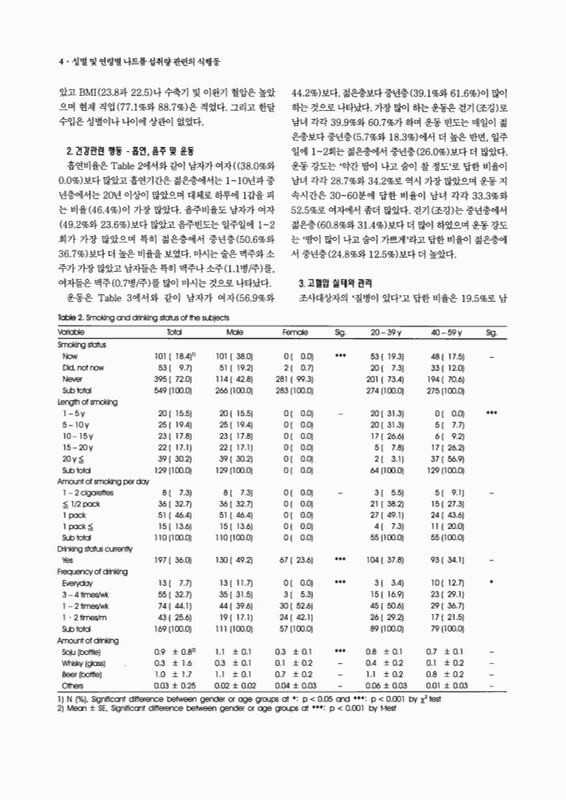
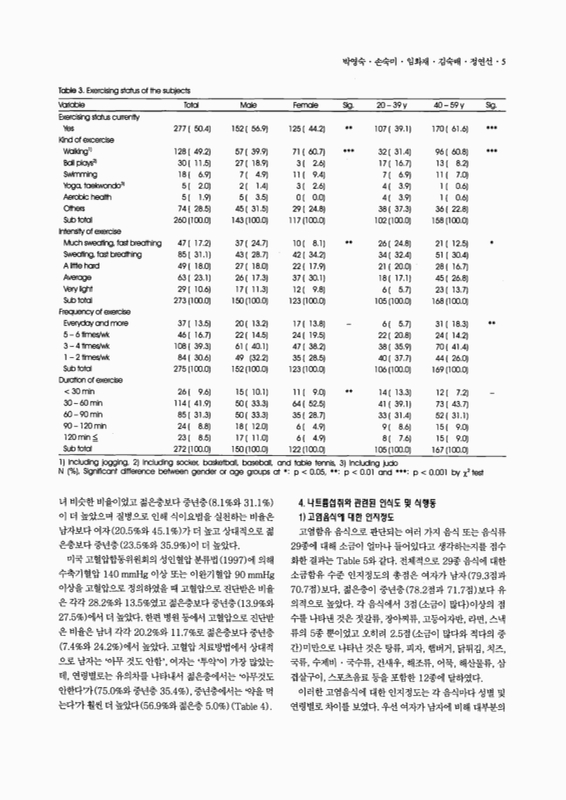
2. 건강관련 행동·흡연, 음주 및 운동 4
3. 고혈압 실태와 관리 4
4. 나트륨섭취와 관련된 인식도 및 식행동 5
1) 고염음식에 대한 인지정도 5
2) 나트륨의 영향표시 인식도 7
3) 짠맛 기호도와 나트륨섭취 증가 또는 저하의 식행동 7
고찰 8
요약 및 결론 10
참고문헌 11
초록보기
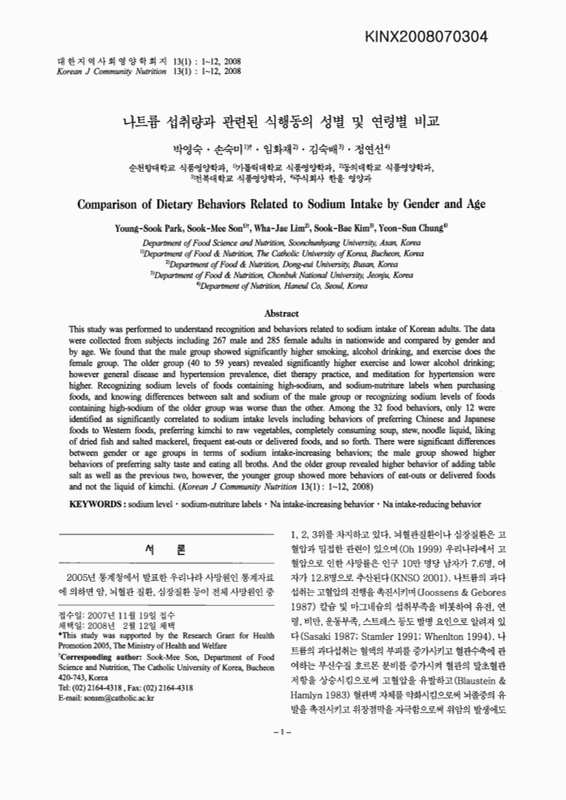
This study was performed to understand recognition and behaviors related to sodium intake of Korean adults. The data were collected from subjects including 267 male and 285 female adults in nationwide and compared by gender and by age. We found that the male group showed significantly higher smoking, alcohol drinking, and exercise does the female group. The older group (40 to 59 years) revealed significantly higher exercise and lower alcohol drinking; however general disease and hypertension prevalence, diet therapy practice, and meditation for hypertension were higher. Recognizing sodium levels of foods containing high-sodium, and sodium-nutriture labels when purchasing foods, and knowing differences between salt and sodium of the male group or recognizing sodium levels of foods containing high-sodium of the older group was worse than the other. Among the 32 food behaviors, only 12 were identified as significantly correlated to sodium intake levels including behaviors of preferring Chinese and Japanese foods to Western foods, preferring kimchi to raw vegetables, completely consuming soup, stew, noodle liquid, liking of dried fish and salted mackerel, frequent eat-outs or delivered foods, and so forth. There were significant differences between gender or age groups in terms of sodium intake-increasing behaviors; the male group showed higher behaviors of preferring salty taste and eating all broths. And the older group revealed higher behavior of adding table salt as well as the previous two, however, the younger group showed more behaviors of eat-outs or delivered foods and not the liquid of kimchi.

 대표어
대표어
 한국학술지인용색인(NRF)