
 대표어
대표어
권호기사보기
| 기사명 | 저자명 | 페이지 | 원문 | 기사목차 |
|---|
결과 내 검색
동의어 포함
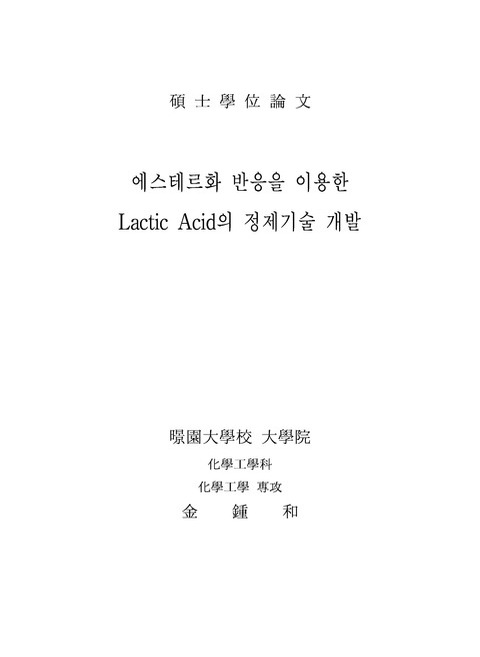
국문요약
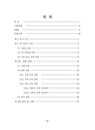
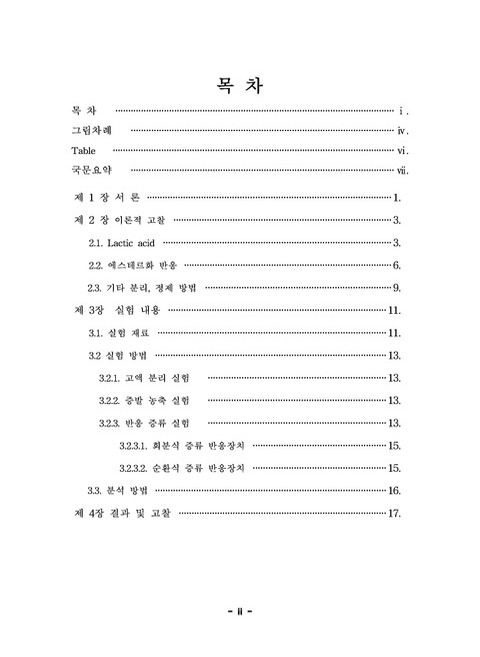
목차
제 1 장 서론 13
제 2 장 이론적 고찰 15
2.1. Lactic acid 15
2.2. 에스테르화 반응 18
2.3. 기타 분리, 정제 방법 21
1) 결정화(Precipitation) 21
2) 액-액 추출(Liquid-liquid extraction) 21
3) 흡착(Adsorption) 21
4) 전기투석(Electro-dialysis, ED) 22
5) 에스테르화 반응을 이용한 증류법(Esterification-Distillation) 22
제 3장 실험 내용 23
3.1. 실험 재료 23
3.2 실험 방법 25
3.2.1. 고액 분리 실험 25
3.2.2. 증발 농축 실험 25
3.2.3. 반응 증류 실험 25
3.2.3.1. 회분식 증류 반응장치 27
3.2.3.2. 순환식 증류 반응장치 27
3.3. 분석 방법 28
제 4장 결과 및 고찰 29
4.1. 고액 분리 실험 29
4.2. 증발 농축 실험 29
4.3. 에스테르화 반응 실험 30
4.3.1. 회분식 증류 반응 실험(lactic acid 형태) 31
4.3.1.1. 반응온도에 따른 효과 31
4.3.1.2. Alcohol 종류에 따른 효과 33
4.3.1.3. butanol/lactic acid 몰비에 따른 효과 34
4.3.1.4. 촉매의 종류 및 양에 따른 효과 37
4.3.1.5. 고체산 촉매의 재활용 효과 38
4.3.1.6. 물 함유량에 따른 효과 41
4.3.2. 순환식 증류 반응 실험(ammonium lactate 형태) 42
4.3.2.1. 반응 온도에 따른 효과 42
4.3.2.2 Lactic acid의 형태에 따른 효과 43
4.3.2.3. butanol/ammonium lactate의 몰비에 따른 효과 45
4.3.2.4. 촉매의 종류 및 투입시간의 효과 46
4.3.2.4.1. 고체산 촉매의 사용에 따른 영향 46
4.3.2.4.2. 황산촉매의 사용에 따른 영향 49
4.3.2.4.3. 촉매의 종류에 따른 영향 50
4.3.2.5. 증발 농축도에 따른 효과 56
4.3.3. Fermentation broth의 lactate salt 반응 실험 57
4.3.3.1. Calcium Lactate 57
4.3.3.2. Sodium Lactate 58
4.3.3.3. A mmonium Lactate 58
제 5 장 결론 61
5.1. 고액 분리, 증발 농축 62
5.2. 에스테르화 반응실험 62
5.2.1. 회분식 증류 반응실험 62
5.2.2. 순환식 증류 반응실험 63
제 6 장 참고문헌 65
Abstract 67
Appendix 69
감사의 글 74
Fig. 1-1. Manufacturing process of lactic acid 14
Fig. 2-1. T he structure of lactic acid 16
Fig. 3-1. Schematic diagram of 3-neck flask for esterification of lactic acid 26
Fig. 4-1. by Degree vacuum of concentration evaporation of lactate salts 30
Fig. 4-2. Conversion of lactic acid with the increase of temperature. (LA :BtOH=1:38) 32
Fig. 4-3. Conversion of lactic acid with the increase of temperature. (LA :BtOH=1:4) 33
Fig. 4-4. Conversion of lactic acid over A mberlyst with different alcohols at 90℃ 35
Fig. 4-5. Conversion of lactic acid with the mole ratio of n-BtOH/LA at 100℃ 36
Fig. 4-6. Conversion of lactic acid with the mole ratio of n-BtOH/LA at 110℃ 37
Fig. 4-7. Conversion of lactic acid with different catalysts at 90℃ 39
Fig. 4-8. Conversion of lactic acid with the amounts of catalysts at 90℃ 40
Fig. 4-9. and Comparison used catalysts of lactic at 90acid ℃ conversion with fresh 41
Fig. 4-10. Conversion of lactic acid with the variation of water contents at 90℃ 42
Fig. 4-11. Conversion of lactic acid with the increase of temperature without catalyst 44
Fig. 4-12. Conversion of lactic acid and ammonium lactate over A mberlyst -15 catalyst. at 105℃ 45
Fig. 4-13. Conversion of ammonium lactate with the mole ratio of n-BtOH/A L at 105℃ 46
Fig. 4-14. catalyst Conversion with of the ammonium increase lactate of temperature. over A mberlyst 48
Fig. 4-15. Conversion of ammonium lactate with different input time of A mberlyst-15 catalyst at 115℃ 49
Fig. 4-16. Conversion of ammonium lactate using sulfuric acid as catalyst at 130℃ 51
Fig. 4-17. Product distribution in the reaction medium catalized by excess H2SO4 at 105℃ 52
Fig. 4-18. Product distribution in the reaction medium catalized by excess H2SO4 at 115℃ 53
Fig. 4-19. Product distribution in the reaction medium catalized by excess H2SO4 at 130℃ 54
Fig. 4-20. Conversion of ammonium lactate with different input time of sulfuric acid at 115℃ 55
Fig. 4-21. Conversion of ammonium lactate with different type of catalysts at 115℃ 56
Fig. 4-22. Conversion of ammonium lactate with different concentration at 115℃ 57
Fig. 4-23. Conversion of sodium lactate with different amount of catalysts at 115℃ 60
Fig. 4-24. of Conversion catalysts of at ammonium 115℃ lactate with different types 61
*표시는 필수 입력사항입니다.
| 전화번호 |
|---|
| 기사명 | 저자명 | 페이지 | 원문 | 기사목차 |
|---|
| 번호 | 발행일자 | 권호명 | 제본정보 | 자료실 | 원문 | 신청 페이지 |
|---|
도서위치안내: / 서가번호:

우편복사 목록담기를 완료하였습니다.
*표시는 필수 입력사항입니다.
저장 되었습니다.
