
 대표어
대표어







권호기사보기
| 기사명 | 저자명 | 페이지 | 원문 | 기사목차 |
|---|
결과 내 검색
동의어 포함
표제지
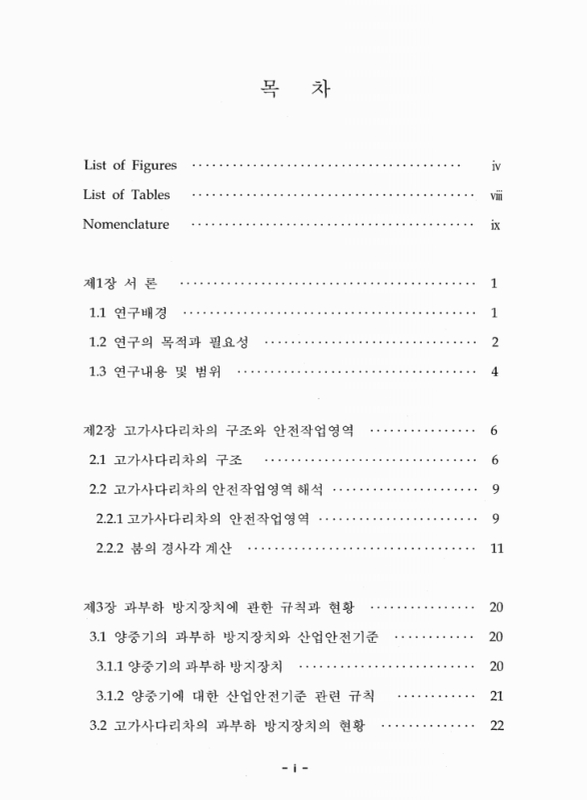
목차
Nomenclature 12
제1장 서론 13
1.1. 연구배경 13
1.2. 연구의 목적과 필요성 14
1.3. 연구내용 및 범위 16
제2장 고가사다리차의 구조와 안전작업영역 18
2.1. 고가사다리차의 구조 18
2.2. 고가사다리차의 안전작업영역 해석 21
2.2.1.고가사다리차의 안전작업영역 21
2.2.2. 붐의 경사각 계산 23
제3장 과부하 방지장치에 관한 규칙과 현황 32
3.1. 양중기의 과부하 방지장치와 산업안전기준 32
3.1.1. 양중기의 과부하 방지장치 32
3.1.2. 양중기에 대한 산업안전기준 관련 규칙 33
3.2. 고가사다리차의 과부하 방지장치의 현황 34
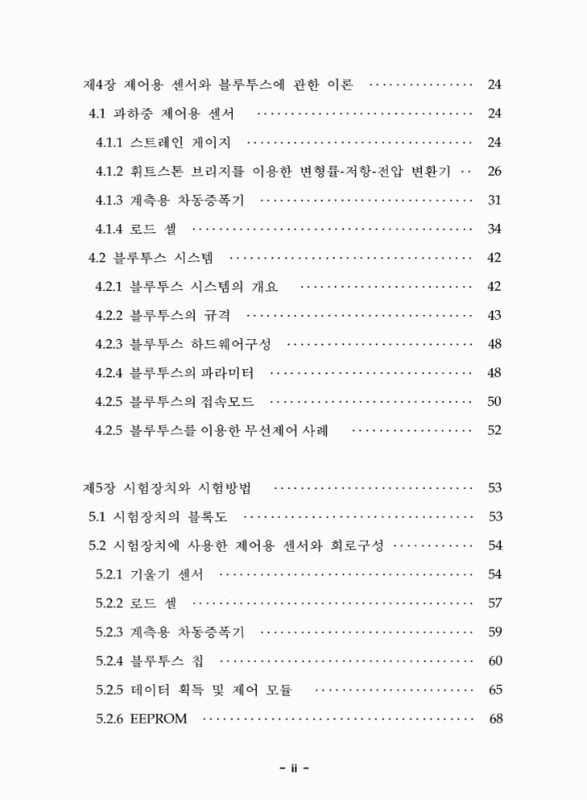
제4장 제어용 센서와 블루투스에 관한 이론 36
4.1. 과하중 제어용 센서 36
4.1.1. 스트레인 게이지 36
4.1.2. 휘트스톤 브리지를 이용한 변형률-저항-전압 변환기 38
4.1.3. 계측용 차동증폭기 43
4.1.4. 로드 셀 46
4.2. 블루투스 시스템 54
4.2.1. 블루투스 시스템의 개요 54
4.2.2. 블루투스의 규격 55
4.2.3. 블루투스 하드웨어구성 60
4.2.4. 블루투스의 파라미터 60
4.2.5. 블루투스의 접속모드 62
4.2.6. 블루투스를 이용한 무선제어 사례 64
제5장 시험장치 및 시험방법 65
5.1. 시험장치의 블록도 65
5.2. 시험장치에 사용한 제어용 센서와 회로구성 66
5.2.1. 기울기 센서 66
5.2.2. 로드 셀 69
5.2.3. 계측용 차동증폭기 71
5.2.4. 블루투스 칩 72
5.2.5. 데이터 획득 및 제어 모듈 77
5.2.6. EEPROM 80
5.3. 시험방법 82
5.3.1. 하드웨어 설치 82
5.3.2. GUI의 설치 87
5.3.3. GUI의 설정방법 87
5.3.4. 과하중시 경보 설정 89
5.3.5. EEPROM에 저장된 데이터의 판독 90
제6장 시험 및 결과 92
6.1. GUI의 메인 화면의 설정 92
6.2. 블루투스 송수신 거리 시험 94
6.3. 기울기별 하중 측정결과 95
6.4. 기울기별 경보장치의 작동상태 102
6.5. EEPROM에서 하중과 기울기 센서의 데이터 기록 103
제7장 결론 및 고찰 105
7.1. 결론 105
7.2. 고찰 106
참고문헌 108
국문초록 112
ABSTRACT 114
부록 116
Fig. 2-1. Overview of the ladder-lift truck 18
Fig. 2-2. Assembly of ladder 19
Fig. 2-3. Sections of ladder boom 20
Fig. 2-4. Free body diagram of ladder-lift truck 22
Fig. 2-5. Stable operating range of tilt angle θ at the point of overturning about support A and B 25
Fig. 2-6. Stable operating range of tilt angle θ at the point of overturning about support C and D 25
Fig. 2-7. Stable operating range of tilt angle θ at the point of overturning about support A and D 26
Fig. 2-8. Stable operating range of tilt angle θ at the point of overturning about support B and C 26
Fig. 2-9. Overall stable operating range of tilt angle θ 27
Fig. 2-10. Overall stable operating range of tilt angle θ at boom's length 70m 31
Fig. 2-11. Stable operating range of tilt angle θ versus boom's length for φ=0 31
Fig. 3-1. Geometry of the ladder-lift truck 34
Fig. 3-2. Working height and tilt angle of the ladder-lift truck(PE-700) 35
Fig. 4-1. Strain gage structure(Kyowa) 36
Fig. 4-2. Composition of Wheatstone bridge 39
Fig. 4-3. 1-gage method for tension or compression stress measuring 41
Fig. 4-4. 2-gage method-1 for tension or compression stress measuring 41
Fig. 4-5. 2-gage method-2 for tension or compression stress measuring 42
Fig. 4-6. Composition of instrumentation differential amplifier circuit 44
Fig. 4-7. Types of standard load cell accessories 47
Fig. 4-8. Load-cell connections in 4-wire connection system 49
Fig. 5-1. Block diagram of overload control system 65
Fig. 5-2. Circuit diagram for tilt sensor(S1) 68
Fig. 5-3. Geometry and photo of load cell under test(CPIN-2THR) 70
Fig. 5-4. Pin configuration and internal circuitry composition of IDA 71
Fig. 5-5. Circuit diagram of load cell and IDA 72
Fig. 5-6. Pin configuration of bluetooth master chip(FB155BC) 72
Fig. 5-7. Methods of bluetooth master and slave combination 74
Fig. 5-8. Kinds of bluetooth slave and PC connection 75
Fig. 5-9. Pin configuration of bluetooth slave chip(FB755AC) 76
Fig. 5-10. Circuit diagram of bluetooth chip 77
Fig. 5-11. Data reception and control module 78
Fig. 5-12. Circuit diagram of relay control 78
Fig. 5-13. Circuit diagram of boozer 79
Fig. 5-14. Circuit diagram of USB to serial interface(RS232) 79
Fig. 5-15. Block diagram of microcontroller and EEPROM connection 80
Fig. 5-16. Pin configuration and block diagram of EEPROM(AT25640) 81
Fig. 5-17. Circuit diagram of EEPROM 82
Fig. 5-18. Tilt sensor S1 82
Fig. 5-19. Installed tilt sensor 83
Fig. 5-20. Tilt sensor module 83
Fig. 5-21. Installed load cell 84
Fig. 5-22. Load cell module 85
Fig. 5-23. Testing system for load and inclination angle 85
Fig. 5-24. Data reception and control module 86
Fig. 5-25. Main control window 88
Fig. 5-26. Alarm set up window 90
Fig. 5-27. Address Input window 90
Fig. 5-28. EEPROM read table window 91
Fig. 6-1. Input data and test result of main control window 92
Fig. 6-2. Input data of alarm set up window 93
Fig. 6-3. Photo of test equipment 94
Fig. 6-4. Test equipment and load specimens 95
Fig. 6-5. Load test results(inclination 90˚) 97
Fig. 6-6. Error rate of measured loads(inclination 90˚) 97
Fig. 6-7. Load test results(inclination 70˚) 99
Fig. 6-8. Error rate of measured loads(inclination 70˚) 99
Fig. 6-9. Load test results(inclination 60˚) 101
Fig. 6-10. Error rate of measured loads(inclination 60˚) 101
Fig. 6-11. Read data of EEPROM(1) 103
Fig. 6-12. Read data of EEPROM(2) 104
본 연구에서는 현재 사용하고 있는 고가사다리차에서 작업안전을 보장하는데 필요한 과하중 제어기능을 보완하기 위하여 로드 셀에서 검출된 하중 데이터를 블루투스를 이용한 무선방식으로 제어장치에 전송하였다. 동시에 현재의 장치에서 적용되지 않고 있는 붐의 각 기울기 각도에 대한 정보 역시 무선방식으로 전송하였다.
과하중 제어장치에서는 각 기울기에 대한 제한하중을 별도로 지정하여 각 기울기마다 제한하중을 초과할 경우 경보음의 발생, 경고등의 점등 및 모터의 전원을 차단하는 방식으로 붐의 기울기별 과하중 제어를 무선방식으로 구현하였다.
블루투스 송수신 거리는 75m까지 정확하게 동작하였고, 해당 기울기별 제한하중을 초과할 때마다 즉시 경보기능이 작동되었다.
시험 결과 적재하중과 측정하중 사이에는 -2.81% ∼ +4.75% 범위의 하중측정오차가 발생하였으나 로드 셀 자체의 허용오차 범위를 초과하지 않는 결과이다. 또 이 오차는 본 연구의 주 목적인 무선과하중 제어 기능에 큰 영향을 미치지 않는 것으로 확인되었다.
본 연구에서는 동시에 하중이 적재될 때마다 붐의 기울기와 하중의 크기를 메모리에 저장하는 블랙박스의 기능을 추가하였다. 이 기능은 안전사고 등의 문제가 발생할 때 원인을 규명하기 위한 목적으로 활용할 수 있다.*표시는 필수 입력사항입니다.
| 전화번호 |
|---|
| 기사명 | 저자명 | 페이지 | 원문 | 기사목차 |
|---|
| 번호 | 발행일자 | 권호명 | 제본정보 | 자료실 | 원문 | 신청 페이지 |
|---|
도서위치안내: / 서가번호:

우편복사 목록담기를 완료하였습니다.
*표시는 필수 입력사항입니다.
저장 되었습니다.
