
 대표어
대표어


권호기사보기
| 기사명 | 저자명 | 페이지 | 원문 | 기사목차 |
|---|
결과 내 검색
동의어 포함
표제지
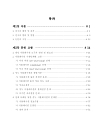
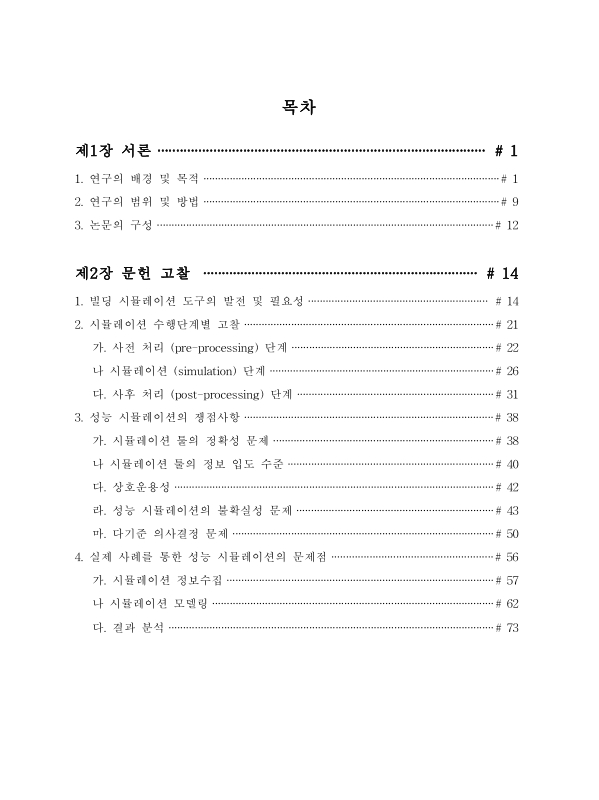
목차
논문요약 15
제1장 서론 17
1. 연구의 배경 및 목적 17
2. 연구의 범위 및 방법 25
3. 논문의 구성 28
제2장 문헌 고찰 30
1. 빌딩 시뮬레이션 도구의 발전 및 필요성 30
2. 시뮬레이션 수행단계별 고찰 37
가. 사전 처리 단계 38
나 시뮬레이션 단계 42
다. 사후 처리 단계 47
3. 성능 시뮬레이션의 쟁점사항 54
가. 시뮬레이션 툴의 정확성 문제 54
나 시뮬레이션 툴의 정보 입도 수준 56
다. 상호운용성 58
라. 성능 시뮬레이션의 불확실성 문제 59
마. 다기준 의사결정 문제 66
4. 실제 사례를 통한 성능 시뮬레이션의 문제점 72
가. 시뮬레이션 정보수집 73
나. 시뮬레이션 모델링 78
다. 결과 분석 89
제3장 시뮬레이션 입력정보의 불확실성 93
1. BIM to BEM 상호운용성 93
2. 데이터 중심의 BIM to BEM 102
가. 미들웨어 형태의 반자동 인터페이스 개발의 필요성 105
나. 인터페이스 개발 108
다. 개발된 인터페이스를 이용한 에너지 성능 사례 분석 116
라. 데이터 중심의 BIM to BEM의 문제점 124
3. 프로세스 중심의 BIM to BEM 128
가. 웹 기반 프로세스 모델을 이용한 에너지 시뮬레이션 129
나. WWW + BPM + 에너지 모델링 137
제4장 몬테카를로 시뮬레이션 146
1. 확률적 사후 처리 방법 146
가. 불확실성 분석의 필요성 146
나. 불확실성 분석의 프로세스 150
2. 샘플링 방법과 모집단 추정방법 153
가. 샘플링 방법 (sampling method) 154
나. 모수적 vs. 비모수적 방법 159
다. 시뮬레이션 모델 및 입력변수 160
라. 민감도 분석 162
마. 준 랜덤 추출 방법의 검증 165
바. 통계적 추정 (모수적 vs. 비모수적) 170
3. 사례분석 1: 최적의 외피 설계 대안 결정 175
가. 대상 건물 및 시뮬레이션 모델 175
나. 외피 설계 대안 및 불확실한 입력변수 177
다. 몬테카를로 시뮬레이션 및 수행 결과 179
4. 사례분석 2: HVAC 시스템 대안 결정 185
가. 대상 건물 및 시뮬레이션 모델 185
나. 불확실한 입력변수 186
다. 민감도 분석 187
라. 불확실성 전파 및 결과 분석 191
제5장 확률적 에뮬레이터 모델개발과 최적설계 194
1. 확률적 에뮬레이터 정의 및 구현 방법 196
2. 확률적 에뮬레이터 및 최적설계를 위한 시뮬레이션 모델 202
3. 확률적 에뮬레이터 구축 및 검증 206
가. 훈련데이터 (training data-set) 수집 206
나. 가우시안 프로세스 회귀모델 208
다. 확률적 에뮬레이터 검증 및 불확실성 분석 215
4. 확률적 최적설계 219
가. 확률적 최적설계의 구현 219
나. 최적화 결과 및 검증 225
제6장 베이지안 의사결정 231
1. 베이지안 의사결정 및 추론 방법의 소개 231
가. 베이지안 의사결정 231
나. MCMC (Markov Chain Monte Carlo) 233
2. HVAC 시스템 대안 결정을 위한 베이지안 의사결정 235
3. 베이지안 추론 결과 243
제7장 결론 248
부록 253
〈부록 1〉 불확실한 입력변수 선정 및 민감도 분석에 따른 우선순위 결과 253
참고문헌 264
ABSTRACT 284
그림 2-1. 빌딩 시뮬레이션 도구의 수학적 모사 31
그림 2-2. 빌딩 시뮬레이션 툴의 발전 32
그림 2-3. 빌딩 시뮬레이션 구조 (입력, 수학적 모델, 출력) 33
그림 2-4. 건물 전체 생애주기 동안 의사결정 효용과의 관계 35
그림 2-5. 시뮬레이션 성능 평가 프로세스 37
그림 2-6. 사전 처리 단계에서의 빌딩 시뮬레이션 툴의 프로세스 (DAE:Differential Algebraic Equation) 41
그림 2-7. 건물 에너지 성능 평가 방법이 지녀야 할 특성 44
그림 2-8. 맥락인식 증강현실을 이용한 동적 정보 제공 프로세스 48
그림 2-9. 맥락인식 증강현실 결과 49
그림 2-10. 핑퐁과 어니온 접근 방법 51
그림 2-11. 인과적 방식과 비인과적 방식 52
그림 2-12. 정보 수준과 시뮬레이션 오류의 상관관계 58
그림 2-13. 모델링과 시뮬레이션 프로세스 60
그림 2-14. 결정적 접근과 확률적 접근 64
그림 2-15. 시뮬레이션 프로세스 동안 의사결정 프로세스 67
그림 2-16. 계층분석적 의사결정방법의 표준 계층 70
그림 2-17. K 본사 사옥 – 전체 건물 3D 형상 72
그림 2-18. 시뮬레이션 툴을 이용한 건물 형상 모델링 과정 78
그림 2-19. 본관동 모델링 79
그림 2-20. 연구동 모델링 79
그림 2-21. 교육동 모델링 80
그림 2-22. 생활관 모델링 80
그림 2-23. Revit을 이용한 건물 형상 모델링 (교육동) 82
그림 2-24. DesignBuilder을 이용한 건물 형상 모델링 83
그림 2-25. EnergyPlus모델 (OpenStudio) 85
그림 2-26. EnergyPlus 모델의 시스템 계통도 86
그림 2-27. 본관동 시뮬레이션 결과 89
그림 2-28. 교육동 시뮬레이션 결과 89
그림 2-29. 연구동 시뮬레이션 결과 90
그림 2-30. 생활관 시뮬레이션 결과 90
그림 3-1. 통합 정보 환경 (BIM 이전 vs.BIM 이후) 94
그림 3-2. BIM to BEM 상호운용성을 위한 인터페이스 96
그림 3-3. 통합 프로세스 성능평가의 접근 방법 99
그림 3-4. 데이터 중심 정보 교환 방법 102
그림 3-5. 인터페이스 입출력 구조 (IFC → IDF) 108
그림 3-6. IfcRelSpaceBoundary의 위상체계 111
그림 3-7. IfcSite의 위상체계 112
그림 3-8. IfcMaterialLayerSet의 위상체계 114
그림 3-9. 인터페이스 프로그램을 이용한 형상 모델 전환 118
그림 3-10. 인터페이스 프로그램을 이용한 에너지 해석 결과 122
그림 3-11. 설계과정에서의 건물에너지 시뮬레이션 활용 126
그림 3-12. 웹 기반 프로세스 에너지 해석 모델 132
그림 3-13. 웹 기반 프로세스 모델을 이용한 두 영역의 상호운용 136
그림 3-14. 프로세스 모델의 서버/클라이언트 구조 137
그림 3-15. 작업흐름과 웹을 통한 정보교환 방법 138
그림 3-16. 건물 형상 정보 입력 예 139
그림 3-17. 에너지 해석 프로그램 정보 입력 예 140
그림 3-18. 스케쥴 정보 입력 예 141
그림 3-19. 실내 발열 및 자재 정보 입력 예 143
그림 3-20. HVAC 시스템 입력 정보 예 143
그림 3-21. 하부 프로세스의 BPM 코딩 화면 예 (건물 형상 정보) 144
그림 4-1. 건물 에너지 해석의 불확실성 147
그림 4-2. 불확실성의 특징 149
그림 4-3. 일반적인 불확실성 분석 절차 153
그림 4-4. 샘플링 방법의 상호 비교 159
그림 4-5. 시뮬레이션 모델 161
그림 4-6. 선별 방법 (Screeningmethod) 결과 165
그림 4-7. 군집 분석 결과 167
그림 4-8. 준 랜덤 추출방법의 검증 169
그림 4-9. 난방 에너지의 확률 밀도 함수 173
그림 4-10. 냉방 에너지의 확률 밀도 함수 174
그림 4-11. 시뮬레이션 모델 176
그림 4-12. 누적 확률 밀도 함수를 이용한 난방 에너지 사용량 비교 181
그림 4-13. 누적 확률 밀도 함수를 이용한 냉방 에너지 사용량 비교 182
그림 4-14. 누적 확률 밀도 함수를 이용한 냉/난방 에너지 사용량 비교 184
그림 4-15. EnergyPlus 모델 186
그림 4-16. Morris 분석 결과 190
그림 4-17. 대안 별 불확실성 분석 결과 192
그림 5-1. 시뮬레이션 모델 202
그림 5-2. 정규분포모형을 이용한 모수 추정 결과 208
그림 5-3. MAP와 MCMC을 이용한 미지파라미터 추정 결과 212
그림 5-4. MAP와 MCMC을 이용한 미지파라미터 추정 결과 214
그림 5-5. 누적확률밀도함수를 이용한 EnergyPlus와 가우시안 프로세스 회귀모델 결과의 비교 218
그림 5-6. 결정적 최적설계와 확률적 최적설계의 비교 219
그림 5-7. 확률적 최적설계 프로세스(가우시안 프로세스 회귀 모델과 + 유전자 알고리즘) 223
그림 5-8. 확률적 최적해 결과 (지배 개체해 vs. 피지배 개체해) 227
그림 5-9. 지배 파레토 개체 집합 (13개) 228
그림 6-1. 확실등가 방법을 이용한 효용함수 계산 237
그림 6-2. 확률등가방법을 이용한 가중치 계산 237
그림 6-3. 의사결정자 3의 곡선 접합 결과 241
그림 6-4. 미지 파라미터의 사후분포 결과 245
그림 6-5. 베이지안 추론을 이용한 기대 효용 결과 246
그림 6-6. 기대 효용 결과를 이용한 HVAC 시스템 의사결정 결과 247
최근, 시뮬레이션 모델링은 성능 목적들에 적합한 요구조건들을 확보하기 위해 다양한 전문가들의 지식, 주관적인 경험, 그리고 정보들이 통합된 지속적인 문제 해결 과정 (continuous problem solving process)이다. 이러한 문제 해결 과정은 컴퓨터 전산처리 속도, 뛰어난 해석 알고리즘의 등장, 정보 통합 환경 또는 IT 산업의 발달 등으로 인해 '매뉴얼 또는 경험'에 의한 직관적인 의사결정 환경에서 '컴퓨터 해석 시뮬레이션 툴'을 이용한 객관적이고 투명한 성능예측으로 전환되고 있다. 시뮬레이션 모델은 우선적으로 특정한 소수 전문가들의 '휴리스틱 (Heuristic) 접근' 또는 다수 전문가들의 지식과 데이터 등을 이용하여 동적인 시뮬레이션 프로세스에 따라 요구 조건들 [목적 (objective, goal), 성능지시자 (performance indicator), 그리고 대안 공간 (option space) 등]에 대한 분석 시나리오를 선정해야 된다. 그리고 선정된 분석 시나리오들에 근거하여, 시뮬레이션 수행자들은 시뮬레이션 모델을 완성하고, 유의한 성능 예측 평가를 진행할 수 있다. 이때, 시뮬레이션 기반의 문제 해결은 '성능 목적 또는 경계 조건'에 의거 (분석 시나리오 만드는 과정임)하여 유의한 모델을 완성하는데 있어, 제한된 시간과 비용 내에 분산된 도메인 영역의 정보 환경을 결합하는 과정을 요구한다. 그리고 시뮬레이션 툴은 상기한 모델링뿐만 아니라, 올바른 예측 결과 및 대안들의 의사결정을 위해 신뢰성 있는 사후처리과정 (post-processing)이 필요하다. 환언하면, 시뮬레이션 기반의 문제해결은 분석 시나리오에 따른 모델링 과정에서 의사결정까지의 연속적인 과정이며, 이는 합리적인 문제해결 도구로서의 능력을 갖추어야 함을 의미한다.
본 논문에서는 상기한 시뮬레이션 프로세스 동안 건물 에너지 분석에 대한 합리적인 의사결정 도출을 목적으로 크게 3 단계 ([1] 사전 처리 단계, [2] 시뮬레이션 단계, [3] 사후 처리 단계)로 구분하였으며, 기존 연구 및 문헌들을 참고하여 각 단계의 불확실성 문제점들과 그 해결방법에 대한 본 저자의 노력들을 기술하는 것이 주목적이다. 첫 번째로, 사전 처리는 박사 논문 3장의 내용으로 상이한 도메인 영역들 (예를 들면, 설계자와 에너지 시뮬레이션니스트) 간의 정보 및 지식 교환을 통해 시뮬레이션 입력 정보를 획득하는 단계이다. 위 단계는 성능 목적, 지시자, 분석 대상의 시뮬레이션 입력정보를 결정하는 것으로 다양한 지식과 정보를 유연한 흐름으로 결합함으로써, 손쉬운 시뮬레이션 수행을 유도함에 그 목적이 있다. 이는 지식의 불확실성을 감소하는 단계로 이해될 수 있으며, 본 논문에서는 웹 기반 시뮬레이션 프로세스를 이용한 건물 에너지 모델링 방법을 소개한다. 두 번째로, 시뮬레이션 단계는 에너지 결과를 얻기 위한 시뮬레이션 수행으로 결정적 접근과 확률적 접근으로 크게 구분된다. 본 논문의 4장은 아직도 모델링 입력정보에 남아있는 불확실성 문제들을 해결하기 위한 확률적 사후 처리 방법 (예를 들면, 몬테카를로 시뮬레이션)을 제안하고, 다양한 사례분석을 통해 그 이점 및 단점에 대해 기술한다. 그리고 확률적 사후 처리 방법의 단점을 극복하기 위해, 본 논문의 5장은 가우시안 프로세스를 이용한 확률적 에뮬레이터 모델을 제안하고, 확률적 에뮬레이터 모델의 적용가능성 및 발전 방향에 대해 기술한다. 마지막으로, 사후 처리 단계에서는 본 논문의 6장으로 시뮬레이션 모델을 통해 도출된 성능 결과를 바탕으로 합리적인 대안결정을 유도하기 위해 다기준 의사결정을 실시한다. 특히, 기존 논문 및 문헌들에서 제시한 의사결정 방법의 문제점을 지적하고, 이를 보완하기 위해 확률적 의사결정 및 추정 방법을 적용하였다. 따라서, 본 논문에서는 시뮬레이션 프로세스 동안 건물 에너지 성능평가의 불확실성과 그 문제점, 그리고 해결방안들에 대해 자세히 기술하고자 한다.| 번호 | 참고문헌 | 국회도서관 소장유무 |
|---|---|---|
| 1 | (2011), 빌딩 시뮬레이션의 새로운 동향, 한국건축친환경 설비학회 추계학숨발표대회 논문집, pp.173-176 | 미소장 |
| 2 | (2013), BIM: 건축설계 및 엔지니어링,빌딩스마트협회, ISBN 978-89-6225-000-093540, 기문당 | 미소장 |
| 3 | (2008a), 유전자 알고리즘. 파레토 최적, 환기 시뮬레이션을 정합한 환기 시스템 최적설계. 대한건축학회논문집 제 24권 1호. pp.237-245 | 미소장 |
| 4 | 몬테카를로 방법을 이용한 공동주택 환기 전략의 불확실성 분석 | 소장 |
| 5 | 확률적 모델을 이용한 재실 인원 예측 | 소장 |
| 6 | (2009b), Nodal flow network 시뮬레이션과 공동주택 환기실험의 비교 분석, 대한건축학희논문집 제25권 12호,pp.437-444 | 미소장 |
| 7 | 맥락인식 증강현실 및 제스쳐 패턴 기술의 이중외피 적용 | 소장 |
| 8 | Nodal Flow Network 시뮬레이션 모델의 보정 | 소장 |
| 9 | 재실자 예측과 핑퐁 방법을 통한 환기 시스템 최적제어 시뮬레이션 | 소장 |
| 10 | (2011b), BIM 기반 에너지 성능평가의 상호운용성과 불확실성. 대한건축학회는문집 제27권 6호, pp.247-255 | 미소장 |
| 11 | 패턴 서치 알고리즘과 유전자 알고리즘을 이용한 이중외피 시스템의 최적제어 | 소장 |
| 12 | 몬테카를로 빌딩 시뮬레이션의 샘플링 방법과 모집단 추정 | 소장 |
| 13 | 재실자 반응이 고려된 에이전트 빌딩 에너지 시뮬레이션 | 소장 |
| 14 | 규범적 건물성능 평가방법 | 소장 |
| 15 | BIM 에너지 시뮬레이션 인터페이스 개발과 검증 | 소장 |
| 16 | 설계단계에서 동적 건물 에너지 성능분석의 쟁점들 | 소장 |
| 17 | BIM 기반 시뮬레이션 모델의 상호운용성을 이용한 건물 에너지 성능평가 | 소장 |
| 18 | (1999), 다기준 의사결정론, 세종출판사. | 미소장 |
| 19 | 에너지 관리 공단 (2011), 건축물의 에너지 절약 설계기준 해설서, 국토해양부고시 제2010-1031호 | 미소장 |
| 20 | 이중외피 시스템의 정적 및 동적 제어 전략 | 소장 |
| 21 | Control Levels of a Double-Skin Facade  |
미소장 |
| 22 | (2003), 앞서가는 리더들의 계충분석적 의사결정, 동현출판사 | 미소장 |
| 23 | SAREK, (2004), 설비공학편람, 제 2권 공기조화,대한설비공학회 | 미소장 |
| 24 | (2003), A decision-making tool to support integration of sustainable technologies in refurbishment projects, 8th International IBPSA Conference, Eindhoven, Netherlands, August 11-14,pp.55-62 | 미소장 |
| 25 | ASHRAE, (2004), ASHRAE STANDARD, Ventilation for Acceptable Indoor Air Quality, ANSI/ASHRAE/IESNA Standard 62.1-2004. | 미소장 |
| 26 | ASHRAE, (2007), ASHRAE Standard, Energy Standard for Buildings Except Low-Rise Residential Buildings, ANSI/ASHRAE/ IESNA Standard 90.1-2007 | 미소장 |
| 27 | ASHRAE, (2009), ASHRAE Handbook Fundamentals. Atlanta: American Society of Heating, Refrigerating and Air-Conditioning Engineers, Inc. | 미소장 |
| 28 | (1994), An overview of the COMBINE project [online]. In:ECPPM Conference, Dresden, Germany, 1994. Available from: httpV/erg.ucd.ie/combine/papers.html [Accessed 27 April 2002] | 미소장 |
| 29 | (1995), COMBINE 2, Final Report. Commission of the European Communities, Brussels, Belgium. Available from: http://dcomtarch.gatech>edu/bt/Combine/my_www/docunient.htm | 미소장 |
| 30 | Trends in building simulation |
미소장 |
| 31 | (2004), Simulation for better building design, Building and Environment, Vol. 38, pp.875-877 | 미소장 |
| 32 | Quantification methods of technical building performance |
미소장 |
| 33 | (2009), Building simulation and beyond: technologies that work (almost), College of Architecture lecture, Georgia Institute of Technology, Oct. 29. 2009 | 미소장 |
| 34 | (2006), Managing uncertainty in engineering design using imprecise probabilities and principles of information economics, Ph.D thesis, Georgia Institute of Technology | 미소장 |
| 35 | (2009), “Architect Friendly” : A comparison of ten different building performance simulation tools, Proceedings of the 11th IBPSA Conference, July. 27-30, Glasgow, Scotland, pp. 204-211 | 미소장 |
| 36 | A Survey of Augmented Reality |
미소장 |
| 37 | Recent advances in augmented reality |
미소장 |
| 38 | (2000), Multi-Criteria Decision-Making Process for Buildings, American Institute of Aeronautics and Astronautics Conference, Las Vegas, Nevada, July 24-28,pp. 1-8 | 미소장 |
| 39 | (2001), Acquisition of Building Geometry in the Simulation of Energy Performance. In R. Lamberts et al. (eds). Building Simulation 2001, Proc. intern, conf., Rio de Janeiro, Vol. 1: 305- 311. ISBN 85-901939-2-6. | 미소장 |
| 40 | (2003),Improving building energy performance simulation with software interoperability, Proceedings of the 8th IBPSA Conference, August 11-14, Eindhoven, Netherlands, pp. 87-92 | 미소장 |
| 41 | (2010), BIM that supports life cycle of buildings, BuildingSMART Korea International Forum 2010, Seoul, Korea, April 21. | 미소장 |
| 42 | (1977), Parametric Estimation in Engineering and Science. New York: John Wiley & Sons. | 미소장 |
| 43 | (2005), Performance based international state of the art - pebbu 2nd international sota report. Technical Report 2, CIBdf-Intemational Council for Research and Innovation in Building and Construction—Development Foundation, Rotterdam. | 미소장 |
| 44 | (1966), Manual de Reference du Programme Electre, Note de Synthese et Formaton,No.25, Direction Scientifque SEMA, Paris, France | 미소장 |
| 45 | An Analysis Of Emergency Room Wait Time Issues Via Computer Simulation |
미소장 |
| 46 | (1994), Reliability assessment of electric power systems using Monte Carlo methods, New York: Plenum Press. | 미소장 |
| 47 | BLIS, (2003), Building Lifecycle Interoperable Software - Hompage. BLIS organization. Available from: http://www.blis-project.org | 미소장 |
| 48 | (2012), Calibrating micro-level models with macro-level data using bayesian regression analysis, Proceedings of the 12th IBPSA Conference, November 14-16, Sydney, Australia, pp.641-648 | 미소장 |
| 49 | Adding advanced behavioural models in whole building energy simulation: A study on the total energy impact of manual and automated lighting control |
미소장 |
| 50 | buildingSmart, (2012), http://www.buildingsmart.org/. last reviewed 06/25/2012 | 미소장 |
| 51 | Sensitivity analysis of an environmental model: an application of different analysis methods |
미소장 |
| 52 | Tackling quantitatively large dimensionality problems |
미소장 |
| 53 | (1993), The energy kernel system: From and Content, Conference proc. Building Simulation ‘93, IBPSA, Adelaide, Australia | 미소장 |
| 54 | (1995), ‘The Development of an Intelligent, Integrated Building Design System Within the European COMBINE Project’, Proc. Building Simulation ‘95,444-453, Int. Building Performance Simulation Association, Madison USA | 미소장 |
| 55 | Energy simulation in buildings: overview and BLAST example |
미소장 |
| 56 | (2006), The Impact of the Occupant on Building Energy Simulations, Joint International Conference on Computing and Decision Making in Civil and Building Engineering, Montreal, Canada. | 미소장 |
| 57 | (2010a). Metrics to Assess Design Guidance, submitted to Design Studies. | 미소장 |
| 58 | (2010b), Design Exploration Assessment Methodology: Testing the Guidance of Design Processes,submitted to Journal of Engineering Design.641-648 | 미소장 |
| 59 | (1997), Multicriteria Analysis. Springer-Verlag | 미소장 |
| 60 | CIBSE,(1998), Building Energy and Environment Modelling, CIBSE Application Manual AM 11, CIBSE | 미소장 |
| 61 | Energy analysis of the non-domestic building stock of Greater London |
미소장 |
| 62 | Contrasting the capabilities of building energy performance simulation programs |
미소장 |
| 63 | (1992), Process Modeling, Communications of the ACM Vol.35, no.9,pp.75- 90 | 미소장 |
| 64 | (1989), Genetic algorithms in multimodal function optimization. MS thesis, TCGA Repot No. 89002. University of Alabama | 미소장 |
| 65 | (2000), A fast elitist non-dominated sorting genetic algorithm for multi-objective optimization: NSGA-Ⅱ, Technical Report No. 200001, Kanpur: Indian Institute of Technology Kanpur, India | 미소장 |
| 66 | (1995). Uncertainty analysis in building thermal modeling. International Symposium SAM095. Belgirate, Italy. | 미소장 |
| 67 | (2001), Uncertainty in prediction of thermal comfort in Buildings, Ph.D. thesis, Tu Delft Netherlands. | 미소장 |
| 68 | Analysis of uncertainty in building design evaluations and its implications |
미소장 |
| 69 | (2003),Computational support for the selection of energy saving building components. In: Schellen and van der Spoel, eds. Building simulation '03, 8th international IBPASA conference, 18-21 September, Eindhoven, Netherlands, pp. 1409-1416 | 미소장 |
| 70 | (2004), Computational Support for the Selection of Energy Saving Building Component, Ph.D. thesis, Tu Delft Netherlands | 미소장 |
| 71 | Predicting the performance of an office under climate change: A study of metrics, sensitivity and zonal resolution |
미소장 |
| 72 | (2004), Energy Performance of Buildings; Outline for Harmonised EP Procedures. Final report EU SAVE ENPER project, Task B6. TNO Building and Construction Research, Delft(NL), June 29,2004 (http://www.enper.org) | 미소장 |
| 73 | DOE, (2010a), Building Energy Software Tools Directory [online]. Available from: http://apps1.eere.energy,gov/buildings/tools_directory/Assessed 1 October 2010 | 미소장 |
| 74 | DOE, (2010b). EnergyPlus 6.0 Input/Output Reference: The Encyclopedic Reference to EnergyPlus Input and Output, US Department Of Energy | 미소장 |
| 75 | (2007),A comparative study of the IFC and gbXML informational infrastructures for data exchange in computational design support environments, Proceedings : Building Simulation, pp. 1530-1537 | 미소장 |
| 76 | QUALITY ASSURANCE REVIEWS: HOW THEY DIFFER FROM PEER REVIEWS |
미소장 |
| 77 | Air, contaminant and heat transport models: integration and application |
미소장 |
| 78 | (1987), Hybrid Monte Carlo. Physics Letters, B Vol. 195, no.2, pp.216-222 | 미소장 |
| 79 | Uncertainty and sensitivity decomposition of building energy models |
미소장 |
| 80 | (1969), Non-parametric estimate of multidimensional probability density. Theory Probability and its application, No.l, pp.153-158 | 미소장 |
| 81 | (1999), A modular, loop-based approach to HVAC energy simulation and its implementation in EnergyPlus. Proceedings of the 6th IBPSA Conference,Kyoto, Japan | 미소장 |
| 82 | Additive Utilities with Incomplete Product Sets: Application to Priorities and Assignments |
미소장 |
| 83 | Stanford-Binet and WAIS IQ differences and their implications for adults with intellectual disability (aka mental retardation) |
미소장 |
| 84 | (1998),Development of the CIB Proactive Program on Performance Based Building Codes and Standards. BCE Doc. 98/232, International Council for Research and Innovation in Building and Construction(CIB), Rotterdam. | 미소장 |
| 85 | (2000), Developments in performanceᅳbased building codes and standards, Forest products journal, Vol. 50, No.7, pp. 12-21 | 미소장 |
| 86 | (2006), Sustainable Building Rating Systems Summary, Pacific Northwest National Laboratory | 미소장 |
| 87 | (2003),Coupling building simulation with agent simulation for exploration to environmentally symbiotic architecture, Proceedings of the 8th IBPSA Conference (International Building Performance Simulation Association), August 11一 14, Eindhoven, Netherlands, pp.363- 370 | 미소장 |
| 88 | (1986), Decision theory: an introduction to the mathematics of rationality. Chichester: Ellis Horwood. | 미소장 |
| 89 | 2003. Modelling, making inferences and making decisions: The roles of sensitivity analysis. TOP, V이.11, pp.229-251. | 미소장 |
| 90 | An elementary introduction to Bayesian computing using WinBUGS. |
미소장 |
| 91 | (1995), Markov Chain Monte Carlo-Stochastic Simulation for Bayesian Inference, Chapman and Hall. | 미소장 |
| 92 | gbXML, (2012),http://www.gbXML.org/. last reviewed, 06/25/2012 | 미소장 |
| 93 | (1995), Markov Chain Monte Carlo in Pratice, Chapman and Hall. | 미소장 |
| 94 | (1987), Genetic algorithm with sharing for multi-modal function optimization. Genetic Algorithms and Their Applications : Proceedings of the Second ICGA, Lawrence Erlbaum Associates, Hillsdale, NJ, pp.41-49 | 미소장 |
| 95 | Bayes Linear Calibrated Prediction for Complex Systems |
미소장 |
| 96 | (2007),A Computer System for Multi-Criteria Comparative Evaluation of Building Envelopes,Proceedings of the 10 IBPSA Conference, Sep.3-6, Beijing, China, pp. 1895-1902 | 미소장 |
| 97 | Outpatient clinic scheduling - a simulation approach |
미소장 |
| 98 | PRIME Decisions: An Interactive Tool for Value Tree Analysis |
미소장 |
| 99 | (1998), Removing barriers to the use of simulation in the building design professions. Thesis (PhD). University of Strathclyde, Department of Mechanical Engineering, UK. | 미소장 |
| 100 | (2005),Improving the data available to simulation programs, Proceedings of the 9th IBPSA Conference, Aug. 15- 18, Montreal, Canada, pp. 373-380 | 미소장 |
| 101 | Monte Carlo Sampling Methods Using Markov Chains and Their Applications |
미소장 |
| 102 | (2007), Application of Sensitivity Analysis in Design of Low Energy Office Buildings, DCE Technical Report, Aalborg University | 미소장 |
| 103 | (2003),Latin hypercube sampling and propagation of uncertainty in analyses of complex systems. Reliability Engineering and System Safety No. 81, pp. 23- 69 | 미소장 |
| 104 | (1999),A comparison of coupled and de-coupled solutions for temperature and airflow in a building, ASHRAE Transactions,Vol. 105,part2 | 미소장 |
| 105 | (2000). Building systems and indoor environment: simulation for design decision support. Architecture (International Conference on Design and Decision Support Systems in Architecture & Urban Planning), pp. 177-189. Eindhoven University of Technology. | 미소장 |
| 106 | (2004), Towards more effective use of building performance simulation in design, Developments in Design & Decision Support Systems in Architecture and Urban Planning, edited by Jos P. van Leeuwen and Harry J. P. Timmermans, Eindhoven University of Technology, Department of Architecture, Building and Planning, Eindhoven, the Netherlands. | 미소장 |
| 107 | (2011), Building performance simulation for design and operation. Spon Press, New York USA | 미소장 |
| 108 | (2011),Bayesian calibration of building energy models for energy retro fit decision-making under uncertainty, Ph.D. thesis, Georgia Institute of Technology, Atlanta, GA. USA | 미소장 |
| 109 | Gaussian process modeling for measurement and verification of building energy savings |
미소장 |
| 110 | (2000), The use og performance-based simulation tools for building design and evaluation - a Singapore Perspective, Building and Environment, Vol.35, pp.709-736 | 미소장 |
| 111 | (2009), Uncertainty and sensitivity analysis in building performance simulation for decision support and design optimization". PhD thesis, Technische Universiteit Eindhoven. | 미소장 |
| 112 | (1975),Adaptation in natural and artificial systems. Ann Arbor: The University of Michigan Press | 미소장 |
| 113 | (2009), Risk-conscious design of off-grid solar energy houses, Ph.D. thesis, Georgia Institute of Technology. | 미소장 |
| 114 | Analysis of uncertainty in natural ventilation predictions of high-rise apartment buildings |
미소장 |
| 115 | IBPSA, (1987-2011),Proceedings of the IBPSA(International Building Performance Simulation Association) conference ('87. '91, '93, *95, '97, '99, '01, '03, .05, '07,'09, ‘11) | 미소장 |
| 116 | International Alliance for Interoperability, (2002), International IAI web site [online]. Available from: http://iaiweb,lbl.gov/ [Aceessed 04 May 2002] | 미소장 |
| 117 | International Energy Agency (IEA), (2002), World energy outlook:Energy and Poverty | 미소장 |
| 118 | ISO 13790, (2008), Energy Performance of Buildings - Calculation of Energy Use for Space Heating and Cooling. | 미소장 |
| 119 | International Energy Agency building energy simulation test (BESTEST) and diagnostic method |
미소장 |
| 120 | (2001), BSPro COM-Sever interoperability between software tools using industry foundation classes, Proceeding of the 7th IBPSA Conference, 13-15 August, Rio de Janeiro, Brazil, pp. 747-754 | 미소장 |
| 121 | (2004), Future of Green Building Credit System in Jeopardy, a report by Platts (http://www.enn.com/aff.html?id=40. accessed on July 2006) | 미소장 |
| 122 | (1993),Decisions with Multiple Objectives - Preferences and Value Tradeoffs. Cambridge University Press, New York. | 미소장 |
| 123 | p,p′-DDE bioaccumulation in female sea lions of the California Channel Islands |
미소장 |
| 124 | Pro-Creation—Haraway's “Regeneration” and the Postcolonial Cyborg Body |
미소장 |
| 125 | Business Process Change: A Study of Methodologies, Techniques, and Tools |
미소장 |
| 126 | (2009), Ventilation operation in hospital isolation room: a multi-criterion assessment considering organization behaviour, Proceedings of the 11th IBPSA Conference, July 27-30, Glasgow, Scotland, pp. 1322-1329 | 미소장 |
| 127 | (2009), Multi-criteria Optimal Design of Residential Ventilation Systems, Proceedings of the 11th IBPSA Conference (International Building Performance Simulation Association), July 27-30, Glasgow, Scotland, pp.1806-1813 | 미소장 |
| 128 | (2011), Web-Enabled Augmented Reality for a Double-Skin System, Proceedings of the 12th IBPSA Conference (International Building Performance Simulation Association), November 14-16, Sydney, Australia, pp.855-862 | 미소장 |
| 129 | Comparison of the simplified methods of the ISO 13790 standard and detailed modelling programs in a regulatory context |
미소장 |
| 130 | (2001), Heating, Cooling, Lighting - Design Methods for Architects, John Wiley and Sons | 미소장 |
| 131 | . (2012), Bayesian calibration for transient energy simulation model, The 1st Asia conference of International Building Performance simulation Association, November 25-27, Shanghai, China | 미소장 |
| 132 | 1992 |
미소장 |
| 133 | (1998), Uniform random number generators. In Proceedings of the 1998 Winter Simulation Conference, 97-104: IEEE Press. | 미소장 |
| 134 | A dynamic modelling strategy for Bayesian computer model emulation |
미소장 |
| 135 | (2001), Practical application of uncertainty analysis. Energy and Buildings Vol.33, pp. 219-227 | 미소장 |
| 136 | (2002), Quantifying the effects of uncertainty in building simulation, Ph.D. thesis. University of Strathclyde, Scotland. | 미소장 |
| 137 | (2009), Comparison of sampling techniques on the performance of monte-carlo based sensitivity analysis. Proceedings of the 11th IBPSA Conference , July 27-30,Glasgow, Scotland, pp. 992-999 | 미소장 |
| 138 | (1999),“The architecture of S2” , in Proc. 6th Int. IBPSA Conference Building Simulation ’99 in Kyoto, International Building Performance Simulation Association | 미소장 |
| 139 | (2003), Computational Building Models : Theme and Four Variations, Proceedings of the 8th IBPSA Conference, Aug. 11-14,Eindhoven, Netherlands, pp. 3-17 | 미소장 |
| 140 | (2005), Toward a unified information space for the specification of building performance simulation results, Building simulation '05, 9th international IBPSA conference, 15-18 August, Montreal, Canada, pp. 671-676 | 미소장 |
| 141 | (2011), The human dimension of building performance simulation, Proceedings of the 12th IBPSA Conference (International Building Performance Simulation Association), November 14-16, Sydney,Australia, pp. 16-33 | 미소장 |
| 142 | (1995). How to overcome HVAC simulation obstacles. Building Simulation, Fourth International Conference Proceedings, IBPSA. | 미소장 |
| 143 | (2007). Building energy performance simulation tools: a life-cycle and interoperable perspective, Stanford, Califonia: Center for Integrated Facility Engineering. | 미소장 |
| 144 | (2004), Advance Building Simulation,Spon Press. | 미소장 |
| 145 | A new paradigm for Human-Building Interaction: the use of CFD and Augmented Reality |
미소장 |
| 146 | McGraw Hill Construction, (2007),Greem BIM SmartMarket Report | 미소장 |
| 147 | McGraw Hill Construction, (2010),Greem BIM SmartMarket Report | 미소장 |
| 148 | (1999),Embedding simulation within the energy sector business. Proceedings of Building Simulation 99,Sixth International IBPSA conference, Kyoto, September 1999, pp 262-268. | 미소장 |
| 149 | A Comparison of Three Methods for Selecting Values of Input Variables in the Analysis of Output from a Computer Code |
미소장 |
| 150 | (1953), Equations of state calculations by fast computing machines. J. Chem. Phys., pp. 1087-1092 | 미소장 |
| 151 | Some Methods for Nonlinear Multi-objective Optimization |
미소장 |
| 152 | A Taxonomy of Mixed Reality Visual Displays |
미소장 |
| 153 | (1994), Augmented reality: a class of displays on the reality-virtuality continuum, SPIE Proc. : Telemanipulator and Telepresence Technologies,2351m,pp.282-292 | 미소장 |
| 154 | (1969), Executive Decisions and Operations Research, Prentice-Hall, INC. Englewood Cliffs, NJ, USA | 미소장 |
| 155 | (2007), Application of probabilistic simulation and bayesian decision theory in the selection of mold remediation actions, Proceedings of the 10th IBPSA Conference, Sep.3 -6,Beijing, China, pp. 912-918 | 미소장 |
| 156 | (2003), Towards the integration of simulation into the building design process. Thesis(PhD). University of Strathclyde, Energy System Research Unit ESRU,UK. | 미소장 |
| 157 | Factorial Sampling Plans for Preliminary Computational Experiments |
미소장 |
| 158 | (2003), ArDot a tool to optimise environmental design of building, IRUSE (Informatics Research Unit for Sustainable Engineering), Department of Civil & Environmental Engineering, National University of Ireland Cork, Ireland. | 미소장 |
| 159 | (1996), Bayesian Learning for Neural Networks. Springer, New York. Lecture Notes in Statistics 118. | 미소장 |
| 160 | In E-Business, the Value of Every Transaction in Increases |
미소장 |
| 161 | New directions in integrated regional energy planning |
미소장 |
| 162 | (2004). Probabilistic sensitivity analysis of complex models: a bayesian approach. J. R. Statist. Soc. Ser. B 66,pp.751-769. | 미소장 |
| 163 | (2011), Process-driven BIM-based optimal design using integration of EnergyPlus, genetic algorithm, and pareto optimality, Proceedings of the 12th IBPSA Conference (International Building Performance Simulation Association), November 14-16,Sydney, Australia, pp.894-901 | 미소장 |
| 164 | (2006) Presentation fo r Engineers : Overview of Simulation, IBPSA-USA (International Building Performance Simulation Association USA Chapter) Conference, August 2 -4 , Cambridge, Massachusetts, USA | 미소장 |
| 165 | (1999), Simulation of business processes. The American Behavioral Scientist, 42, pp.1551-1576. | 미소장 |
| 166 | Application of multi-criteria decision making to sustainable energy planning-A review |
미소장 |
| 167 | (2003), Communication Building Simulation Outputs to Users, Proceedings of the 8th IBPSA Conference, Aug. 11-14, Eindhoven, Netherlands, pp. 1053-1060 | 미소장 |
| 168 | 200-MeV bremsstrahlung tagged photon beams at Sendai |
미소장 |
| 169 | (2001), Daylight availability and manual lighting control in office buildings - Simulation studies and analysis of measurements, Ph.D. thesis, Technical University of Karlsruhe, Germany, October 2001 | 미소장 |
| 170 | A high-resolution domestic building occupancy model for energy demand simulations |
미소장 |
| 171 | (2005), The trade space exploration paradigm. INCOSE 2005 International Symposium. Rochester, New York. | 미소장 |
| 172 | (1980), The Analytic Hierarchy Process, McGraw-Hill, New York, NY, USA | 미소장 |
| 173 | (2000), Sensitivity Analysis, John Wiley & Sons, Ltd, New York. | 미소장 |
| 174 | Sensitivity Analysis in Practice: A Guide to Assessing Scientific Models by A. Saltelli; |
미소장 |
| 175 | (2000), Analytical group decision making in natural resources: methodology and application. Forest Science pp.62-75. | 미소장 |
| 176 | Do LEED-certified buildings save energy? Not really… |
미소장 |
| 177 | (1985), Multi objective optimization with vector evaluated genetic algorithm. Proceedings of the First International Conference on Genetic Algorithms, Hillsdale, New Jersey, pp.93-100 | 미소장 |
| 178 | Building information model based energy/exergy performance assessment in early design stages |
미소장 |
| 179 | Performance-based building and innovation: balancing client and industry needs |
미소장 |
| 180 | (1986), Density estimation for statistics and data analysis, Chapman and Hall, New York | 미소장 |
| 181 | (2011), SimLab Documentation web site, Avaliable from:http://simlab.jrc.ec.europa.eu/dQcs/html/uniform.html | 미소장 |
| 182 | (1998), On quasi-Monte Carlo integrations, Mathematics and Computers in Simulation, Vol. 47, pp. 103-112 | 미소장 |
| 183 | Lessons Learned by Closing Windows |
미소장 |
| 184 | (2003). WinBUGS User Manual, Version 1.4. Medical Research Council Biostatistics Unit, Cambridge. | 미소장 |
| 185 | (2006), Mechanical and electrical equipment for buildings, John Wiley & Sons, Inc. | 미소장 |
| 186 | (2001), M ulti-criteria Decision-making MCDM-23, a method for specifying and prioritising criteria and goals in design (Draft), International Energy Agency Solar Heating and Cooling, pp.4-11 | 미소장 |
| 187 | (2008), Integrated Data and Process Control During BIM Design, Master's Thesis, Technical University of Denmark | 미소장 |
| 188 | An examination of the effectiveness of multi-dimensional decision-making methods: A decision-making paradox |
미소장 |
| 189 | (2000), Multi-criteria decision making methods: a comparative study, Kluwer Academic Publishers, Dordrecht | 미소장 |
| 190 | (1997), A hybrid monitoring-modeling procedure for analyzing the performance of large central chilling plants. IBPSA Conference Proceedings, Prague, Czech Republic, Sept. 13-15. | 미소장 |
| 191 | UNEP, Buildings - Investing in energy and resource efficiency, UNEP. (2011), Available from: http://www.unep.Org/greeneconomy/Portals/88/documents/ger/9.0.Buildings.pdf (assessed 27.12.12) | 미소장 |
| 192 | (2007), Mitigating C02 emissions from energy use in the world's buildings. Building Research & Information Vol.35, pp.379-398 | 미소장 |
| 193 | US Green Building Council, (2010), LEED Rating System, online version 3.0, Washington, DC. | 미소장 |
| 194 | (2011), Bayesian modeling with Gaussian processes using the MATLAB toolbox GPstuff. submitted. | 미소장 |
| 195 | Multiobjective Evolutionary Algorithms: Analyzing the State-of-the-Art |
미소장 |
| 196 | (1947), Theory of Games and Economic Behavior. Princeton University Press, Princeton, New Jersey | 미소장 |
| 197 | Applying multi-objective genetic algorithms in green building design optimization |
미소장 |
| 198 | (2004), Simulation-based building energy optimization. Mechanical Engineering. Berkeley, California, University of California. Doctor of Philosophy: 989-999. | 미소장 |
| 199 | Modelica-based modelling and simulation to support research and development in building energy and control systems |
미소장 |
| 200 | (2004), Outline for a general framework for the assessment of innovative ventilation systems, RESHYVENT report | 미소장 |
| 201 | Optimization of building thermal design and control by multi-criterion genetic algorithm |
미소장 |
| 202 | (1998), A User’s Guide to LHS: Sandias Latin Hypercube Sampling Software, Albuquerque, NM, Sandia National Laboratories. | 미소장 |
| 203 | (1973), Compromise Programming, Multiple Criteria Decision Making, University of South Caroline Press. USA. | 미소장 |
| 204 | (2009), HVAC design informed by organization simulation, 17lh International IBPSA Conference Glasgow, Scotland July 27-30, pp.2198-2203 | 미소장 |
*표시는 필수 입력사항입니다.
| 전화번호 |
|---|
| 기사명 | 저자명 | 페이지 | 원문 | 기사목차 |
|---|
| 번호 | 발행일자 | 권호명 | 제본정보 | 자료실 | 원문 | 신청 페이지 |
|---|
도서위치안내: / 서가번호:

우편복사 목록담기를 완료하였습니다.
*표시는 필수 입력사항입니다.
저장 되었습니다.
