
 대표어
대표어
권호기사보기
| 기사명 | 저자명 | 페이지 | 원문 | 기사목차 |
|---|
결과 내 검색
동의어 포함
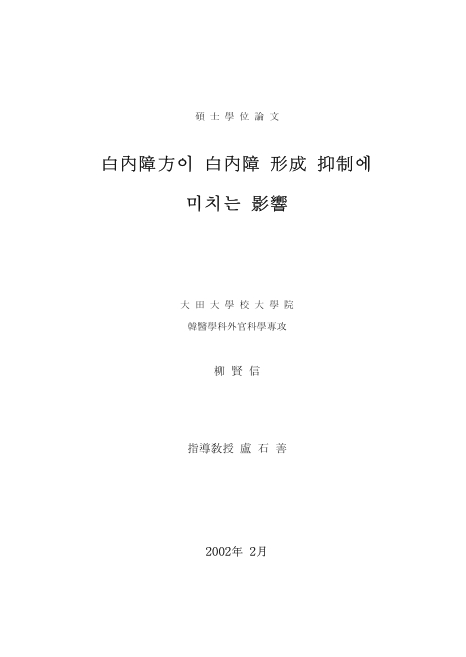
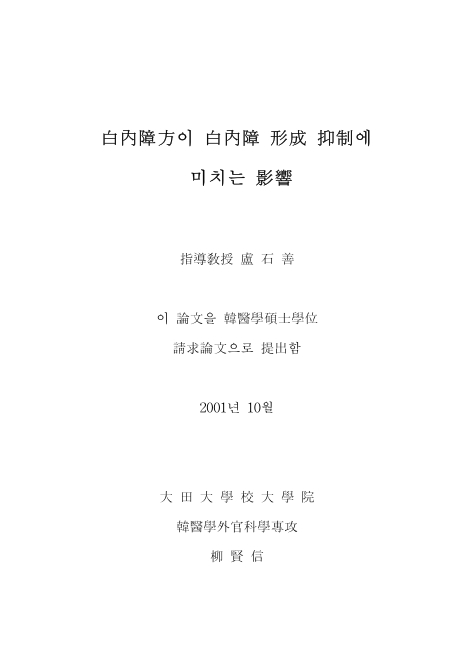
표제지
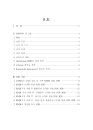
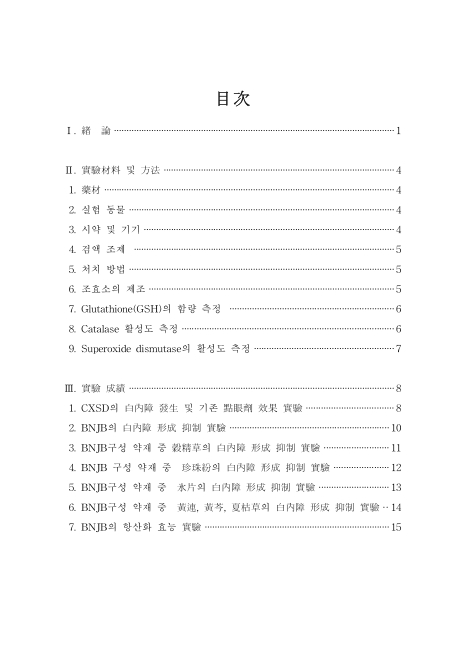
목차
I. 緖論 6
II. 實驗材料 및 方法 9
1. 藥材 9
2. 실험 동물 9
3. 시약 및 기기 9
4. 검액 조제 10
5. 처치 방법 10
6. 조효소의 제조 10
7. Glutathione(GSH)의 함량 측정 11
8. Catalase 활성도 측정 11
9. Superoxide dismutase의 활성도 측정 12
III. 實驗 成績 13
1. CXSD의 白內障 發生 및 기존 點眼劑 效果 實驗 13
2. BNJB의 白內障 形成 抑制 實驗 15
3. BNJB구성 약재 중 穀精草의 白內障 形成 抑制 實驗 16
4. BNJB 구성 약재 중 珍珠紛의 白內障 形成 抑制 實驗 17
5. BNJB구성 약재 중 氷片의 白內障 形成 抑制 實驗 18
6. BNJB구성 약재 중 黃連, 黃芩, 夏枯草의 白內障 形成 抑制 實驗 19
7. BNJB의 항산화 효능 實驗 20
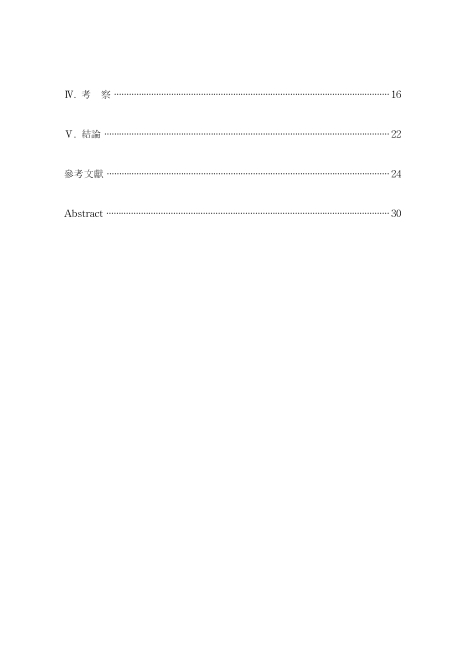
IV. 考察 21
V. 結論 27
參考文獻 29
Abstract 35
Fig.1. Cataract formation in CXSD mouse after 10 weeks. a) A non-cataractous eye in 10 weeks. b) A cataractous eye in 10 weeks 13
Fig.2. 카다린 제제의 백내장 지연 효과. Negative control, (O); 카다린 제제(●). 14
Fig.3. 복합 처방된 점안제의 白內障 지연 효과.Negative control, (O); BNJB(●). 15
Fig.4. 穀精草가 갖는 白內障 억제 효과.Negative control, (O); 穀精草점안제(●). 16
Fig.5. 珍珠紛이 갖는 白內障 억제 효과.Negative control, (O); 珍珠紛점안제(●). 17
Fig.6. 氷片이 갖는 白內障 억제 효과.Negative control, (O); 氷片점안제(●). 18
Fig.7. 黃連이 갖는 白內障 억제 효과.Negative control, (O); 黃連점안제(●). 19
Fig.8. Anti-oxidant activities of BNJB. Three major enzymes that involved in the oxidation process were selected. a) GSH, b) SOD, and c) Catalase. 20
This study was carried out to prove the therapeutic effects of BNJB on the catract. The objects of this study were CXSD mice that spontaneously eye rupture occurred from three weeks after birth and eventually generate cataract within 12 weeks. We applied eyewash made from BNJB to eyes of CXSD mice twice in a day till all the eyes of the negative control showed up the symptoms of a cataract and recorded the increasing patterns of cataractous eyes. To explained the therapeutic effects of the BNJB, We carried out the ex vivo experiment which cultivating eyeballs were offered oxidative stress condition by 0.03 % H₂O₂ during three days. Total co-enzyme was extracted from the cultured eyeballs and used to measure activities of catalase, superoxide dismutase, glutathion S-transferase and content of GSH.
The results were obtained as follows:
1. When we treated the catalin to CXSD mouse as a positive control, it represented the delaying effect for cataract generation for 2-3 days compare with negative control. But it seems that it doesn't appropriate as a therapeutic, or delaying agent.
2. In the experimental BNJB group, Cataract formation rate was dramatically reduced by BNJB. This rate was much lower than positive group and means our new formulation for the therapy of cataract has a good potential.
3. In the analysis of individual medicines of BNJB, Gok-Jeong-Cho, Hwang-Lyun, Ha-Go-Cho, and Mok-Jeok-Cho didn't have a major effect of BNJB.
4. The cataract formation rate was repressed by Bing-Pyun and Jin-Joo-Boon about 40 % and 50 %, respectively. We can presume that the anti-cataract effect of BNJB was caused by these two medicines.
5. When we surveyed the anti-oxidant activities of BNJB, enzyme activities of GSH, SOD, and Catalase increased about 10%, 30%, and 2.5 folds, respectively.*표시는 필수 입력사항입니다.
| 전화번호 |
|---|
| 기사명 | 저자명 | 페이지 | 원문 | 기사목차 |
|---|
| 번호 | 발행일자 | 권호명 | 제본정보 | 자료실 | 원문 | 신청 페이지 |
|---|
도서위치안내: / 서가번호:

우편복사 목록담기를 완료하였습니다.
*표시는 필수 입력사항입니다.
저장 되었습니다.
