
 대표어
대표어
권호기사보기
| 기사명 | 저자명 | 페이지 | 원문 | 기사목차 |
|---|
결과 내 검색
동의어 포함
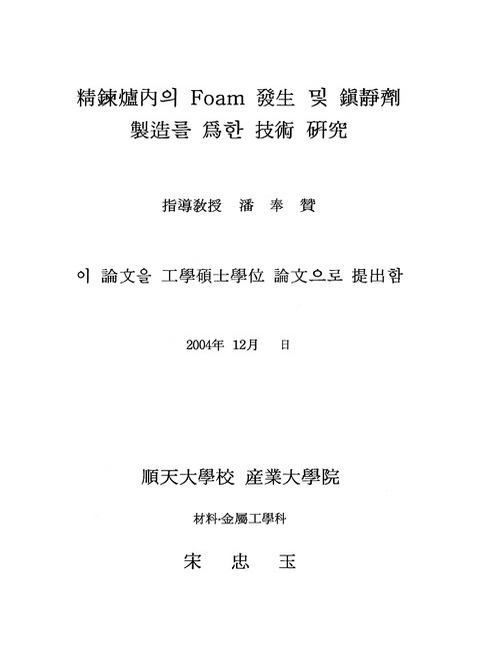
표제지
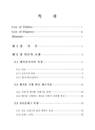
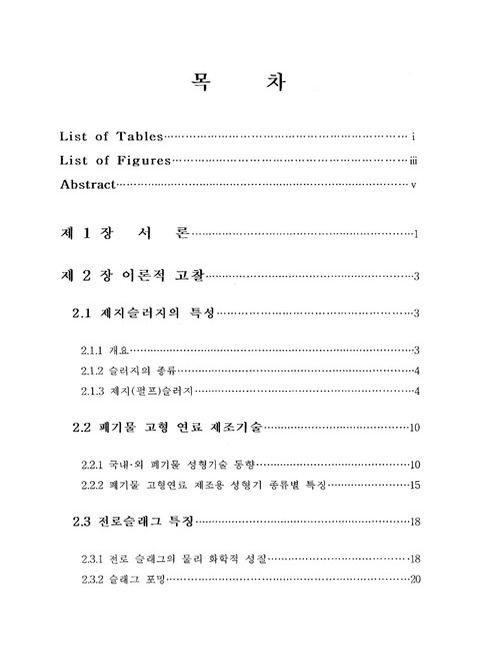
목차
Abstract 11
제1장 서론 13
제2장 이론적 고찰 15
2.1. 제지슬러지의 특성 15
2.1.1. 개요 15
2.1.2. 슬러지의 종류 16
2.1.3. 제지(펄프)슬러지 16
2.2. 폐기물 고형 연료 제조기술 22
2.2.1. 국내 · 외 폐기물 성형기술 동향 22
2.2.2. 페기물 고형연료 제조용 성형기 종류별 특징 27
2.3. 전로슬래그 특징 30
2.3.1. 전로 슬래그의 물리 화학적 성질 30
2.3.2. 슬래그 포밍 32
2.3.3. 전로의 포밍 진정제 및 억제제 42
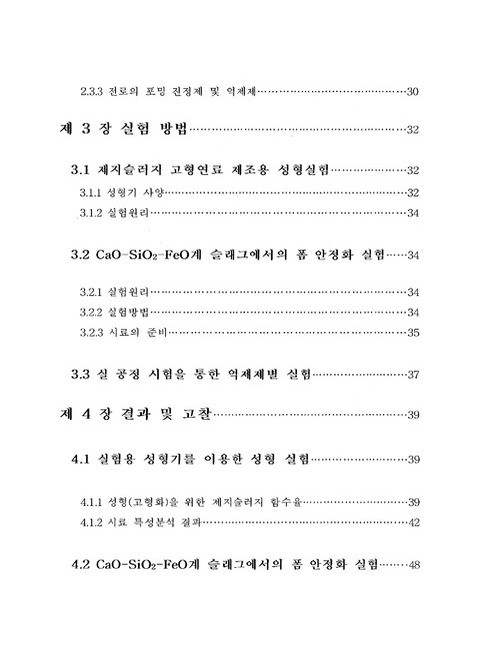
제3장 실험방법 44
3.1. 제지슬러지 고형연료 제조용 성형 실험 44
3.1.1. 성형기 사양 44
3.1.2. 시료 특성분석 기기 46
3.2. CaO-SiO₂-FeO계 슬래그에서의 폼 안정화 실험 46
3.2.1. 실험원리 46
3.2.2. 실험방법 46
3.2.3. 시료의 준비 47
3.3. 실 공정 시험을 통한 억제제별 실험 49
제4장 결과 및 고찰 51
4.1. 실험용 성형기를 이용한 성형 실험 51
4.1.1. 제지슬러지 함수율에 따른 성형효과 51
4.1.2. 시료 특성분석 54
4.2. CaO-SiO₂-FeO계 슬래그에서의 폼 안정화 실험 60
4.2.1. 염기도 변화에 따른 슬래그 포밍 특성 60
4.2.2. 슬래그 중 FeO의 농도변화에 따른 폼 안정성 67
4.2.3. 반응 슬래그 중 Fe³+/Fe²+ 비율 변화에 의한 폼의 안정성 (이미지참조) 83
4.3. 실 공정 시험을 통한 억제제별 실험 87
4.3.1. 알루미늄 드로스에 의한 폼 제어 87
4.3.2. 코크스 및 겨에 의한 포밍 제어 88
4.3.3. 드로스 투입 시 용선 성분의 변화 92
4.3.4. 제지슬러지 진정제에 의한 폼 제어 97
제5장 결론 98
참고문헌 101
감사의글 103
Fig. 2.1. Slag foaming mechanism in the slag LD. 38
Fig. 2.2. Effect of the SiO₂/Al₂O₃ ratio on the foaming index. 40
Fig. 2.3. Effect of increasing Al₂O₃ on the foaming index. 41
Fig. 3.1. Extruder type foaming machine. 45
Fig. 3.2. Schematic diagram of experimental apparatus. 48
Fig. 4.1. Thermogravimetric analysis of two typical sludges. 55
Fig. 4.2. Developed extruder shape by this study. 58
Fig. 4.3. Shape of final sludge product for anti foaming agent. 59
Fig. 4.4. Effect of basicity variation on the foam height measured with increasing superficial gas velocity. 60
Fig. 4.5. Macroscopic image of foaming slag after experiment. 62
Fig. 4.6. Relation between foam index and average bubble diameters with different basicities. 65
Fig. 4.7. Comparison between calculation and measurements. 66
Fig. 4.8. Effect of (FeO) content variation on the foam height measured with increasing superficial gas velocity. 68
Fig. 4.9. Effect of FeO on the foaming index of CaO -SiO₂-FeO-(Al₂O₃) melts 69
Fig. 4.10. Relation between foam index and average bubble diameters with (FeO) contents. 71
Fig. 4.11. Predicted surface tension of iron-silicate as a function of silica activity at 1773K by modified Szyszkowski's experimental equation. 74
Fig. 4.12. The surface tension of CaO-SiO₂-FeO at 1823K as a function of slag composition tensions calculated from Ghag & Lee and experimental results of this work. 76
Fig. 4.13. Effect of coke spheres(6mm) in slag on the foam height. 79
Fig. 4.14. Effect of coke spheres(10mm) in slag on the foam height. 80
Fig. 4.15. Effect of coal particles in slag on the foam height 81
Fig. 4.16. Fe³+/Fe²+ ratio in CaO-SiO₂-FeO slags at 1823K calculated from the model of Ban-ya.(이미지참조) 82
Fig. 4.17. Effect of slag basicities on the Fe³+/Fe²+ ratios.(이미지참조) 86
Fig. 4.18. Effect of antifoamers on the productivity in actual trials. 91
Fig. 4.19. [Si] contents trend during antifoamer application in the actual process. 93
Fig. 4.20. Sulfur pick-up during desiliconization with Al dross based antifoamer. 94
Fig. 4.21. Oxygen potential in the Ca-S-O system. 96
*표시는 필수 입력사항입니다.
| 전화번호 |
|---|
| 기사명 | 저자명 | 페이지 | 원문 | 기사목차 |
|---|
| 번호 | 발행일자 | 권호명 | 제본정보 | 자료실 | 원문 | 신청 페이지 |
|---|
도서위치안내: / 서가번호:

우편복사 목록담기를 완료하였습니다.
*표시는 필수 입력사항입니다.
저장 되었습니다.
