
 대표어
대표어
권호기사보기
| 기사명 | 저자명 | 페이지 | 원문 | 기사목차 |
|---|
결과 내 검색
동의어 포함
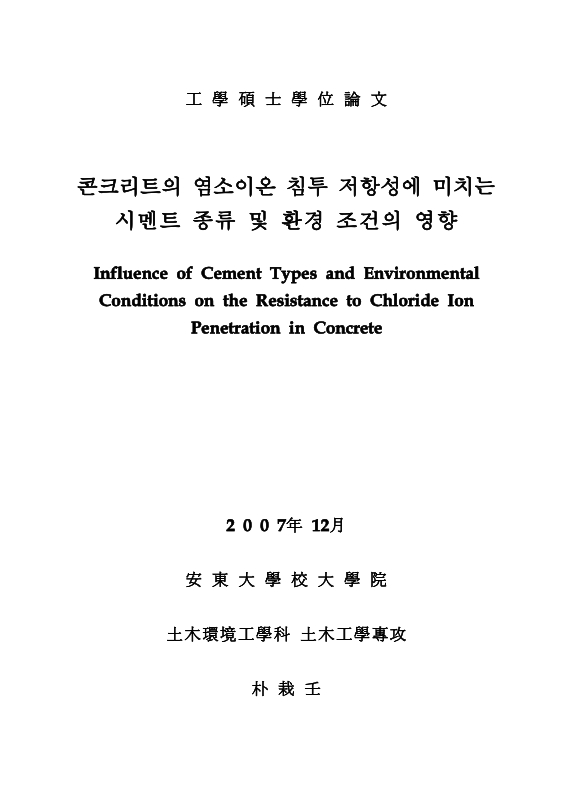
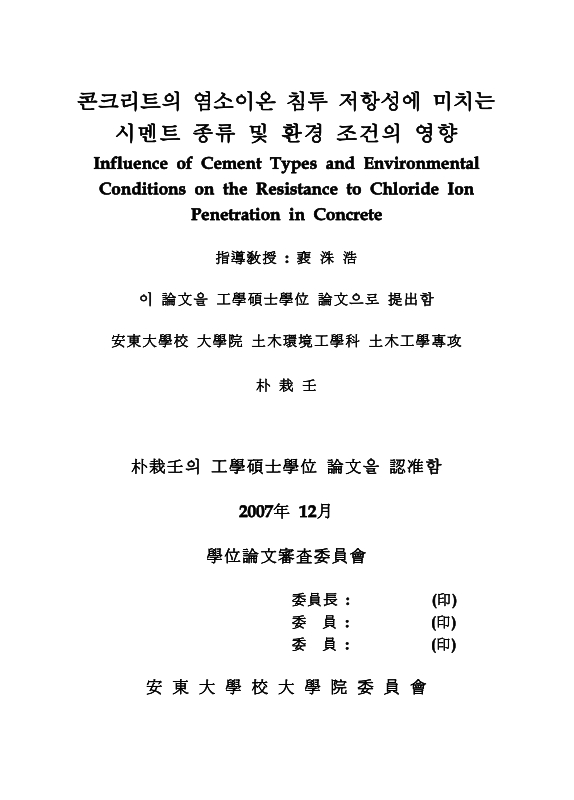
표제지
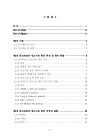
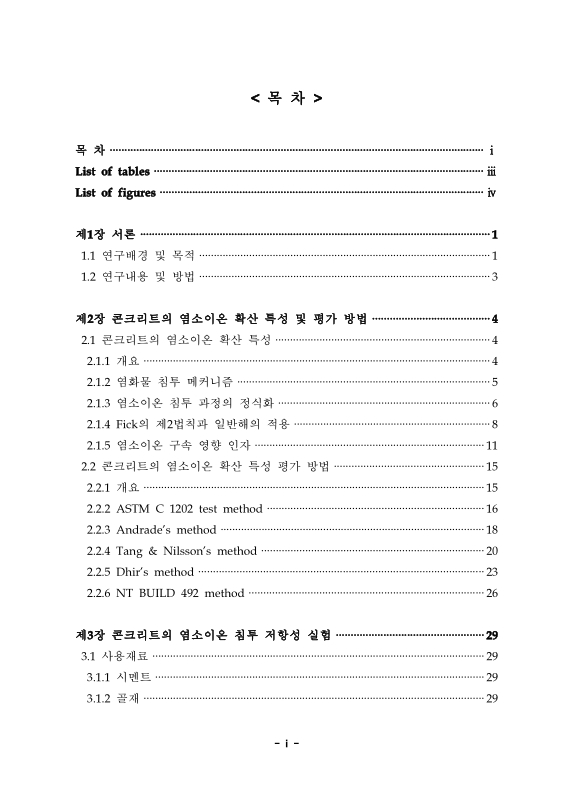
목차
제1장 서론 8
1.1. 연구배경 및 목적 8
1.2. 연구내용 및 방법 10
제2장 콘크리트의 염소이온 확산 특성 및 평가 방법 11
2.1. 콘크리트의 염소이온 확산 특성 11
2.1.1. 개요 11
2.1.2. 염화물 침투 메카니즘 12
2.1.3. 염소이온 침투 과정의 정식화 13
2.1.4. Fick의 제2법칙과 일반해의 적용 15
2.1.5. 염소이온 구속 영향 인자 18
2.2. 콘크리트의 염소이온 확산 특성 평가 방법 22
2.2.1. 개요 22
2.2.2. ASTM C 1202 test method 23
2.2.3. Andrade's method 25
2.2.4. Tang & Nilsson's method 27
2.2.5. Dhir's method 30
2.2.6. NT BUILD 492 method 33
제3장 콘크리트의 염소이온 침투 저항성 실험 36
3.1. 사용재료 36
3.1.1. 시멘트 36
3.1.2. 골재 36
3.1.3. 혼화재료 38
3.2. 실험방법 39
3.2.1. 공시체 제작 39
3.2.2. 압축강도 시험 42
3.2.3. 확산셀의 구성 및 염소이온 침투깊이 평가 42
3.2.4. 염소이온 침투 저항성 평가 44
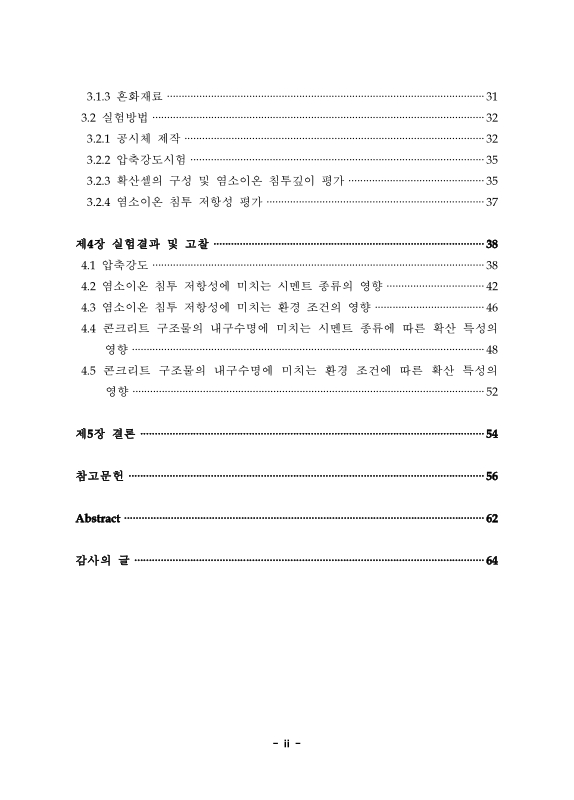
제4장 실험결과 및 고찰 45
4.1. 압축강도 45
4.2. 염소이온 침투 저항성에 미치는 시멘트 종류의 영향 49
4.3. 염소이온 침투 저항성에 미치는 환경 조건의 영향 53
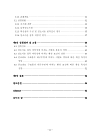
4.4. 콘크리트 구조물의 내구수명에 미치는 시멘트 종류에 따른 확산 특성의 영향 55
4.5. 콘크리트 구조물의 내구수명에 미치는 환경조건에 따른 확산 특성의 영향 59
제5장 결론 61
참고문헌 63
Abstract 69
Figure 2.1. Surface chloride concentration of concrete with distance of seashore 12
Figure 2.2. Chloride ion profile by Fick's second Law 17
Figure 2.3. Detail of diffusion cell by ASTM C 1202 test method 23
Figure 2.4. Detail of diffusion cell by Andrade's method 26
Figure 2.5. Detail of diffusion cell by Tang's method 27
Figure 2.6. Theoretical concentration profile 29
Figure 2.7. Detail of diffusion cell by Dhir's method 30
Figure 2.8. Ideal form of chloride ions transmission through specimen 32
Figure 2.9. Detail of diffusion cell by NT BUILD 492 method 33
Figure 2.10. Illustration of measurement for chloride penetration depths 34
Figure 3.1. Standard curing of concrete specimens 41
Figure 3.2. Offshore exposure of concrete specimens 41
Figure 3.3. Test of compressive strength 42
Figure 3.4. Detail of migration set-up 43
Figure 3.5. Arrangement of the migration set-up 43
Figure 4.1. Compressive strength of concrete(W/B=32%, standard) 47
Figure 4.2. Compressive strength of concrete (W/B=38%, standard) 47
Figure 4.3. Compressive strength of concrete (W/B=43%, standard) 48
Figure 4.4. Compressive strength of concrete with environmental conditions 48
Figure 4.5. Diffusion coefficient of concrete (W/B=32%, standard) 51
Figure 4.6. Diffusion coefficient of concrete (W/B=38%, standard) 51
Figure 4.7. Diffusion coefficient of concrete (W/B=43%, standard) 52
Figure 4.8. Diffusion coefficient of concrete with environmental conditions 54
Figure 4.9. Service life of concrete structures with cement types (W/B=32%) 57
Figure 4.10. Service life of concrete structures with cement types (W/B=38%) 57
Figure 4.11. Service life of concrete structures with cement types (W/B=43%) 58
Figure 4.12. Service life of concrete structures with environmental conditions 60
To predict service life of concrete structures exposed to chloride attack, surface chloride content, diffusion coefficient for chloride ion, and critical chloride content for corrosion in concrete, are considered as important factors.
Of these, the diffusion coefficient for chloride ion in concrete may significantly change the service life of structures. The qualitative factors affecting the penetration and diffusion of chloride ion into concrete are water-binder(W/B) ratio, cement type and constituents, age, chloride ion concentration of given environment, wet and dry condition, etc.
In this paper, the influence of cement types and environmental conditions on the diffusion characteristics for chloride ion in concrete were investigated through the chloride ion diffusion test by the Nordtest method(NT BUILD 492). For this purpose, the diffusion characteristics in concrete with several cement types such as ordinary portland cement(OPC), binary blended cement(BBC), and ternary blended cement(TBC) were measured for the concrete specimens with W/B ratios of 32%, 38%, and 43%, respectively.
It was observed from the test that the resistance against chloride ion penetration increased with decreasing W/B ratio and that of TBC concrete was the most excellent of the cement types used in this study and under different environmental conditions that of standard curing concrete was more or less better than offshore exposure case in the case of same mix proportions of concrete. Furthermore, the service life of concrete structures was predicted by using the measured values of the diffusion coefficients of concrete.*표시는 필수 입력사항입니다.
| 전화번호 |
|---|
| 기사명 | 저자명 | 페이지 | 원문 | 기사목차 |
|---|
| 번호 | 발행일자 | 권호명 | 제본정보 | 자료실 | 원문 | 신청 페이지 |
|---|
도서위치안내: / 서가번호:

우편복사 목록담기를 완료하였습니다.
*표시는 필수 입력사항입니다.
저장 되었습니다.
