
 대표어
대표어
권호기사보기
| 기사명 | 저자명 | 페이지 | 원문 | 기사목차 |
|---|
결과 내 검색
동의어 포함
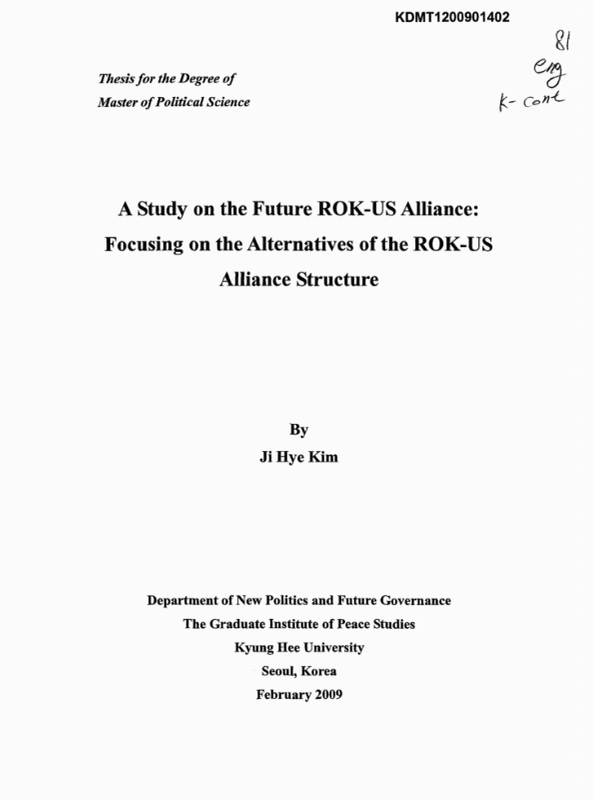
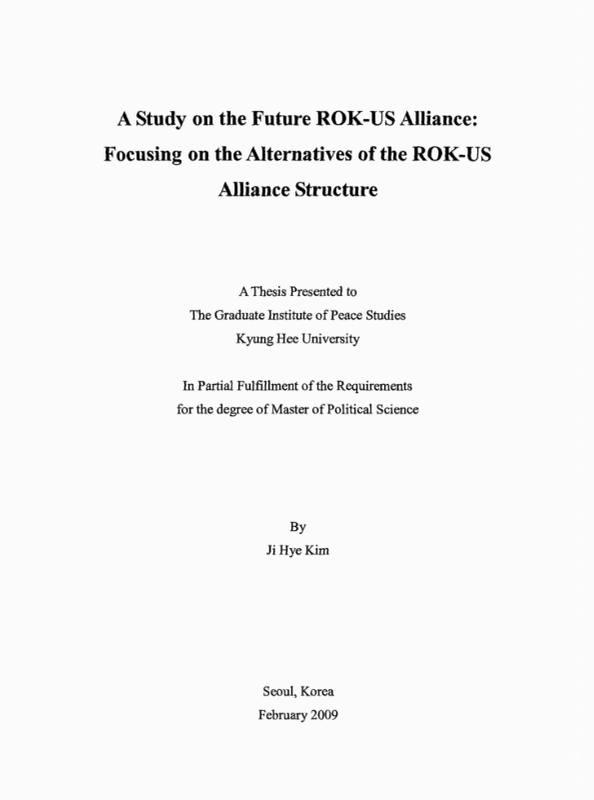
Title Page
Acknowledgements
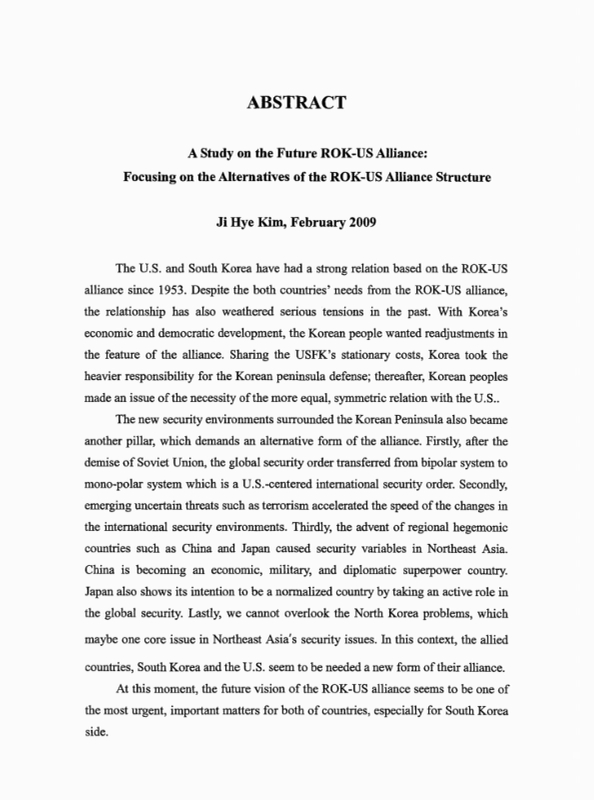
Abstract
Contents
I. Introduction 10
1. Background of the Study 11
2. Purpose of the Study 15
3. Scope and Method of the Study 16
II. Historical Overview of the ROK-US Alliance 18
1. Signing of the Mutual Defense Treaty 18
2. Vietnam War and the Nixon Doctrine 20
3. Koreanization of Korea Defense and the Burden-sharing 21
4. Changing the ROK's Role and Expanding the ROK's Responsibility 23
5. Implication 25
III. Changing Security Environments' Impact on the ROK-US Alliance 28
1. The Global Security Environment and the U.S. Security Strategy 28
2. The Northeast Asia Security Environment Changes 32
3. The Changes in the Korean Peninsula and Disharmonies within the ROK-US Alliance 38
4. Anti-Americanism and a Demand for Change in the ROK-US Alliance 41
IV. Analysis of the U.S.-ROK National Interests 46
1. Common Interests 46
2. Common Vision 55
2.1. New Goals 55
2.2. New Missions 59
V. An Alternative ROK-US Alliance: The Reconfigured Regional Security Alliance 61
1. The Alternatives of ROK-US Alliance 61
1.1. A Reconfigured Peninsula Alliance 62
1.2. A Regional Security Alliance 64
1.3. Comparison of the Two Alternative Alliances 67
2. The Reconfigured Regional Alliance as a Suitable Alternative 69
2.1. Concept of the Reconfigured Regional Alliance 69
2.2. Roles and Missions of the Reconfigured Regional Security Alliance 71
2.3. The New Force Structure 72
2.4. The New Command System 73
VI. Conclusions 78
Bibliography 82
국문 초록 91
Figure 1. Command System of the ROK-US Combined Forces Command. 75
Figure 2. The Possible New Command System of the ROK-US Combined Forces Command. 76
*표시는 필수 입력사항입니다.
| 전화번호 |
|---|
| 기사명 | 저자명 | 페이지 | 원문 | 기사목차 |
|---|
| 번호 | 발행일자 | 권호명 | 제본정보 | 자료실 | 원문 | 신청 페이지 |
|---|
도서위치안내: / 서가번호:

우편복사 목록담기를 완료하였습니다.
*표시는 필수 입력사항입니다.
저장 되었습니다.
