
본문 바로가기 주메뉴 바로가기
국회도서관 홈으로 정보검색 소장정보 검색

결과 내 검색

동의어 포함

목차보기

표제지

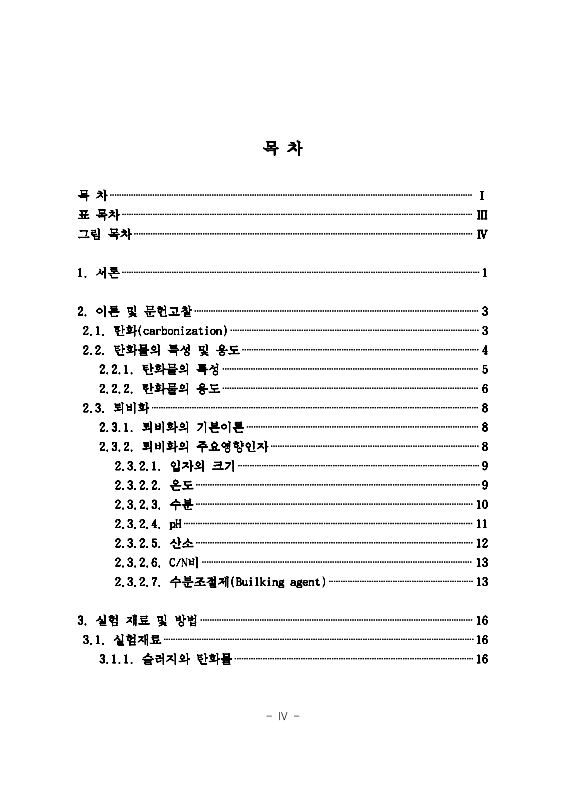
목차

1. 서론 7

2. 이론 및 문헌고찰 9

2.1. 탄화(carbonization) 9

2.2. 탄화물의 특성 및 용도 10

2.2.1. 탄화물의 특성 11

2.2.2. 탄화물의 용도 12

2.3. 퇴비화 14

2.3.1. 퇴비화의 기본이론 14

2.3.2. 퇴비화의 주요영향인자 14

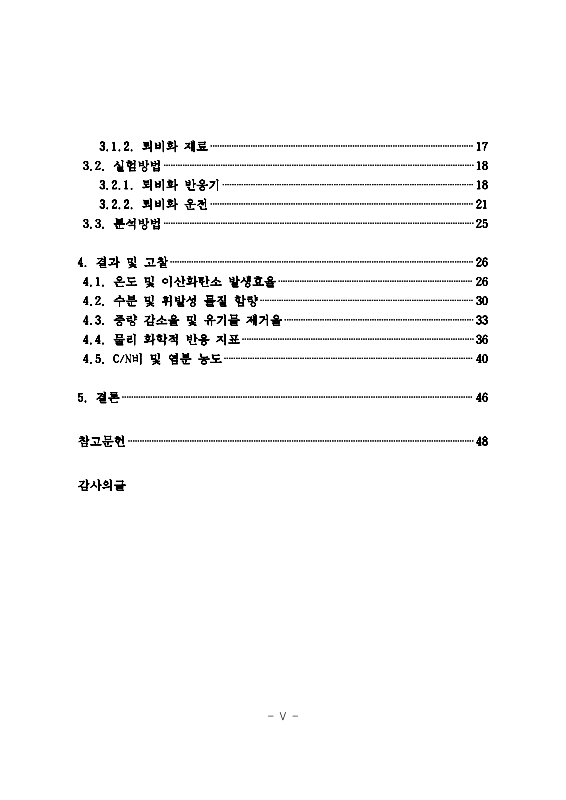
3. 실험 재료 및 방법 22

3.1. 실험재료 22

3.1.1. 슬러지와 탄화물 22

3.1.2. 퇴비화 재료 23

3.2. 실험방법 24

3.2.1. 퇴비화 반응기 24

3.2.2. 퇴비화 운전 27

3.3. 분석방법 31

4. 결과 및 고찰 32

4.1. 온도 및 이산화탄소 발생 효율 32

4.2. 수분 및 휘발성 물질 함량 36

4.3. 중량 감소율 및 유기물 제거율 39

4.4. 물리 화학적 반응 지표 42

4.5. C/N비 및 염분 농도 46

5. 결론 52

참고문헌 54

Abstract 60

감사의 글 62

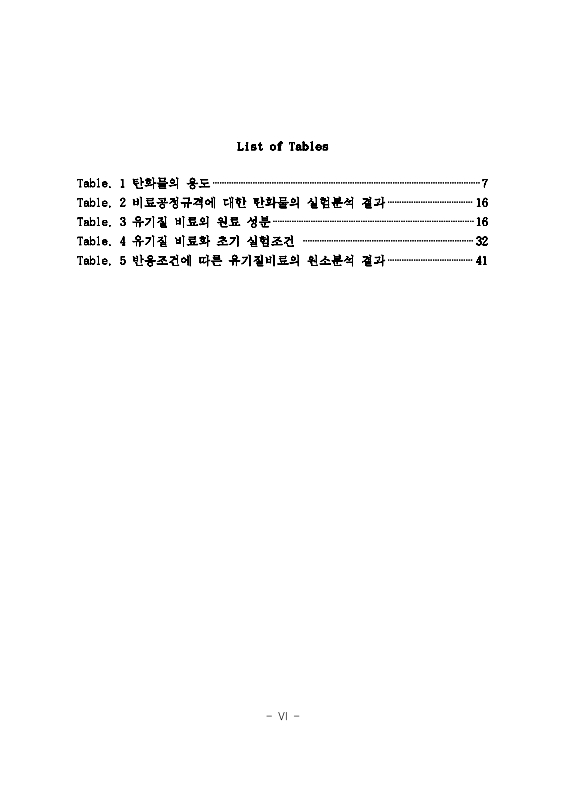
List of Tables

Table. 1. 탄화물의 용도 13

Table. 2. 비료공정규격에 대한 탄화물의 시험분석결과 23

Table. 3. 유기질비료의 원료성분 24

Table. 4. 유기질비료화 초기실험조건 28

Table. 5. 반응조건에서 얻어진 유기질비료의 원소분석 결과 47

List of Figures

Fig. 1. 실험장치 및 레이아웃 개략도 25

Fig. 2. 유기질비료화 제조장치 26

Fig. 3. 실험에 사용된 유기질비료 제조원료 29

Fig. 5. 혼합재료 충진 후의 반응시스템 30

Fig. 4. 재료의 혼합 30

Fig. 6. 운전시간에 따른 온도변화 33

Fig. 7. 배가스의 CO₂ 농도변화 34

Fig. 8. 매시간대별 CO₂ 발생량 35

Fig. 9. 누적된 CO₂ 발생량 36

Fig. 10. 운전시간에 따른 수분함량 변화 38

Fig. 11. 운전시간에 따른 유기물함량 변화 38

Fig. 12. 시간에 따른 습윤중량 감소율 40

Fig. 13. 시간에 따른 누적 시료채취량 41

Fig. 14. 시간에 따른 건조중량 감소율 41

Fig. 15. 시간에 따른 pH의 변화 43

Fig. 16. 시간에 따른 반응물의 부피변화 43

Fig. 17. 시간에 따른 겉보기밀도의 변화 45

Fig. 18. 시간에 따른 자유기체공간(FAS)의 변화 46

Fig. 19. 반응 시작점과 종료점 퇴비혼합물의 용존성 COD 48

Fig. 20. 반응 시작점과 종료점 퇴비혼합물의 용존성 탄소함량 49

Fig. 21. 반응 시작점과 종료점 퇴비혼합물의 용존성 TKN 함량 49

Fig. 22. 반응 시작점과 종료점 퇴비혼합물의 용존성 C/N비 50

Fig. 23. 반응 시작점과 종료점 퇴비혼합물의 용존성 총 인(T-P)함량 50

Fig. 24. 반응 시작점과 종료점 퇴비혼합물의 염분함량 51

초록보기

The purpose of this study was to examine the practical use of carbonized sludge as a bulking agent in livestock waste composting. Three sets were used in this study. Control mix was composed of 40% of livestock, 30% of coffee residue and 30% of sawdust, respectively. Mix I, which was designed to have same moisture content with control, was composed of 49% of livestock, 38% of coffee residue and 13% of carbonized sludge. Mix II, which was designed to replace the sawdust with carbonized sludge, was composed of 40% of livestock, 30% of coffee residue and 30% of carbinized, respectively. The experiment was carried out for 10 days. The results showed that the carbonized sludge could be used successfully as a bulking agent, and which could keep the optomal moisture content with less amount than sawdust. More organic matter was decomposed in Mix I and Mix II than Control. This result showed that the carbonized sludge could activate the decomposition of organics more effectively than sawdust. The final organic contents of Mix I and Mix II exceeded 60% which was the legal minimum limit of organic compost. While the week alkine pH of 8.2~8.7 have been kept for the all the time of operation in the Control using sawdust, the pH have been changed from week acidic condtion to week alkaline condition in Mix I and Mix II using carbonized sludge, and which was the typical pH variation shown in normal composting operation. While the Mix I and Mix II showed about 50% of FAS (free air space), the Control showed about 60% of FAS. The more incresed FAS of Control than Mix I and Mix II could cause the thermal loss to Control set, and which deterioated the organic decomposition of waste materials. The carbonized sludge was supposed to have superior advantage in optimal FAS and thermal preservation than sawdust. The salinities of Mix I and Mix II were below 0.1%, and which was less than the legal limit of 1.0%.

