
 대표어
대표어
권호기사보기
| 기사명 | 저자명 | 페이지 | 원문 | 기사목차 |
|---|
결과 내 검색
동의어 포함
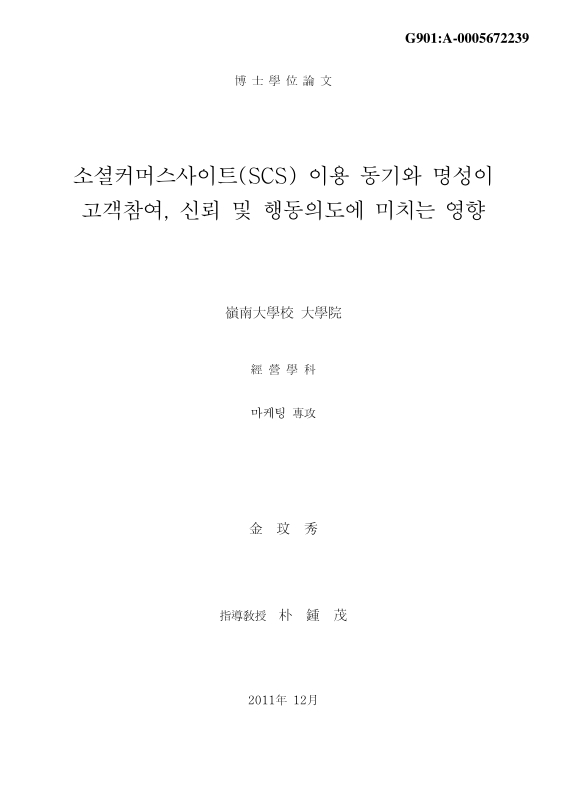
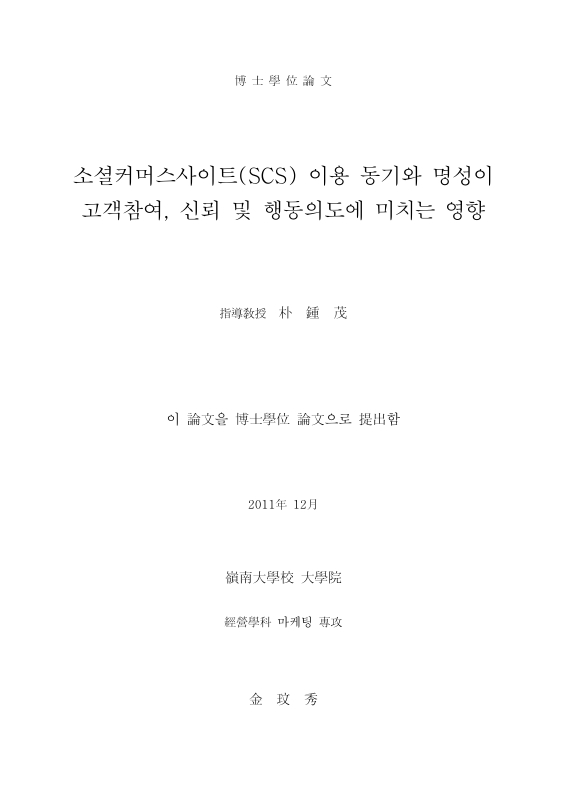
표제지
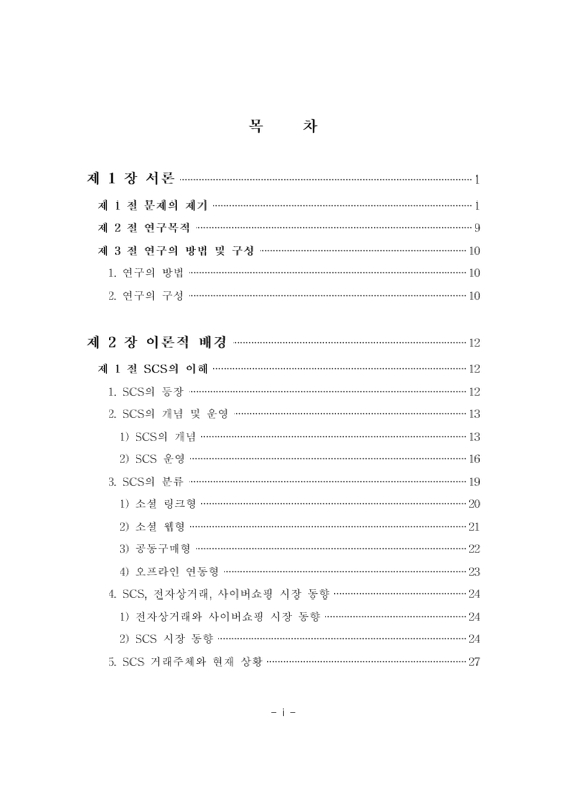
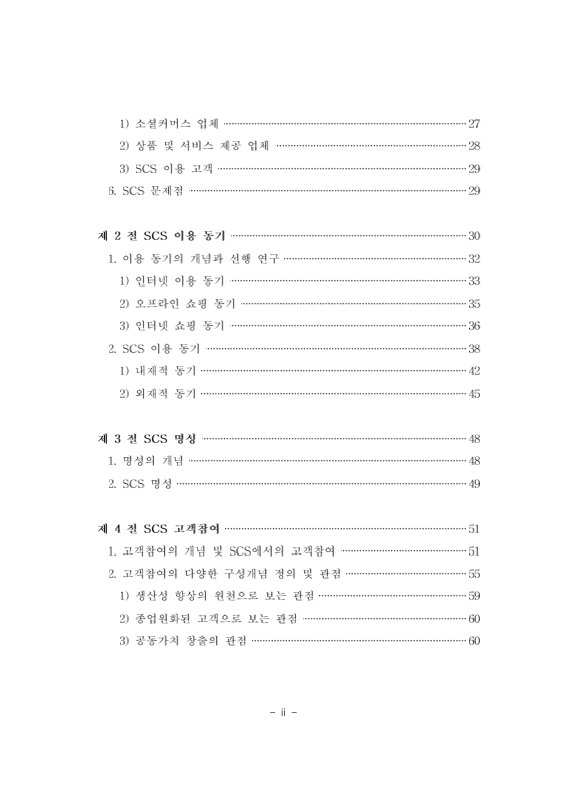
목차
제1장 서론 11
제1절 문제의 제기 11
제2절 연구의 목적 19
제3절 연구의 방법 및 구성 20
1. 연구의 방법 20
2. 연구의 구성 20
제2장 이론적 배경 22
제1절 SCS의 이해 22
1. SCS(social commerce site)의 등장 22
2. SCS(social commerce site)의 개념 및 운영 23
3. SCS의 분류 29
4. SCS, 전자상거래, 사이버쇼핑 시장 동향 34
5. SCS 거래 주체와 현재 상황 37
6. SCS 문제점 39
제2절 SCS 이용 동기 40
1. 이용 동기의 개념과 선행 연구 42
2. SCS 이용 동기 48
제3절 SCS 명성 58
1. 명성(requtation)의 개념 58
2. SCS 명성 59
제4절 SCS 고객 참여 61
1. 고객참여의 개념 및 SCS에서의 고객참여 61
2. 고객참여의 다양한 구성개념 정의 및 관점 65
제5절 SCS 신뢰 71
1. 신뢰(trust)의 개념과 SCS 신뢰 71
2. 신뢰 전이(trust transfer)에 관한 연구 74
3. 소셜커머스 업체 신뢰와 상품 및 서비스 제공 업체 신뢰 76
제6절 SCS 행동의도 77
제3장 연구 모형 및 가설 설정 80
제1절 연구 모형 80
제2절 가설 설정 82
1. SCS 이용 고객의 이용 동기가 SCS 고객참여에 미치는 영향 82
2. SCS 명성이 SCS 고객참여에 미치는 영향 85
3. SCS 고객참여가 SCS 신뢰에 미치는 영향 86
4. SCS 신뢰가 행동의도에 미치는 영향 88
5. SCS 이용 고객의 이용 동기 중 충동성 동기가 행동의도에 미치는 영향 90
제4장 연구방법 91
제1절 연구표본 91
제2절 자료수집 91
제3절 설문지 구성 92
제4절 변수의 조작적 정의 및 측정 95
1. SCS 이용 고객의 이용 동기 95
2. SCS 명성 102
3. SCS 고객참여 103
4. SCS 신뢰 104
5. SCS 행동의도 106
제5절 분석방법 107
제5장 결과분석 108
제1절 표본의 특성 108
제2절 타당도 및 신뢰도 분석 113
1. 타당도 분석 113
2. 신뢰도 분석 117
제3절 제안모델 평가 121
제4절 가설 검증 129
1. SCS 이용 고객의 내재적 동기와 SCS 고객참여 및 SCS 행동 의도 간의 관계 129
2. SCS 이용 고객의 외제적 동기와 SCS 고객참여 간의 관계 131
3. SCS 명성과 SCS 고객참여 간의 관계 134
4. SCS 고객참여와 SCS 신뢰 간의 관계 135
5. SCS 신뢰와 SCS 행동의도 간의 관계 137
제6장 결론 140
제1절 연구의 요약 140
제2절 연구의 시사점 144
1. 이론적 시사점 146
2. 실무적 시사점 150
제3절 연구의 한계점 및 미래 연구방향 157
참고문헌 161
부록 : 설문지 185
Abstract 193
〈그림 2-1〉 SCS 운영 원리 27
〈그림 2-2〉 SCS 수익 구조 28
〈그림 2-3〉 소셜 링크형 SCS 30
〈그림 2-4〉 소셜 앱형 SCS 31
〈그림 2-5〉 공동구매형 SCS 32
〈그림 2-6〉 오프라인 연동형SCS 33
〈그림 2-7〉 국내 SCS 일평균 방문자 순위 36
〈그림 2-8〉 국내 SCS 월간 방문자 순위 36
〈그림 2-9〉 충동성 동기의 2가지 시점 55
〈그림 3-1〉 연구 모형 81
〈그림 5-1〉 연구모형의 분석 결과 126
The birth and growth of SNS(social network service) such as Facebook, Twitter and etc. offers a new marketing opportunity in online shopping market. On top of that, the advent of social commerce which grafts SNS on previous electronic commerce sites is rapidly changing the electronic commerce market and it seems to be a successful settlement as a new electronic commerce trend. This is expected to be evolved in its concept and form speedily.
Despite its growth in social commerce market, there are few researches on how to draw out its successful performance from the viewpoint of marketing as it still remains at the stage of forming a new market from 2010 in Korea. This study designed a research model by finding key variables such as motivation, reputation, trust and etc. which evoke behavioral intention of SCS(social commerce site) customers. This study also examined their influence factor and causal relationship and offered both theoretical and practical suggestions with strategic methods for forming a successful performance.
The purpose of this study is as follows.
First, this study empirically verified influence factors of motivation of SCS users and reputation on customer participation.
Second, this study empirically examined influence factors of SCS customer participation on SCS trust.
Third, this study investigated that SCS trust is a driver for SCS behavioral intention as a main influence factor.
Forth, this study proposed a more concrete and practical implications in SCS for owing firms of the social commerce sites and providers of products and services.
This study developed items for constructs of research model and conducted a survey research subjected to customers using SCS. The validity and reliability of each construct were examined by using SPSS 18.0 and AMOS 18.0 and this study conducted a structural equation model analysis for empirical testing of research hypothesis. Among 1,150 surveys data, 416 were collected. After removing respondents who visit less than one or two times per six months or one year, We finally use 352 samples for analysis.
The main results are as follows.
First, hedonic motivation from intrinsic motivation, and economic and convenience motivation from extrinsic motivation of SCS users have a positive and significant influence on customer participation. On the other hand, even though social motivation turned out to have insignificant influence on customer participation, impulsivity motivation turned out to have a direct influence on behavioral intention.
Second, SCS reputation has a positive and significant influence on customer participation.
Third, customer participation of SCS users significantly influences on both owing firms of the social commerce sites trust and providers of products and services trust.
Forth, while providers of products and services trust of SCS users have not a significant influence on behavioral intention, owing firms of the social commerce sites trust of SCS users have a significant influence on SCS behavioral intention.
Some strategic implications of this study are as follows.
First, active participation of customers can be led by offering products and services which can meet hedonic motivation such as giving pleasure and interest in shopping to SCS users, economical benefits such as offering cheaper coupons, and convenience motivation such as easier use of coupons.
Second, it is needed to establish competitive reputation as it can attract SCS users into more active customer participation, but reputation can not be established in a short period of time. Therefore, owing firms of the social commerce sites and providers of products and services should plan more effective ways to establish reputation and CI(corporate identity) from a wider point of view by completing moral duties and social responsibility.
Third, in order for customer to share suggest information, firms may open online community and setup a solid SCS trust which lead to natural participation of customers in SCS.
Forth, the study find that a positive behavioral intention which directly influence company performance can be formed when SCS users have trust in owing firms of the social commerce sites. Therefore, owing firms of the social commerce sites should keep promises with users and need to make every effort to allow credible providers of products and services to enter.
The current analysis has a number of limitations and the findings also lead to new questions and future line of inquiry.
First, in the research model of this study, the participation of customers is divided into two stages as pre-participation and post-participation of customers and active and voluntary participation of customers forms trust and finally extends its influence on behavioral intention of customers. This is an important finding of this study but from the viewpoint of general relationship between attitude and traditional theory of consumer behavior, trust is understood as a antecedents, which should be studied more thoroughly in the future.
Second, even though social commerce sites have significant differences comparing to other general electronic commerce sites as they also have SNS characteristics, this study only focused on customer participation. So future researches need to include another factors covering SCS environment considering additional SNS characteristics.
Third, as social commerce has another characteristics in that coupons of SCS should be used only through offline providers of products and services, this study examined influence and causal relationship among research variables dividing SCS trust into owing firms of the social commerce sites trust and providers of products and services trust. Even though to define the mutual influence of trust between two kinds of companies might be meaningful in that the result of this study can be understood as practical and strategic one, skipping substantial analysis from the parsimoniousness and fitness of structural equation model might be a limitation of this study which calls for further additional researches.| 번호 | 참고문헌 | 국회도서관 소장유무 |
|---|---|---|
| 1 | 인터넷 소비자의 행동과 가치관에 대한 연구 : 인터넷에 대한 동기, 태도, 행동을 중심으로 | 소장 |
| 2 | 데일리 딜 서비스(Daily Deal Service) 시장 동향과 전망 | 소장 |
| 3 | (2010), 「AMOS 18.0 구조방정식모형 분석」, 한나래출판사. | 미소장 |
| 4 | 웹사이트 측정도구의 개발과 활용에 대한 연구 | 소장 |
| 5 | 웹 이용 행위에 영향을 미치는 요인 연구: 심리적 요인과 구조적 요인의 영향력 차이를 중심으로 | 소장 |
| 6 | (2011), “소셜커머스 시장현황 및 정책이슈,” 정보통신정책연구원, 23(11), 41-63. | 미소장 |
| 7 | (2011), “2011년 IT중소기업 동향(2차) - 소셜커머스 시장현황 및 이슈,” KT경제경영연구소, 연구보고서. | 미소장 |
| 8 | (2011), “잠재성장률 2%p 제고를 위한 VIP REPORT: 사이버 거래의 경쟁기반 현황과 발전 과제,” 현대경제연구원, 481(11-11), 1-16. | 미소장 |
| 9 | (2011), “소셜커머스의 현황과 시사점,” 정보통신산업연구원, 연구보고서. | 미소장 |
| 10 | Consumers` Usage of Online Social Networks | 소장 |
| 11 | 대한상공회의소 (2011), “기업의 소셜커머스 활용실태 및 향후 전망 조사,” 보도자료, 2011년 4월 12일. | 미소장 |
| 12 | An Empirical Analysis of the Price Levels of Internet and Off - Line Retailers  |
미소장 |
| 13 | (2008), 「구조방정식모형의 이해와 적용 워크샵」, 대구가톨릭대학교. | 미소장 |
| 14 | (2009), 「구조방정식모델링의 이해와 적용」, 학지사. | 미소장 |
| 15 | 온라인 커뮤니티 명성, 사회적 실재감, 상호작용성, 즐거움이 성과형성에 미치는 영향 연구 | 소장 |
| 16 | 택배서비스 신뢰에서 전자상점에 대한 신뢰로의 전이 : 온라인 구전효과 조절적 역할의 관점에서 | 소장 |
| 17 | (2001) , 「소비자의 이해」, 영남대학교출판부. | 미소장 |
| 18 | 소비자의 인터넷쇼핑 행동에 영향을 미치는 요인에 관한 연구 | 소장 |
| 19 | Qualitative Study of Factors Influencing on Consumer Trust in B-to-C Electronic Commerce | 소장 |
| 20 | A Cross-Cultural Study on Factors Influencing Participation of the Internet Open Market | 소장 |
| 21 | Factors Influencing on Trust toward E-Commerce by Consumer Experience of Online Buying |
미소장 |
| 22 | 서비스 산업에서의 고객참여 측정도구 개발 : PARTICQUAL | 소장 |
| 23 | An Empirical Study on the Effects of SNS Website Quality Factors on the User Satisfaction, Intention of Continuous Use, and Intention of Words-of-Mouth | 소장 |
| 24 | 소셜커머스 신뢰, 만족과 충성도의 구조적 관계 : 신뢰전이를 중심으로 | 소장 |
| 25 | 관계마케팅 활동에서의 고객참여의 역할에 관한 연구 : 서비스 산업을 중심으로 | 소장 |
| 26 | 위키피디아, “소셜커머스,” | 미소장 |
|
| 27 | A Study on Consumers' Perceptions of the Cost Advantage Effect in the Electronic Commerce-Concentrated on Consumers' Perceptions on th Internet Shopping Mall | 소장 |
| 28 | ‘소셜 커머스’, 이제 소비자를 기업의 동반자로 |
미소장 |
| 29 | (2007), “오픈마켓의 이용만족도의 선행요인과 결과, 쇼핑동기, 이용빈도, 구전, 재구매 의도를 중심으로,” 한국경영정보학회, 추계학술대회발표논문, 559-564. | 미소장 |
| 30 | Effects of Personal Values and Service Encounter Characteristics on Customer Participation Behavior | 소장 |
| 31 | The Impact of Web Site Characteristics on e-Trust in Specialized Portal | 소장 |
| 32 | (2009), “개인 심리 요인이 모바일콘텐츠 이용에 미치는 영향,” 경 영 연구, 24(1), 127-158. | 미소장 |
| 33 | 제품 광고매체로서 인터넷 이용 행태에 관한 연구 : 인터넷 이용 동기 및 태도, 종결 욕구를 중심으로 | 소장 |
| 34 | Shopping Orientation`s Differentiation between On-line | 소장 |
| 35 | 조선경제, “ 「반값 할인」소셜커머스, 거품 꺼지나?,” 2011년 9월 22일. | 미소장 |
| 36 | (1996), 「Lisrel 구조방정식 모델」, 영지문화사. | 미소장 |
| 37 | A study on the Web-site Service Quality of Family Restaurant and Revisit Intention | 소장 |
| 38 | 온라인 커뮤니티 이용 의도: 블로그 사용자를 중심으로 |
미소장 |
| 39 | 참가업체 관점에서 본 참가목적, 결정요인 및 주최자의 전시회서비스에 대한 중요도와 만족도 연구 : 컨벤션산업전 사례중심으로 | 소장 |
| 40 | 수용자의 사회성에 따른 인터넷과 라디오 이용동기에 관한 연구 | 소장 |
| 41 | 통계청 (2010), “2010년 연간 및 4/4분기 전자상거래 및 사이버쇼핑 동향,” 연구보고서. | 미소장 |
| 42 | (2004), “사용자 중심의 웹사이트 구축을 위한 주요 평가요인에 관한 실증 연구,” 컴퓨터교육학회지, 7(3), 67-78. | 미소장 |
| 43 | 한국인터넷진흥원 (2010), “마이크로블로그, 새로운 온라인 여론 광장으로 부상,” 연구보고서. | 미소장 |
| 44 | Effects of Customer Participation and Citizenship Behavior on Perceived Service Quality and Repurchasing Intention | 소장 |
| 45 | The Motives for Using Social Commerce and Satisfaction, Repurchase Intention: Based on the Uses and Gratification Theory | 소장 |
| 46 | (2009), “시간과 공간, 超세분화하라!,” 동아비즈니스리뷰, 40(2), 22-31. | 미소장 |
| 47 | (2007), “온라인 쇼핑몰에서 소비자의 쇼핑동기와 감정이 쇼핑 행동에 미치는 영향: 구매경험자와 잠재구매자간의 차이 분석,” 경영연구, 22(2), 347-375. | 미소장 |
| 48 | (1996), Creativity in Context, Boulder : Westview Press. | 미소장 |
| 49 | Determinants of Continuity in Conventional Industrial Channel Dyads |
미소장 |
| 50 | (1999), The Gratification Dimensions Of The Internet’s World Wide Web : An Exploratory Study, Doctorial Dissertation, The Florida State University. | 미소장 |
| 51 | Hedonic shopping motivations |
미소장 |
| 52 | Work and/or Fun: Measuring Hedonic and Utilitarian Shopping Value |
미소장 |
| 53 | On the evaluation of structural equation models |
미소장 |
| 54 | (2001),“Consumer Attitudes toward Multi-channel Retailers’ Websites : The Role of Environment, Brand Attitude, Internet Knowledge and Visit Duration,” Journal of Business Strategies, 18(2),105-131. | 미소장 |
| 55 | Managing Corporate Image and Corporate Reputation |
미소장 |
| 56 | Anxiety and Impulsiveness Related to Psychomotor Efficiency |
미소장 |
| 57 | Psychological Implications of Customer Participation in Co-Production |
미소장 |
| 58 | Comparative fit indexes in structural models. |
미소장 |
| 59 | Customer voluntary performance: Customers as partners in service delivery |
미소장 |
| 60 | Individual Trust in Online Firms: Scale Development and Initial Test |
미소장 |
| 61 | Customer contributions and roles in service delivery |
미소장 |
| 62 | Consumer Search: An Extended Framework |
미소장 |
| 63 | (1989), Structural Equations with Latent Variables, New York: Wiley. | 미소장 |
| 64 | Reporting Analyses of Covariance Structures |
미소장 |
| 65 | Managing customers as human resources in service organizations |
미소장 |
| 66 | Transaction Cost Analysis of Service Organization-Customer Exchange |
미소장 |
| 67 | Development of a taxonomy of services to gain strategic marketing insights |
미소장 |
| 68 | Social Network Sites: Definition, History, and Scholarship |
미소장 |
| 69 | (1993), Reputation,Image and Impression Management, Oxford: John Wiley & Sons. | 미소장 |
| 70 | Psychological Aspects of Corporate Identity, Image and Reputation |
미소장 |
| 71 | Buying or browsing?:An exploration of shopping orientations and online purchase intention |
미소장 |
| 72 | Functional and dysfunctional impulsivity: contribution to the construct validity |
미소장 |
| 73 | Relationship Between Attitudes and Evaluative Space: A Critical Review, With Emphasis on the Separability of Positive and Negative Substrates |
미소장 |
| 74 | B2C e-commerce web site quality: an empirical examination |
미소장 |
| 75 | The role of satisfaction and website usability in developing customer loyalty and positive word-of-mouth in the e-banking services |
미소장 |
| 76 | Customer Participation in Service Specification and Delivery |
미소장 |
| 77 | Is Customer Participation in Value Creation a Double-Edged Sword? Evidence from Professional Financial Services Across Cultures |
미소장 |
| 78 | The influences of shopping motivation on adolescent online-shopping perceptions |
미소장 |
| 79 | An empirical investigation on factors affecting the acceptance of CASE by systems developers |
미소장 |
| 80 | (2001),“Hedonic and Utilitarian Motivations for Online Retail Shopping Behavior,” Journal of Retailing, 77(4),511-535. | 미소장 |
| 81 | (1998), “Issues and Opinion on Structural Equation Modeling,”MIS Quarterly, 22(1),7-16. | 미소장 |
| 82 | (1986), “Planned versus Impulse Purchase Behavior of Retailing,” Journal of Retailing,62(4),384-409. | 미소장 |
| 83 | Couple resilience to economic pressure. |
미소장 |
| 84 | (2000),“Assessing the Effects of Quality, Value, and Customer Satisfaction on Consumer Behavioral Intentions in Service Environments,” Journal of Retailing, 76(2),193 - 218. | 미소장 |
| 85 | (1993),“Customer Satisfaction and Service Quality: Two Constructs or One?,” in Enhancing Knowledge Development in Marketing, David W. Cravens and Peter Dickson, eds. Chicago: American Marketing Association, 4,10-18. | 미소장 |
| 86 | Perceived Usefulness, Perceived Ease of Use, and User Acceptance of Information Technology |
미소장 |
| 87 | User Acceptance of Computer Technology: A Comparison of Two Theoretical Models |
미소장 |
| 88 | (1990), “Shopping Motives, Emotional States, and Retail Outcomes,” Journal of Retailing, 66(4), 408-427. | 미소장 |
| 89 | Units of Analysis for Internet Communication |
미소장 |
| 90 | (1985), Intrinsic Motivation and Self-Determination in Human Behavior, New York: Plenum Press. | 미소장 |
| 91 | (1999), Gaining Customer Compliance in Services, Doctorial Dissertation, The University of California, Irvine. | 미소장 |
| 92 | (2004), Self-Interest,Reciprocity, and Participation in Online Reputation Systems, MIT Sloan Working Papers. | 미소장 |
| 93 | The DeLone and McLean Model of Information Systems Success: A Ten-Year Update |
미소장 |
| 94 | (1992),“The Role of Choice in Vigilance Performance,” Bulletin of the Pscychonomic Society, 30(3),201-204. | 미소장 |
| 95 | CA-125 Levels after Surgical Exploration and Radioactive Chromic Phosphate in Ovarian Cancer Patients |
미소장 |
| 96 | The role of pleasure in web site success |
미소장 |
| 97 | (1960),The strategy of desire, Garden City, NY: Doubleday. | 미소장 |
| 98 | Effects of Price, Brand, and Store Information on Buyers' Product Evaluations |
미소장 |
| 99 | (1998), Identity and Deception in the Virtual Community, Communities in Cyberspace, London: Routledge. | 미소장 |
| 100 | (1997), “Trust in Buyer-Seller Relationships,” Journal of Marketing, 61(2),35-51. | 미소장 |
| 101 | The internet Shopper |
미소장 |
| 102 | Developing your company image into a corporate asset |
미소장 |
| 103 | Organizational Images and Member Identification |
미소장 |
| 104 | Adding Value in the Information Age: Uses and Gratifications of Sites on the World Wide Web |
미소장 |
| 105 | Impact of Participative Service Relationships on Quality, Satisfaction and Retention: An Exploratory Study |
미소장 |
| 106 | How Presentation Flaws Affect Perceived Site Quality, Trust, and Intention to Purchase from an Online Store |
미소장 |
| 107 | The World Wide Web as a Functional Alternative to Television |
미소장 |
| 108 | More Than a Labor of Love: Gender Roles and Christmas Gift Shopping |
미소장 |
| 109 | Consumer Participation and Productivity in Service Operations |
미소장 |
| 110 | The Reputational Landscape |
미소장 |
| 111 | Evaluating Structural Equation Models with Unobservable Variables and Measurement Error |
미소장 |
| 112 | Determinants of Long-Term Orientation in Buyer-Seller Relationships |
미소장 |
| 113 | E-commerce: the role of familiarity and trust |
미소장 |
| 114 | (2000), “The Relative Importance of Perceived of Use in IS Adoption," Journal of Association for Information system, 1(1). 1-28. | 미소장 |
| 115 | Structural Equation Modeling and Regression: Guidelines for Research Practice |
미소장 |
| 116 | Trust and TAM in Online Shopping: An Integrated Model |
미소장 |
| 117 | (2001),“From Brand Loyalty to E-loyalty: A Conceptual Framework,” Journal of Economic and Social Research, 3(1),43-58. | 미소장 |
| 118 | “I CAN DO IT MYSELF:” TRAINING THE SERVICE CONSUMER TO CONTRIBUTE TO SERVICE PRODUCTIVITY |
미소장 |
| 119 | Customer-Employee Rapport in Service Relationships |
미소장 |
| 120 | Image and substance: From symbolic to behavioral relationships |
미소장 |
| 121 | Factors influencing consumer perceptions of brand trust online |
미소장 |
| 122 | (1995), Multivariate Data Analysis with Readings, New York.: 4th ed. Prentice-Hall, Inc. Englewood Cliffs. | 미소장 |
| 123 | The relationship between extraversion and neuroticism and the different uses of the Internet |
미소장 |
| 124 | Customer participation in retail service: lessons from Brecht |
미소장 |
| 125 | A multi-method investigation of consumer motivations in impulse buying behavior |
미소장 |
| 126 | Understanding online purchase intentions: contributions from technology and trust perspectives |
미소장 |
| 127 | Hedonic Consumption: Emerging Concepts, Methods and Propositions |
미소장 |
| 128 | Marketing in Hypermedia Computer-Mediated Environments: Conceptual Foundations |
미소장 |
| 129 | Building consumer trust online |
미소장 |
| 130 | The Experiential Aspects of Consumption: Consumer Fantasies, Feelings, and Fun |
미소장 |
| 131 | Trust, the Internet, and the digital divide |
미소장 |
| 132 | (1995), Customer Co-creation of Service Outcomes: Effects of Locus of Causality Attributions, unpublished doctoral dissertation, Arizona State University. | 미소장 |
| 133 | Profiling consumers: A study of Qatari consumers’ shopping motivations |
미소장 |
| 134 | Consumer Trust in an Internet Store: A Cross-Cultural Validation |
미소장 |
| 135 | Consumer trust in an Internet store |
미소장 |
| 136 | Predicting use of technologies for communication and consumer needs |
미소장 |
| 137 | Customerization: The next revolution in mass customization |
미소장 |
| 138 | Online and in the Know: Uses and Gratifications of the Web for Political Information |
미소장 |
| 139 | Customer participation in service production and delivery. |
미소장 |
| 140 | Measuring impatience: Elicited discount rates and the Barratt Impulsiveness Scale |
미소장 |
| 141 | The Power of Trust in Manufacturer-Retailer Relationships |
미소장 |
| 142 | Motivational Considerations in the Study of Instruction |
미소장 |
| 143 | (2000),Turning ‘Play’ into 'Work' and 'Work' into ‘Play’: 25 Years of Research on Intrinsic versus Extrinsic Motivation, San Diego, CA: Academic Press. | 미소장 |
| 144 | (1996), “Developing and Maintaining Trust in Work Relationships,” Frontiers of Theory and Research, 4637,114-139. | 미소장 |
| 145 | Online Service Adoption Likelihood |
미소장 |
| 146 | Exploring the factors associated with Web site success in the context of electronic commerce |
미소장 |
| 147 | (2003), The Role of Culture on Customer Participation in Services, Doctoral Dissertation, Hong Kong: Hong Kong Polytechnic University. | 미소장 |
| 148 | (1999),Modeling Participation in Entertainment and Shopping Activities in Malls Utilizing the Flow Paradigm, paper presented at Yonsei University, Seoul, Korea. | 미소장 |
| 149 | (1979), “Look to Consumers to Increase Productivity," Harvard Business Review, 57(3),168-178. | 미소장 |
| 150 | Retail relationships and store loyalty: A multi-level perspective |
미소장 |
| 151 | Exploring Impulse Purchasing on the Internet |
미소장 |
| 152 | An Integrative Model of Organizational Trust |
미소장 |
| 153 | Principles and practice in reporting structural equation analyses. |
미소장 |
| 154 | (1981), The Uses and Gratification Approach,Handbook of political communication, Beverly Hills, CA: Sage. | 미소장 |
| 155 | The Measurement of Web-Customer Satisfaction: An Expectation and Disconfirmation Approach |
미소장 |
| 156 | Internet Shopping Orientation Segments: An Exploration of Differences in Consumer Behavior |
미소장 |
| 157 | The impact of initial consumer trust on intentions to transact with a web site: a trust building model |
미소장 |
| 158 | (1974), An Approach to Environmental Psychology, Cambridge: MIT Press. | 미소장 |
| 159 | Motivating the Client/Employee System as a Service Production Strategy |
미소장 |
| 160 | Clients as "Partial" Employees of Service Organizations: Role Development in Client Participation |
미소장 |
| 161 | Psychiatric aspects of impulsivity. |
미소장 |
| 162 | Trait Intrinsic and Extrinsic Motivations, Academic Performance, and Creativity in Hong Kong College Students. |
미소장 |
| 163 | The Commitment-Trust Theory of Relationship Marketing |
미소장 |
| 164 | Role of electronic trust in online retailing |
미소장 |
| 165 | (2003), “Mixing Patterns in Networks,” Physical Review, 67(2),1-13. | 미소장 |
| 166 | Performance Outcomes of Purchasing Arrangements in Industrial Buyer-Vendor Relationships |
미소장 |
| 167 | (1978),Psychometric Theory, New York: McGraw-Hill. | 미소장 |
| 168 | (1997), Satisfaction: A Behavioral Perspective on the Consumer, New York: McGraw Hill. | 미소장 |
| 169 | (2005),Experimental Value: A Hierarchical Model, the Impact of E-loyalty and a Customer Typology, Proceedings of the 12th Biennial World Marketing Congress, Muenster, Germany: Carol de Moranville. | 미소장 |
| 170 | The Self Online: The Utility of Personal Home Pages |
미소장 |
| 171 | Predictors of Internet Use |
미소장 |
| 172 | (2006),“Factors Influencing the Internet Shopping in Korea: Effects of Shopping Orientations, Online experience, and Trust," Journal of Digital Business, 1(1),11—18. | 미소장 |
| 173 | (2000),“A Use and Gratification Perspective on the Internet as a New Information Source,” American Business Review, 18(2),43-49. | 미소장 |
| 174 | Consumer Acceptance of Electronic Commerce: Integrating Trust and Risk with the Technology Acceptance Model |
미소장 |
| 175 | (1991), “Defining Impulse Purchasing," Advances in Consumer Research, 18(1),509 - 514. | 미소장 |
| 176 | (1993),Making Democracy Work: Civic Traditions in Modem Italy, Princeton University Press. | 미소장 |
| 177 | The importance of trust in electronic commerce |
미소장 |
| 178 | Key dimensions of business-to-consumer web sites |
미소장 |
| 179 | Structuring Cooperative Relationships between Organizations |
미소장 |
| 180 | Measuring the quality of relationships in consumer services: an empirical study |
미소장 |
| 181 | (2003), Emotion Marketing, New York: McGraw-Hill. | 미소장 |
| 182 | (2000),Customer Participation in Service Production and Delivery, in Handbook of Services Marketing and Management, Teresa A. Swartz and D. Iacobucci(Eds.),Thousand Oaks, CA:Sage Publications, 111-125. | 미소장 |
| 183 | A typology of online shoppers based on shopping motivations |
미소장 |
| 184 | Normative Influences on Impulsive Buying Behavior |
미소장 |
| 185 | Uses and Gratifications Theory in the 21st Century |
미소장 |
| 186 | Intrinsic and Extrinsic Motivations: Classic Definitions and New Directions |
미소장 |
| 187 | Influences on Exchange Processes: Buyers' Preconceptions of a Seller's Trustworthiness and Bargaining Toughness |
미소장 |
| 188 | A Sociocultural Analysis of a Midwestern American Flea Market |
미소장 |
| 189 | Extended technology acceptance model of Internet utilization behavior |
미소장 |
| 190 | (1985),“Participating the Service Encounter: A Theoretical Framework,” in Block, T. M., Upah, G. D. and Zeithaml, V. A. (Eds.), Service Marketing in a Changing Environment, Chicago IL: American Marketing Association, 117-121. | 미소장 |
| 191 | Consumer Trust, Value, and Loyalty in Relational Exchanges |
미소장 |
| 192 | A Model of Customer Satisfaction with Service Encounters Involving Failure and Recovery |
미소장 |
| 193 | Deriving Value from Social Commerce Networks |
미소장 |
| 194 | (1999), “Transference as a Means Building Trust in World Wide Sites,” International Conference on Information Systems, 47(1),459-464. | 미소장 |
| 195 | (2003),“Transfer of Trust on the World Wide Web,” Organization Science, 14(1),5-13. | 미소장 |
| 196 | The Significance of Impulse Buying Today |
미소장 |
| 197 | (2002),Determinants and Consequences of Trust in e-Business, Working Paper, Sloan School of Management, MIT. | 미소장 |
| 198 | Drivers of Intention to Revisit the Websites of Well-Known Companies: The Role of Corporate Brand Loyalty |
미소장 |
| 199 | How industrial salespeople gain customer trust |
미소장 |
| 200 | Marketing Notes and Communications: Why Do People Shop? |
미소장 |
| 201 | Understanding Information Technology Usage: A Test of Competing Models |
미소장 |
| 202 | (1999), “Intrinsic and Extrinsic Motivation in Internet Usage,” International Journal of Management Science, 27(1),25-37. | 미소장 |
| 203 | (2007),“Consumer Trust in E-commerce in the United States, Singapore and China,” International Journal of Management Science, 35(1),22-38. | 미소장 |
| 204 | Customers as Innovators: A New Way to Create Value |
미소장 |
| 205 | (2007),“Shopping Motivations on Internet: A Study Based on Utilitarian and Hedonic Value,” Technovation, 27(12),774-787. | 미소장 |
| 206 | A reliability coefficient for maximum likelihood factor analysis |
미소장 |
| 207 | Placing Trust at the Center of Your Internet Strategy |
미소장 |
| 208 | Customer control and evaluation of service validity and reliability |
미소장 |
| 209 | Predicting consumer intentions to use on-line shopping: the case for an augmented technology acceptance model |
미소장 |
| 210 | Modeling Participation in an Online Travel Community |
미소장 |
| 211 | The Relationship between Intense Media Exposure and Change in Corporate Reputation |
미소장 |
| 212 | Impulsive consumer buying as a result of emotions |
미소장 |
| 213 | Computer Networks as Social Networks: Collaborative Work, Telework, and Virtual Community |
미소장 |
| 214 | (1985),“A Motivation-based Shopper Typology,” Journal of Retailing,61(1),78-103. | 미소장 |
| 215 | Psychology and Culture |
미소장 |
| 216 | Factors influencing Internet users’ perceived credibility of news-related blogs in Taiwan |
미소장 |
| 217 | Development and validation of an instrument to measure user perceived service quality of information presenting Web portals |
미소장 |
| 218 | The antecedents and consequences of trust in online-purchase decisions |
미소장 |
| 219 | The Behavioral Consequences of Service Quality |
미소장 |
*표시는 필수 입력사항입니다.
| 전화번호 |
|---|
| 기사명 | 저자명 | 페이지 | 원문 | 기사목차 |
|---|
| 번호 | 발행일자 | 권호명 | 제본정보 | 자료실 | 원문 | 신청 페이지 |
|---|
도서위치안내: / 서가번호:

우편복사 목록담기를 완료하였습니다.
*표시는 필수 입력사항입니다.
저장 되었습니다.
