
 대표어
대표어
권호기사보기
| 기사명 | 저자명 | 페이지 | 원문 | 기사목차 |
|---|
결과 내 검색
동의어 포함
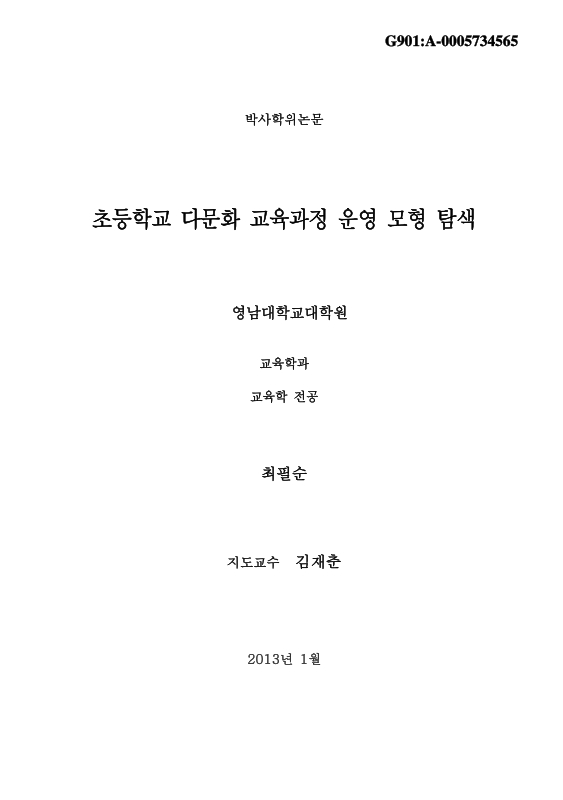
표제지
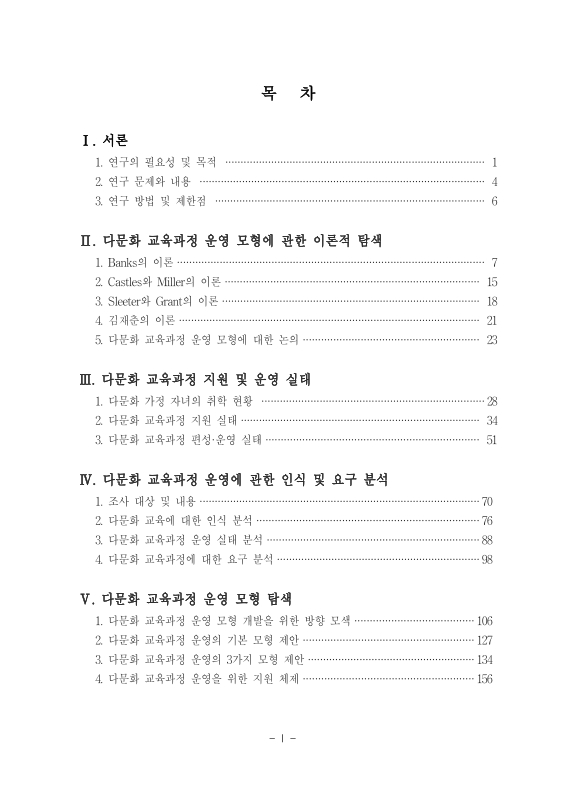
목차
I. 서론 11
1. 연구의 필요성 및 목적 11
2. 연구 문제와 내용 14
가. 연구 문제 14
나. 연구 내용 15
3. 연구 방법 및 제한점 16
II. 다문화 교육과정 운영 모형에 관한 이론적 탐색 17
1. Banks의 이론 17
가. 기여적 접근 19
나. 부가적 접근 20
다. 변혁적 접근 21
라. 사회 행동적 접근 23
마. 혼합적 접근 24
2. Castles와 Miller의 이론 25
1) 차별적 배제 모델 26
2) 동화주의 모델 26
3) 다문화주의 모델 27
3. Sleeter와 Grant의 이론 28
4. 김재춘의 이론 30
1) 동화주의 31
2) 다원주의 32
3) 비판주의 32
5. 다문화 교육과정 운영 모형에 대한 논의 33
III. 다문화 교육과정 지원 및 운영 실태 38
1. 다문화 가정 자녀의 취학 현황 38
가. 국제결혼가정 자녀 재학생 현황 38
나. 외국인 근로자 자녀 취학 현황 42
다. 새터민 가정 자녀 취학 현황 43
2. 다문화 교육과정 지원 실태 44
가. 교육기관 위계별 다문화 교육 실태 44
나. 교육청 다문화 교육 추진 사례 54
3. 다문화 교육과정 운영 실태 61
가. 교 육과정의 다문화 교육 관련 지침 61
나. 교육과정 편성·운영 지침 분석 64
다. 장학자료 분석 69
라. 학교 다문화 교육 운영 실태 73
IV. 다문화 교육과정 운영에 관한 인식 및 요구 분석 80
1. 조사 대상 및 내용 80
가. 조사 대상 80
나. 조사 내용 82
2. 다문화 교육에 대한 인식 분석 86
가. 교사 86
나. 학생 91
다. 학부모 94
라. 종합 97
3. 다문화 교육과정 운영에 대한 실태 분석 98
가. 교사 98
나. 학생 101
다. 학부모 105
라. 종합 108
4. 다문화 교육과정에 대한 요구 분석 108
가. 교사 108
나. 학생 112
다. 다문화 가정 부모 113
라. 종합 114
V. 다문화 교육과정 운영 모형 탐색 116
1. 다문화 교육과정 운영 모형 개발을 위한 방향 모색 116
가. 목표 설정 117
나. 내용 설정 120
다. 교수·학습 방법 설정 124
라. 평가 설정 135
2. 다문화 교육과정 운영의 기본 모형 제안 137
3. 다문화 교육과정 운영의 3가지 모형 제안 144
가. 이벤트형 다문화 교육과정 모형 144
나. 일부 교과 중심형 다문화 교육과정 모형 151
다. 전 교과 중심형 다문화 교육과정 모형 161
4. 다문화 교육과정 운영을 위한 지원 체제 166
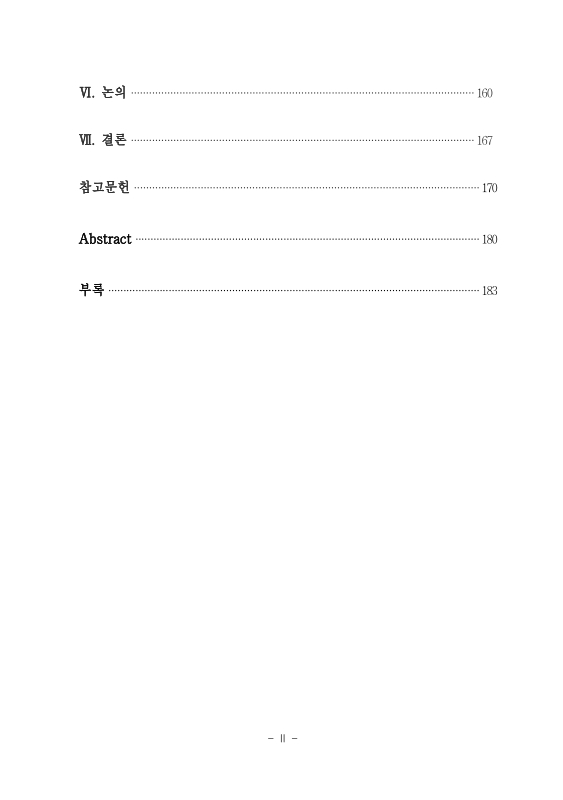
VI. 논의 170
1. 다문화 교육과정의 지원 및 운영 실태에 대한 논의 170
2. 다문화 교육과정 운영에 관한 인식 및 요구 분석 실태에 대한 논의 173
3. 다문화 교육과정 운영 모형 탐색에 관한 논의 174
VII. 결론 177
참고문헌 180
abstract 190
부록 193
[그림 V-1] 다문화 수업의 초점과 수업 진행의 중심 125
[그림 V-2] 다문화 교육과정 운영 모형 139
[그림 V-3] 다문화 교육과정 운영 모형의 기본틀 143
[그림 V-4] 다문화 수업 설계 절차 154
This study aims to propose multicultural curriculum management models in order to carry out systematic and efficient multicultural education in South Korean elementary schools. In order to do so, the study focuses on theoretical exploration of the philosophical perspective within which the multicultural curriculum must be formed.
To accomplish this purpose, a literature review and survey research were conducted. Theories on multicultural curriculum management models by Banks, Castles and Miller, Sleeter and Grant, and Kim were explored in the literature review. In the survey research, this study considered the management status and needs of a multicultural curriculum as well as the awareness of and demand for it; several points, including the proposed multicultural curriculum management models, were derived from the results and analysis. They are as follows.
First, examinations of multicultural curriculum management models can be grouped into three perspectives: assimilationism, or the conservative view; pluralism, or the progressive view; and criticism, or the radical view. Assimilationism, focusing on the adaptation of minorities to a dominant culture, is a significant educational activity in itself that supplements cultural deficits that these individuals may experience, but whether this assimilationist activity can be seen as multicultural education per se is disputable. Criticism requires an actual practice of struggle to overcome cultural differences between the mainstream and minorities; this may also have limitations when applied to Korean education, which emphasizes political neutrality of education. Due to these limitations, this study reviewed multicultural curriculum management in the progressive view.
For the survey, students from multicultural families who currently attend elementary, middle, and high schools in South Korea were divided into three groups: children of international marriages, children of migrant workers, and children of North Korean defectors. The first group is the largest, while the second shows the most concentrated distribution, centering on the capital and some other cities. This phenomenon has raised that the meaning of national identity is fading; and in a globalizing and diversifying society, establishment of identity is emerging as an important issue central to communication among cultures.
Third, the analysis of awareness of and demand for of multicultural education showed that the ability of teachers with work and training experiences in research schools to guide multicultural education was greater than that of teachers without such experience, to the level of 0.05%, in several measured items: "development of teaching materials," "use of proper teaching and learning strategies," and "guidance for cooperation among multiracial students." With regard to students, those with two South Korean parents had a positive awareness of "the value of other cultures"; and children of multicultural families wanted to learn "the language, culture or history of their parents' countries." Parents in multicultural families were most worried about their children's school life in terms of their ability at "making friends" (47.9%), followed by their "school grades" (32.9%).
Fourth, this study proposes three multicultural curriculum management models from the progressive perspective: an event-type multicultural curriculum model, a partial subject-centered type multicultural curriculum model, and a whole subject-centered type multicultural curriculum model. The first maintains the framework of the existing curriculum and adds multicultural education in the form of creative experience activities or events, supplementing existing multicultural education content. The second maintains the general outline of the existing curriculum yet implements multicultural education in subjects such as morals or social studies. In contrast, the whole subject-centered type multicultural curriculum model wholly restructures the curriculum for multicultural education. From the perspective of multicultural education, is the ideal approach, but there are limitations to its actual application in the context of the larger Korean educational discourse.
The multicultural curriculum management models proposed in this study can be gradually actualized according to the intention of school authorities. To do so, it is necessary to first establish a philosophical approach to multicultural education and then to prepare any needed organizational frameworks and personnel. Also, a network must be established for curriculum sharing, and academic study of these efforts must continue, in constant communication with multicultural education policy organizations. Moreover, there is a need for greater awareness and acceptance of the importance of multiculturalization among school administrators and multicultural education teachers, and schools must provide institutional strategies and vision to actualize such things as well as an environment in which all systems can be resolutely accepted.
When these things are achieved, multicultural education will help cultivate harmonious and integrated global talents that can actively cope with the society of the future. Officials of the South Korean Ministry of Education, Science and Technology as well as education researchers and practitioners must maintain commitment to the advancement of a multicultural curriculum.*표시는 필수 입력사항입니다.
| 전화번호 |
|---|
| 기사명 | 저자명 | 페이지 | 원문 | 기사목차 |
|---|
| 번호 | 발행일자 | 권호명 | 제본정보 | 자료실 | 원문 | 신청 페이지 |
|---|
도서위치안내: / 서가번호:

우편복사 목록담기를 완료하였습니다.
*표시는 필수 입력사항입니다.
저장 되었습니다.
