
 대표어
대표어
권호기사보기
| 기사명 | 저자명 | 페이지 | 원문 | 기사목차 |
|---|
결과 내 검색
동의어 포함
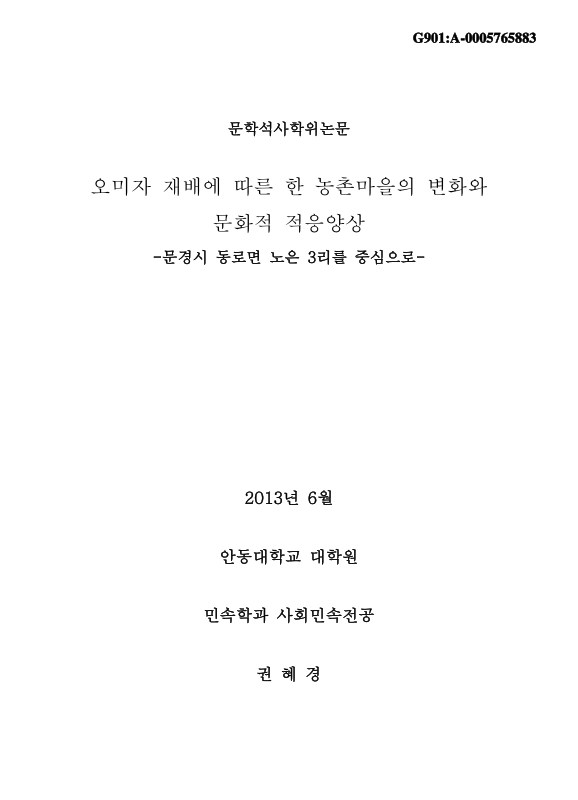
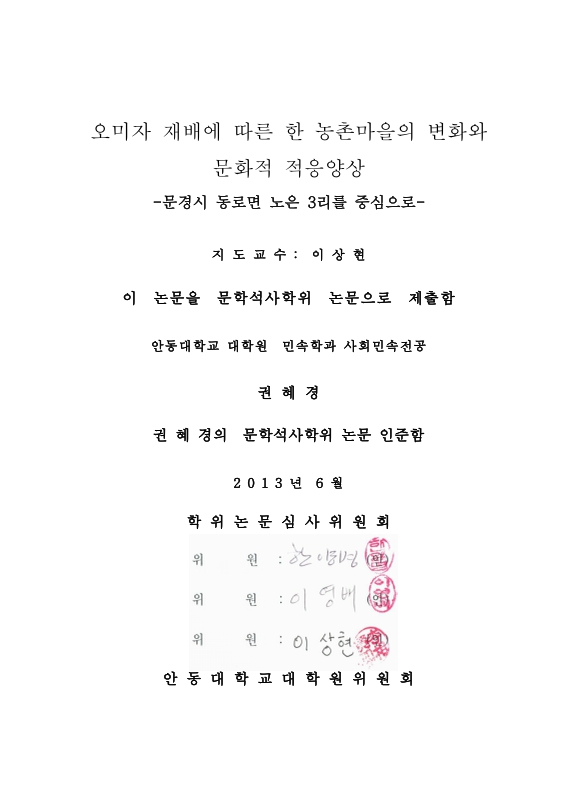
표제지
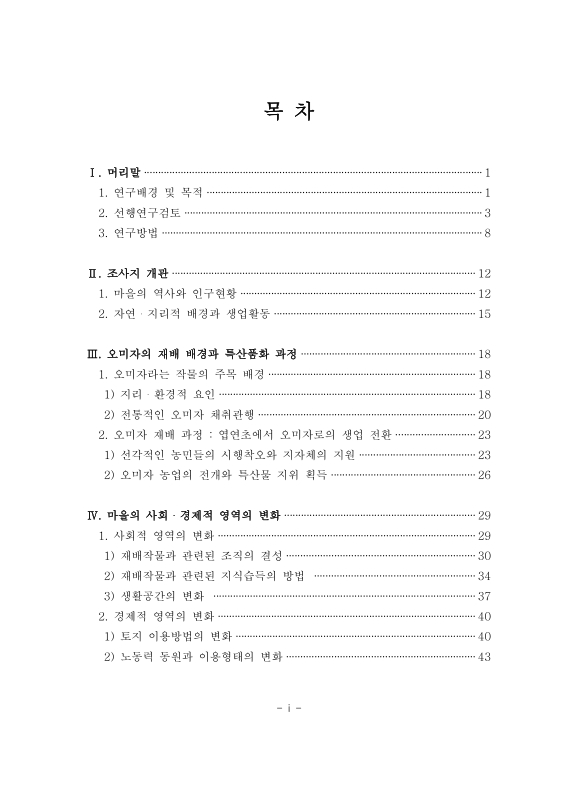
목차
I. 머리말 7
1. 연구배경 및 목적 7
2. 선행연구검토 9
3. 연구방법 14
II. 조사지 개관 18
1. 마을의 역사와 인구현황 18
2. 자연·지리적 배경과 생업활동 21
III. 오미자의 재배 배경과 특산품화 과정 24
1. 오미자라는 작물의 주목 배경 24
1) 지리·환경적 요인 24
2) 전통적인 오미자 채취관행 26
2. 오미자 재배 과정 : 엽연초에서 오미자로의 생업 전환 29
1) 선각적인 농민들의 시행착오와 지자체의 지원 29
2) 오미자 농업의 전개와 특산물 지위 획득 32
IV. 마을의 사회·경제적 영역의 변화 35
1. 사회적 영역의 변화 35
1) 재배작물과 관련된 조직의 결성 36
2) 재배작물과 관련된 지식습득의 방법 40
3) 생활공간의 변화 43
2. 경제적 영역의 변화 46
1) 토지 이용방법의 변화 46
2) 노동력 동원과 이용형태의 변화 49
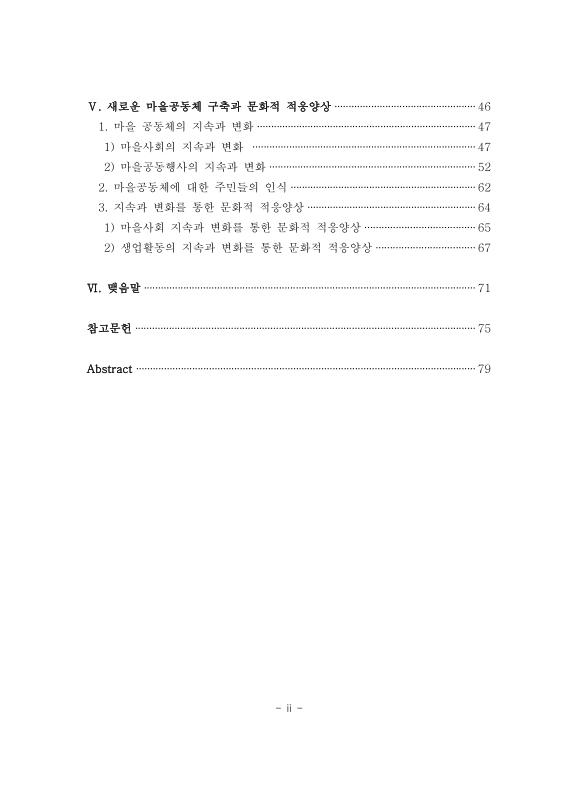
V. 새로운 마을공동체 구축과 문화적 적응양상 52
1. 마을 공동체의 지속과 변화 53
1) 마을사회의 지속과 변화 53
2) 마을공동행사의 지속과 변화 58
2. 마을공동체에 대한 주민들의 인식 68
3. 지속과 변화를 통한 문화적 적응양상 70
1) 마을사회 지속과 변화를 통한 문화적 적응양상 71
2) 생업활동의 지속과 변화를 통한 문화적 적응양상 73
VI. 맺음말 77
참고문헌 81
Abstract 85
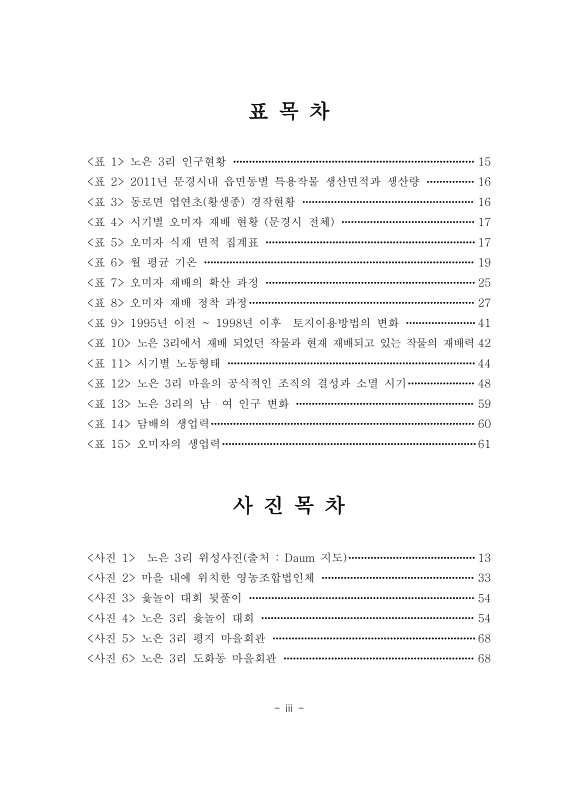
〈그림 1〉 정상진, 김영자 씨의 집 평면도 45
〈그림 2〉 장사은, 김금자 씨의 집 평면도 45
〈사진 1〉 노은 3리 위성사진 19
〈사진 2〉 마을 내에 위치한 영농조합법인체 39
〈사진 3〉 윷놀이 대회 뒷풀이 60
〈사진 4〉 노은 3리 윷놀이 대회 60
〈사진 5〉 노은 3리 평지 마을회관 74
〈사진 6〉 노은 3리 도화동 마을회관 74
This study analyzed the adaptive aspects of residents living in Noeun 3-ri, Dongro-myun, Moongyeong-si through field studies describing the social and economic change process and the change and continuance of the village community in the cultivation of Schisandra chinensisi.
Noeun 3-ri, is surrounded by high and steep Baekdudaegan, is located at an altitude of 300~700m. It is a U-shaped inland basin located in a semi-alpine mountain region. Recently, this region has introduced cultivation of Sachisandra chinensis by utilizing its natural and regional features. As the number of farmhouses increases and the size of the organizations increases, a cultural symbol of 'When one says Schisandra chinensis, it equals to Dongro-myun, Moongyeong-si.' has been forged. The farmers participate in various organizations and exchange knowledge related to the cultivation of crops, and an inventory of techniques and strategies are spread throughout the farming community. Additionally, it has led to the creation and formation of a new village community.
A certain pressure of structural changes starts being experienced due to long term residential tasks as a community or paying commission to a service company during the harvesting period for Schisandra chinensis. Also, the residents started to experience changes such as a lack of community spirit, individualism, etc. from the influx of a young population returning to farming. Through these changes, the village community has experienced a unique phenomenon, which condenses the residents' everyday life in to something that has more detail and importance.
Natives of the village, who are in their sixties, think positively of village community life, but outsiders are having difficulty adapting and integrating into the life of the village community. Therefore, the residents are trying to utilize the village community as a factor to unite all, but it has a problem in that the residents are not cooperating very well. Thus, the mutual exchange on opinions in electing the head of village and selecting cooperative unit members is encouraged in order to balance the fairness among the villages. Also, there is a plan to continue and reinforce the idea of a life-zone village for each village to unite all of the residents.
This study has a meaning in analyzing the effect on the residents' social and economic lives related the new crop called Schisandra chinensis, and understanding the cultural change process of the village communities.*표시는 필수 입력사항입니다.
| 전화번호 |
|---|
| 기사명 | 저자명 | 페이지 | 원문 | 기사목차 |
|---|
| 번호 | 발행일자 | 권호명 | 제본정보 | 자료실 | 원문 | 신청 페이지 |
|---|
도서위치안내: / 서가번호:

우편복사 목록담기를 완료하였습니다.
*표시는 필수 입력사항입니다.
저장 되었습니다.
