
 대표어
대표어
권호기사보기
| 기사명 | 저자명 | 페이지 | 원문 | 기사목차 |
|---|
결과 내 검색
동의어 포함
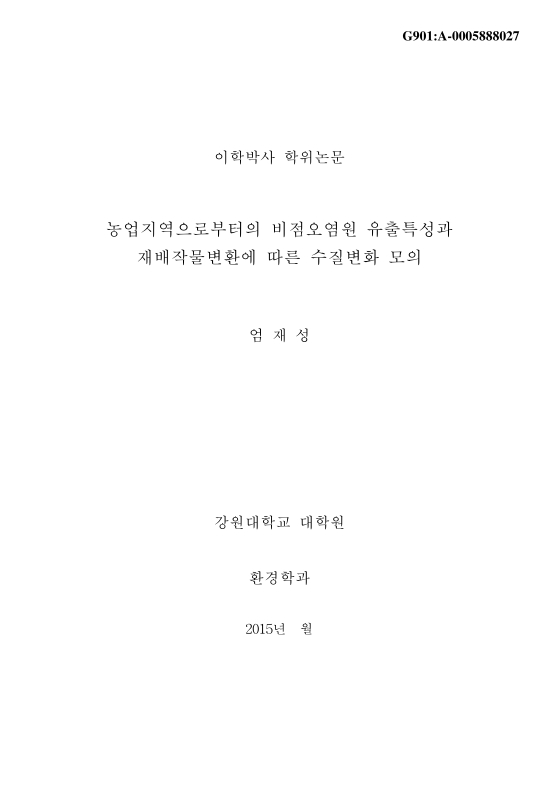
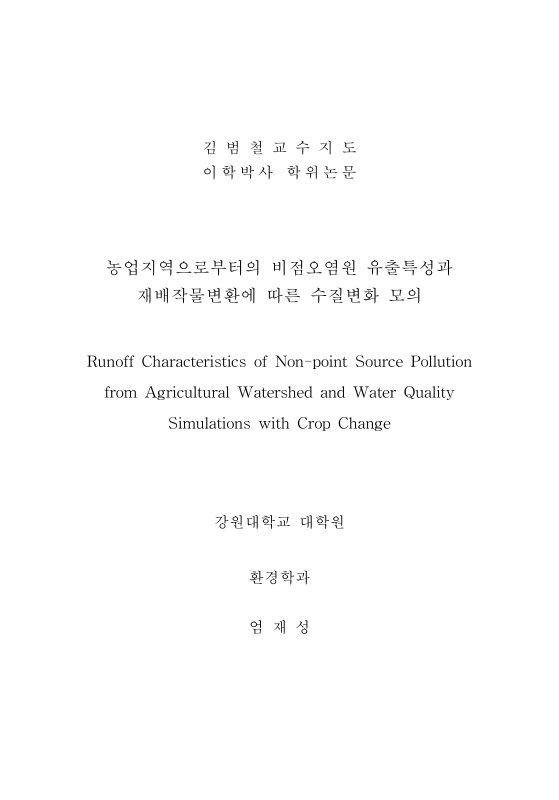
표제지
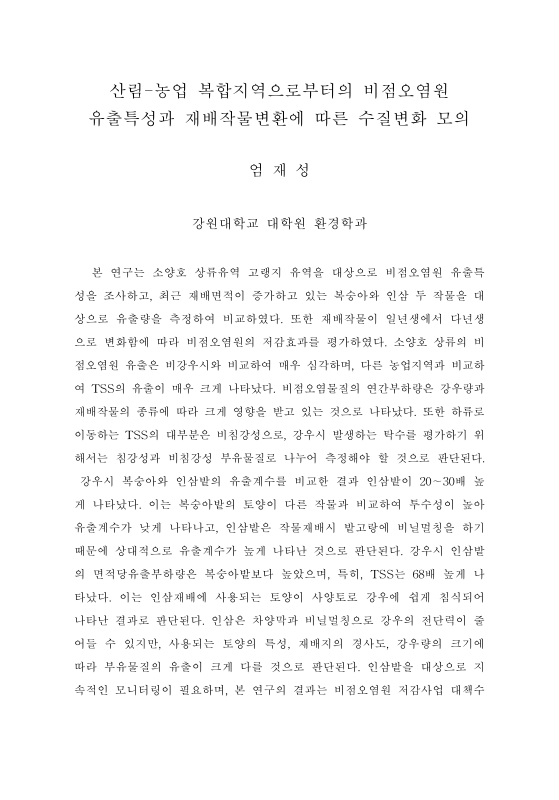
요약
목차
Chapter I. 고랭지 농업지역의 비점오염원 유출특성 11
1. 서론 11
2. 재료 및 방법 15
2.1. 조사유역 15
2.2. 조사항목 및 방법 18
2.3. 계산방법 20
2.4. 미계측 강우사상의 부하량 산정 20
3. 결과 및 고찰 24
3.1. 강우의 특성 24
3.2. 무강우와 강우시 수질변화 27
3.3. 강우특성, 유량과 유량가중평균농도의 상관관계 분석 28
3.4. FWMC, 면적당부하량 선행연구와의 비교 29
3.5. 하천과 호수의 NSSS의 분포 31
3.6. 연간부하량 산정 35
4. 결과요약 40
Chapter II. 강우시 과수원과 인삼밭의 비점오염원 유출부하 측정 41
1. 서론 41
2. 재료 및 방법 43
2.1. 조사지점 및 방법 43
2.2. 분석방법 44
2.3. 부하량과 유량가중평균농도 계산 44
3. 결과 및 고찰 46
3.1. 강우특성과 유출량 46
3.2. 유량가중평균농도와 면적당부하량 비교 48
3.3. 다른 농작물과 면적당부하량 비교 53
4. 결과요약 54
Chapter III. SWAT 모형을 적용한 비점오염물질 저감효과 분석 55
1. 서론 55
2. 재료 및 방법 57
2.1. 연구 대상유역 57
2.2. SWAT 모형의 개요 58
2.2. SWAT 모형의 입력자료 60
2.3. 모형의 보정 64
2.4. 연구시나리오 65
3. 결과 및 고찰 66
3.1. 모형의 보정결과 66
3.2. 재배작물변환에 따른 TSS 저감효과 분석 66
4. 결과요약 71
참고문헌 72
Chapter IV. 종합결론 83
Chapter I. 고랭지 농업지역의 비점오염원 유출특성 16
Fig. 1. Study site and locations for water sampling. 16
Fig. 2. Relationship between rainfall and depth of runoff in the Mandae stream. 22
Fig. 3. Relationship between discharge and specific loads in the Mandae stream. 23
Fig. 4. Characteristics of rainfall in the Mandae watershed from 2003 to 2009. 25
Fig. 5. Spatial variation of SSS/TSS in the rainy season. 32
Fig. 6. Relationship between turbidity and TSS. 33
Fig. 7. Relationship between turbidity and TSS, NSSS in the streams and Lake Soyang during storm events. 33
Fig. 8. Relationship of rainfall and annual load in the Mandae watershed from 2003 to 2009. 36
Fig. 9. Yearly variation of crops yield in the Mandae watershed from 2003 to 2009. 37
Fig. 10. Yearly variation of ginseng and orchard area in the Mandae watershed from 2003 to 2009. 38
Fig. 11. Comparison of specific loads and area of perrenial crop in the Mandae watershed from 2003 to 2009. 39
Chapter II. 강우시 과수원과 인삼밭의 비점오염원 유출부하 측정 43
Fig. 1. Study site and locations for water sampling. 43
Fig. 2. FWMC comparisons of peach and ginseng during rain event. 51
Fig. 3. Specific load comparison of peach and ginseng during rain event. 52
Chapter III. SWAT 모형을 적용한 비점오염물질 저감효과 분석 57
Fig. 1. Haean study area within the Lake Soyang watershed is located in northeastern South Korea. 57
Fig. 2. Input and output data in SWAT model. 59
Fig. 3. DEM and soil map used in SWAT model. 60
Fig. 4. Location of the weather stations. 61
Fig. 5. Land use of Haean catchment. 62
Fig. 6. Comparison of observed and SWAT estimated flow in the monitoring location. 67
Fig. 7. Relationship between observed and SWAT simulated flow in the monitoring location. 67
Fig. 8. Comparison of observed and SWAT estimated TSS in the monitoring location. 68
Fig. 9. Relationship between observed and SWAt estimated TSS in Mandae stream. 68
본 연구는 소양호 상류유역 고랭지 유역을 대상으로 비점오염원 유출특성을 조사하고, 최근 재배면적이 증가하고 있는 복숭아와 인삼 두 작물을 대상으로 유출량을 측정하여 비교하였다. 또한 재배작물이 일년생에서 다년생으로 변화함에 따라 비점오염원의 저감효과를 평가하였다. 소양호 상류의 비점오염원 유출은 비강우시와 비교하여 매우 심각하며, 다른 농업지역과 비교하여 TSS의 유출이 매우 크게 나타났다. 비점오염물질의 연간부하량은 강우량과 재배작물의 종류에 따라 크게 영향을 받고 있는 것으로 나타났다. 또한 하류로 이동하는 TSS의 대부분은 비침강성으로, 강우시 발생하는 탁수를 평가하기 위해서는 침강성과 비침강성 부유물질로 나누어 측정해야 할 것으로 판단된다.
강우시 복숭아와 인삼밭의 유출계수를 비교한 결과 인삼밭이 20∼30배 높게 나타났다. 이는 복숭아밭의 토양이 다른 작물과 비교하여 투수성이 높아 유출계수가 낮게 나타나고, 인삼밭은 작물재배시 밭고랑에 비닐멀칭을 하기 때문에 상대적으로 유출계수가 높게 나타난 것으로 판단된다. 강우시 인삼밭의 면적당유출부하량은 복숭아밭보다 높았으며, 특히, TSS는 68배 높게 나타났다. 이는 인삼재배에 사용되는 토양이 사양토로 강우에 쉽게 침식되어 나타난 결과로 판단된다. 인삼은 차양막과 비닐멀칭으로 강우의 전단력이 줄어들 수 있지만, 사용되는 토양의 특성, 재배지의 경사도, 강우량의 크기에 따라 부유물질의 유출이 크게 다를 것으로 판단된다. 인삼밭을 대상으로 지속적인 모니터링이 필요하며, 본 연구의 결과는 비점오염원 저감사업 대책수립에 도움이 될 것으로 판단된다. 재배작물 변환에 따른 비점오염원 저감효과를 모의한 결과, 과수원 재배면적이 증가함에 따라 TSS의 연간부하량은 감소하였으며, 유역 전체 부하량의 1. 5∼5. 8%가 감소하는 것으로 나타났다. 그러나, 인삼의 재배면적이 증가함에 따라 TSS의 연간부하량은 증가하는 경향을 보였으며, 앞서 실측된 결과에서는 일년생 작물보다는 면적당부하량이 작았음에도 불구하고 반대의 경향을 보였다. 이는 인삼재배 방법의 가장 큰 특징인 차양막과 고랑의 멀칭을 고려하지 않았기 때문에 나타난 결과로 판단된다. 본 연구를 통하여 약 1㏊의 일년생 작물이 과수작목으로 전환됨에 따라 연간 1ton의 TSS가 저감되는 것을 확인할 수 있었다. 향후 차양막과 고랑의 비닐멀칭이 SWAT 모형에 고려된다면 인삼작목 전환에 따른 TSS의 저감효과 분석이 가능할 것으로 판단된다. 소양호 상류의 인삼과 과수 재배면적이 지속적으로 증가하고 있어 비점오염원 유출에 큰 영향을 미칠 것으로 판단되며, 비점오염 저감효과 분석을 위해 위해서는 과수와 인삼 관련된 많은 연구가 필요할 것으로 판단된다.*표시는 필수 입력사항입니다.
| 전화번호 |
|---|
| 기사명 | 저자명 | 페이지 | 원문 | 기사목차 |
|---|
| 번호 | 발행일자 | 권호명 | 제본정보 | 자료실 | 원문 | 신청 페이지 |
|---|
도서위치안내: / 서가번호:

우편복사 목록담기를 완료하였습니다.
*표시는 필수 입력사항입니다.
저장 되었습니다.
