
 대표어
대표어
권호기사보기
| 기사명 | 저자명 | 페이지 | 원문 | 기사목차 |
|---|
결과 내 검색
동의어 포함
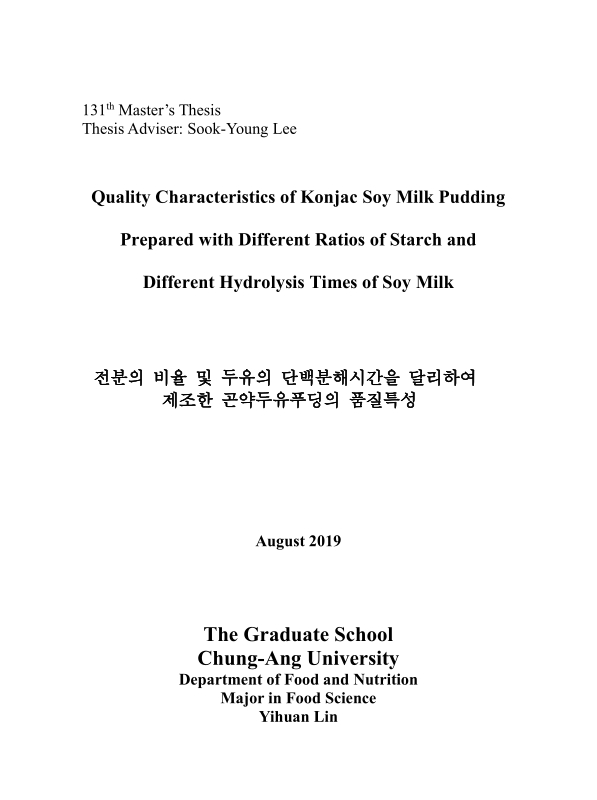
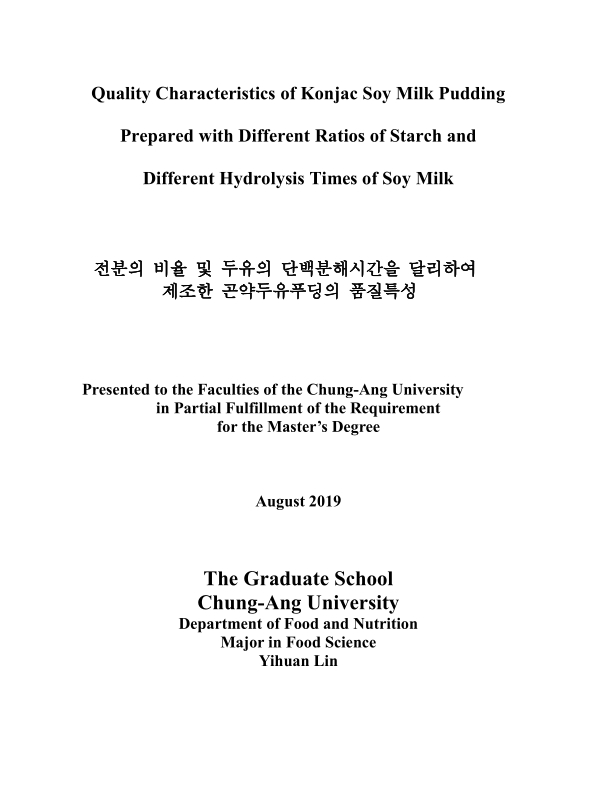
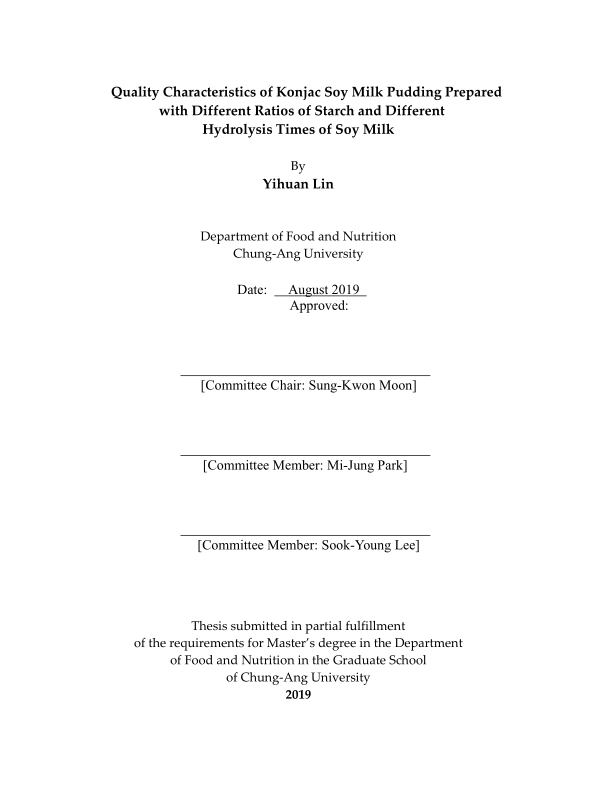
Title Page
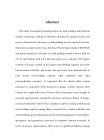
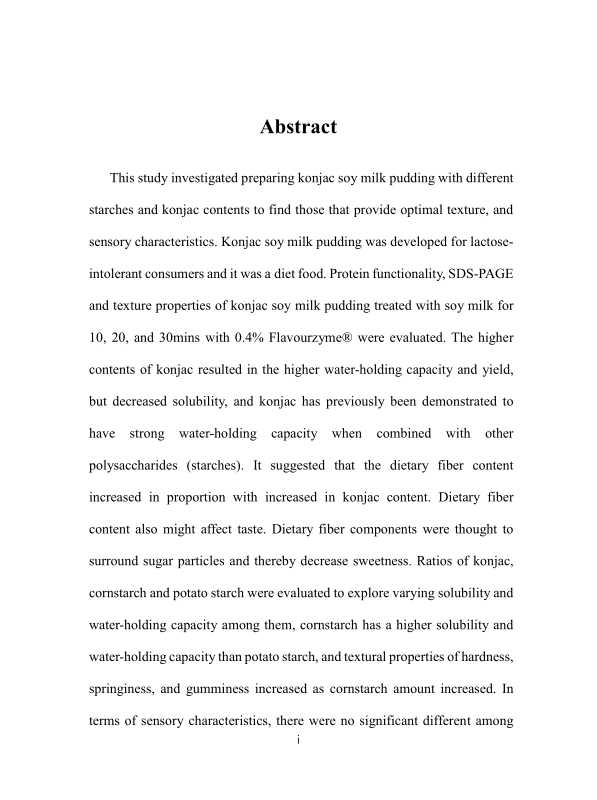
Abstract
Contents
I. Introduction 13
II. Materials and Methods 17
1. Materials 17
2. Preparation of proteolyzed soy milk 17
3. Preparation of konjac soy milk pudding 18
4. Yield 22
5. Sweetness 22
6. SDS-PAGE 22
7. Degree of hydrolysis 23
8. Solubility 23
9. Water-holding capacity 24
10. Emulsifying activity 25
11. Textural profile analysis 25
12. Sensory evaluation 26
13. Statistical analysis 26
III. Results and Discussion 27
1. Quality Characteristics of Konjac Soy Milk Pudding Prepared with Different Contents of Konjac and Ratios of Starches 27
1.1. Yield 27
1.2. Sweetness 28
1.3. Solubility 28
1.4. Water-holding capacity 29
1.5. Textural properties 31
1.6. Sensory evaluation 34
2. Protein Functionality with Different Hydrolysis Times of Soy Milk 37
2.1. SDS-PAGE patterns 37
2.2. Degree of hydrolysis 40
2.3. Solubility 40
2.4. Water-holding capacity 41
2.5. Emulsifying activity 42
3. Quality Characteristics of Konjac Soy Milk Pudding Prepared with Different Hydrolysis Times of Soy Milk 44
3.1. Yield 44
3.2. Solubility 44
3.3. Water-holding capacity 45
3.4. Textural properties 47
3.5. Sensory evaluation 50
IV. Conclusion 53
References 57
Appendix 66
Appendix 1. Sensory evaluation questionnaire for konjac soy milk pudding prepared with different ratios of gelling agent 66
Appendix 2. Sensory characteristics of vanilla-soy milk pudding treated with different hydrolysis by protease 67
국문 초록 69
Figure 1. Procedure for soy milk treated with protease for different... 19
Figure 2. Procedure for konjac soy milk pudding prepared with... 20
Figure 3. SDS-PAGE patterns with different hydrolysis times of soy milk 39
*표시는 필수 입력사항입니다.
| 전화번호 |
|---|
| 기사명 | 저자명 | 페이지 | 원문 | 기사목차 |
|---|
| 번호 | 발행일자 | 권호명 | 제본정보 | 자료실 | 원문 | 신청 페이지 |
|---|
도서위치안내: / 서가번호:

우편복사 목록담기를 완료하였습니다.
*표시는 필수 입력사항입니다.
저장 되었습니다.
