
 대표어
대표어
권호기사보기
| 기사명 | 저자명 | 페이지 | 원문 | 기사목차 |
|---|
결과 내 검색
동의어 포함
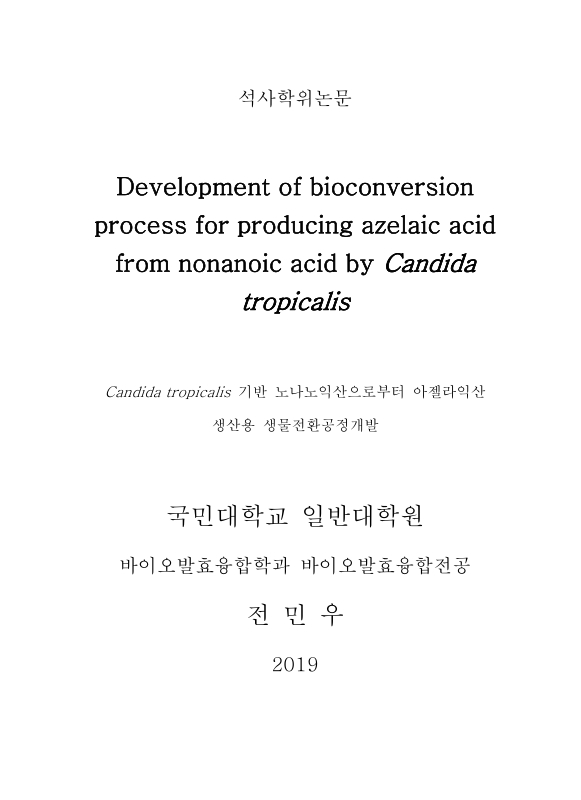
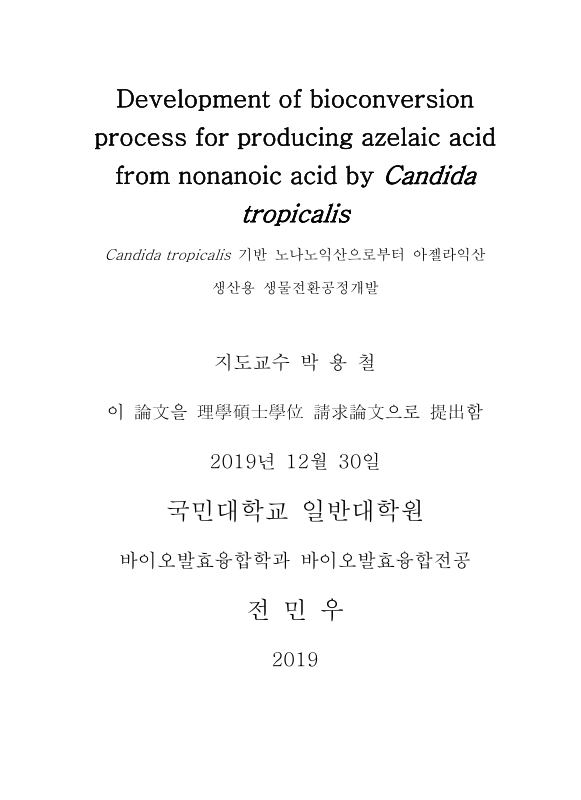
Title Page
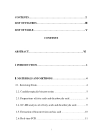
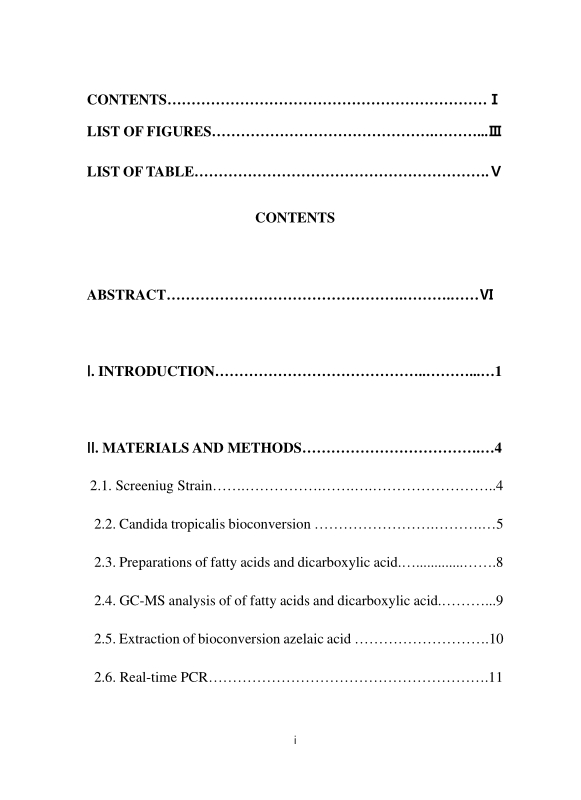
Contents
Abstract 9
1. Introduction 11
2. Materials and Methods 14
2.1. Screeniug Strain 14
2.2. Candida tropicalis bioconversion 15
2.2.1. Seed culture 15
2.2.2. Pre culture (Growth phase) 15
2.2.3. Main culture (Growth phase) 15
2.2.4. Main culture (Conversion phase) 16
2.3. Preparation of fatty acid and dicarboxylic acid 18
2.4. GC-MS analysis of fatty acid and dicarboxylic acid 19
2.5. Extraction of bioconversion azelaic acid 20
2.6. Real time PCR 21
2.6.1. Primer 21
2.6.2. RNA extraction, cDNA synthesis and Real-time PCR 21
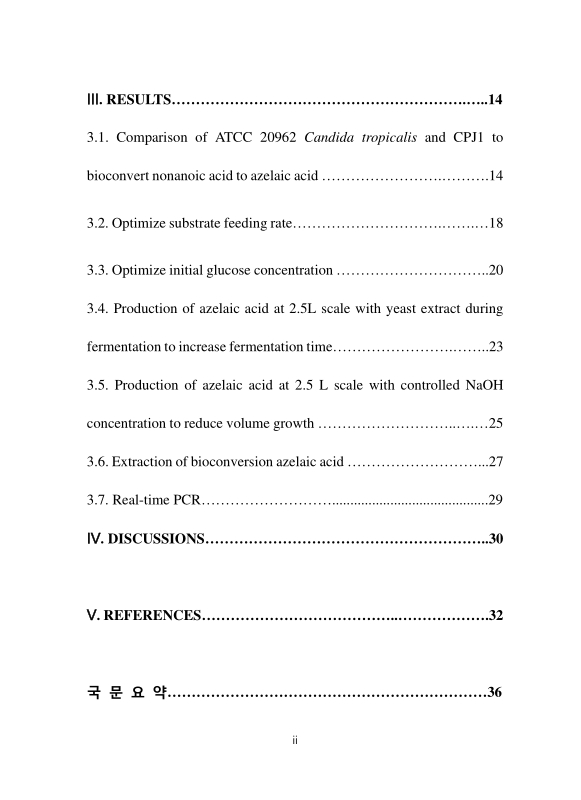
3. Results 24
3.1. Comparison of ATCC 20962 Candida tropicalis and CPJ1 to bioconvert nonanoic acid to azelaic acid 24
3.2. Optimize substrate feeding rate 28
3.3. Optimize initial glucose concentration 30
3.4. Production of azelaic acid at 2.5L scale with yeast extract during fermentation to increase fermentation time 33
3.5. Production of azelaic acid at 2.5 L scale with controlled NaOH concentration to reduce volume growth 35
3.6. Extraction of bioconversion azelaic acid 37
3.7. Real time PCR 39
4. Discussion 40
5. References 42
국문요약 46
List of Tables
Table 1. primer 23
Table 2. Comparison of ATCC 20962 Candida tropicalis and CPJ1 to bioconvert... 27
Table 3. Comparison of Conditions of Different Glucose Concentrations of CPJ1 to... 32
Fig 1. Substrate-resistance strain screening schematic 14
Fig 2. Process for producing azelaic acid by Candida tropicalis 17
Fig 3. Preparations of nonanoic acid and azelaic acid 19
Fig 4. Bioconversion of nonanoic acid to azelaic acid by ATCC 20962 Candida... 25
Fig 5. Bioconversion of nonanoic acid to azelaic acid by CPJ1 Candida tropicalis. 26
Fig 6. To optimize substrate feeding rate Bioconversion of nonanoic acid to azelaic... 29
Fig 7. To optimize substrate feeding rate Bioconversion of nonanoic acid to azelaic... 31
Fig 8. Bioconversion process applying 200g / L of 25ml yeast extract every 60 hours... 34
Fig 9. Result of fermentation applying all improved conditions. Bioconversion of... 36
Fig 10. Bioconversion azelaic acid recovered by the extraction process 37
Fig 11. Extracted bioconversion azelaic acid GC/MS data 38
Fig 12. Real-time PCR result. Time 1: Before induction, 2: after induction, 3: after... 39
*표시는 필수 입력사항입니다.
| 전화번호 |
|---|
| 기사명 | 저자명 | 페이지 | 원문 | 기사목차 |
|---|
| 번호 | 발행일자 | 권호명 | 제본정보 | 자료실 | 원문 | 신청 페이지 |
|---|
도서위치안내: / 서가번호:

우편복사 목록담기를 완료하였습니다.
*표시는 필수 입력사항입니다.
저장 되었습니다.
