
 대표어
대표어
권호기사보기
| 기사명 | 저자명 | 페이지 | 원문 | 기사목차 |
|---|
결과 내 검색
동의어 포함
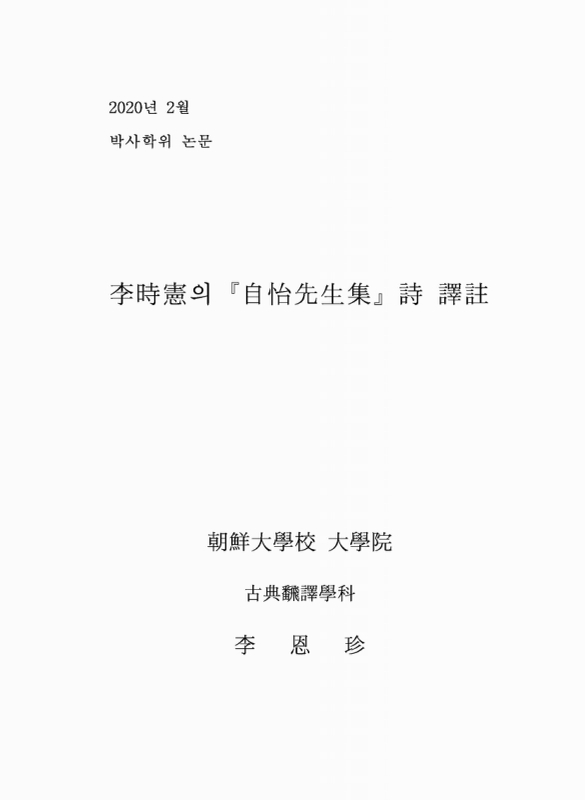
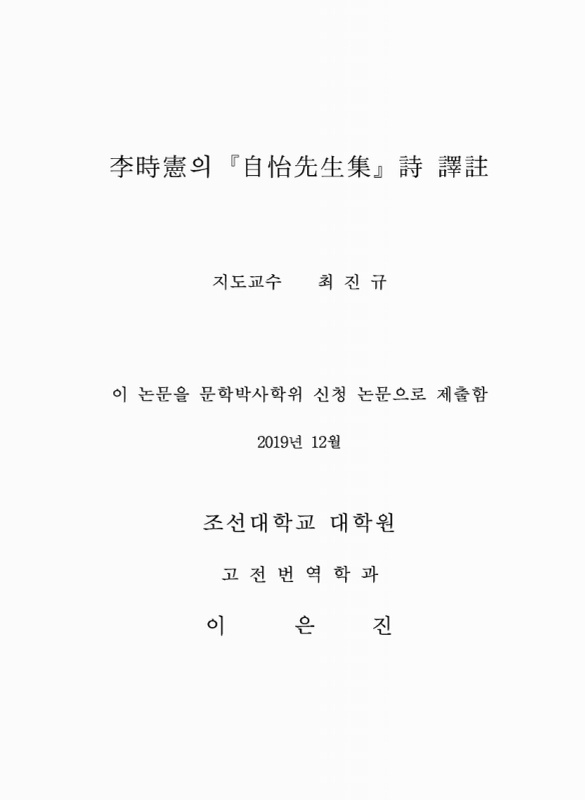
표제지
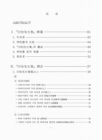
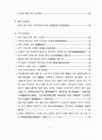
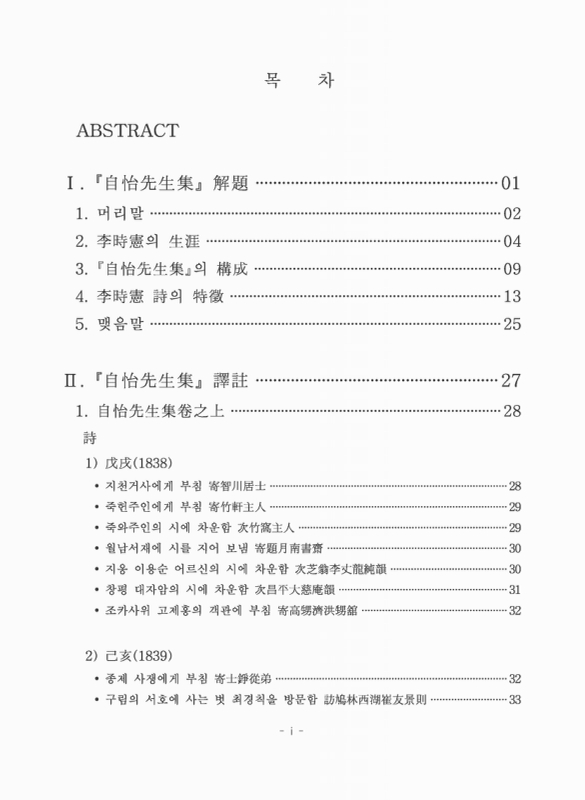
목차
ABSTRACT 18
I. 『自怡先生集』 解題 20
1. 머리말 21
2. 李時憲의 生涯 23
3. 『自怡先生集』의 構成 28
4. 李時憲 詩의 特徵 32
5. 맺음말 44
II. 『自怡先生集』 譯註 46
1. 自怡先生集卷之上: 詩 47
1) 戊戌(1838) 47
2) 己亥(1839) 51
3) 庚子(1840) 53
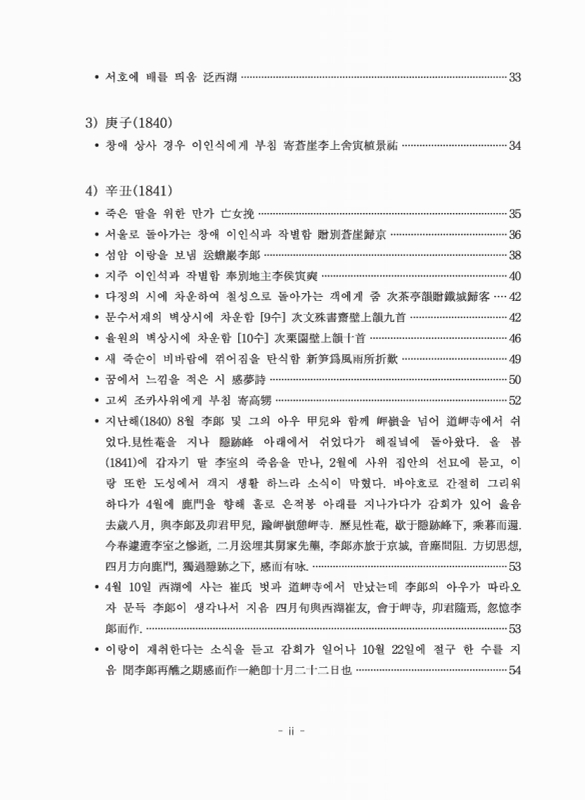
4) 辛丑(1841) 54
5) 壬寅(1842) 73
6) 癸卯(1843) 76
7) 甲辰(1844) 84
8) 乙巳(1845) 89
9) 丙午(1846) 103
10) 丁未(1847) 105
11) 己酉(1849) 113
12) 辛亥(1851) 127
13) 壬子(1852) 136
14) 癸丑(1853) 151
15) 甲寅(1854) 189
16) 乙卯(1855) 205
17) 丙辰(1856) 216
2. 自怡先生集卷之中 221
죽사동 산당화 (竹寺洞山棠花) 221
시인의 각별한 관심 (詩人別樣奇) 222
죽사동에서 같은 날 운을 잡음 (竹寺洞同日拈韻) 222
근수루에서 운을 잡음 (近水樓拈韻) 223
주헌의 발에 내리는 비 (籌軒簾雨) 224
재첩시 (再疊) 225
앞 시의 운을 써서 해남의 옛 수령을 송별함 (用前韻送別海南舊使君) 226
다음 날까지 비가 내려 이어진 인연 (翌雨續緣) 226
신안에 사는 신암을 위한 시와 서문 (新安新菴詩並序) 227
암우의 시에 화답함 (和菴嵎詩) 231
신종의 「백회」시에 차운함 (次愼從白悔詩韻) 232
일속산방에 화답하여 부침 (和寄一粟山房) 232
다산의 「옥판봉」에 차운하여 삼가 정유상에게 보내고 짧은 서문을 아울러 지음 (次茶山玉版峰詩韻奉寄維桑幷小序) 233
「천황봉」 시에 화운함 (和天皇峯韻) 235
풍악산으로 유람 가는 이를 전송하는 시와 서문 (送人遊楓嶽詩序) 236
산양의 이수재에게 화답하고 이별함 (和別山陽李秀才) 239
쌍정으로 둔우를 찾아 갔으나 만나지 못하고 절구 2수를 남김 (雙亭訪芚嵎不遇留題二絶) 239
정유상의 「상풍」 시에 화답함 (和維桑賞楓韻) 240
「갑사」 시에 화운함 (和岬寺韻) 241
눈 내린 창가에 백 그루의 매화가 피니 춘파·회사·청불에게 절하며 드리고, 아울러 짧은 편지를 보냄 (百梅雪窓, 拜呈春坡·晦沙·淸拂, 下幷短柬) 241
금릉 여섯 수 (金陵六首) 242
둔우의 시에 화답함 (和芚嵎詩) 245
운곡에 사는 사간 김권의 시에 화답함 (和雲谿金司諫權詩韻) 246
물염정 시 (勿染亭韻) 247
뜻을 펼쳐 우연히 읊음 (述志偶唫) 248
미륵가 (彌勒歌) 248
표제 고하진을 위한 만가 [절구시 3수] (挽表弟高厦鎭三絶) 250
실제 (失題) 3수 (三首) 251
실제 (失題) 253
초의대사에게 짧은 서문과 오언 고시를 드림, 무술년(1838) 6월 15일 (贈草衣大師小序幷五古戊戌 流頭) 253
가학치를 지남 (過駕鶴峙) 256
사선정에서 머무름 (宿四仙亭) 257
호산춘색도에 지음 (題壺山春色圖) 257
산수화에 지음 (題山水畵) 257
송단노인에게 씀 (題松壇老人) 257
연파어자도에 지음 (題烟波漁子圖) 258
일연거사 회갑연에 바치는 시와 서문 (一淵居士回甲壽宴詩序) 258
참고문헌 261
This paper is a study on the lives of Lee Si-heon, and the composition and contnt of his anthology titled 『Jai SunSeng jib』, and his sense of seclusion. Lee was born in the Gangjin Baegun-dong Wonlim(白雲洞園林) and lived there all his life. Many famous people visited Baegun-dong Wonlim, and 『Jai SunSeng jib』 contains numerous poems that are written in socializing with them. Baegun-dong Wonlim was first established by Lee Dam-lo, the sixth ancestor of Lee Si~heon, and has been passed down to its descendants, which is called Jungheung-jo of Baegun-dong Wonlim.
『Jai Sun Sengjib』 consists of 394 poems, 6 prefaces, 7 commemorative articles, 7 opinions, 12 memorial orations, 4 Sangnyang-mun and 11 epistles.
While studying the civil service exam in order to enter the government, Lee Si-heon always admired to be a hermit, and live in harmony with nature. He read diligently with the scriptures of ancient sages, listening to the wind and the sound of water in the valleys, not to concern himself with the disputes of the world. He studied not only Confucian literature and Buddhist literature, but also Taoism literature. In particular, he admired a fairyland and took care of himself by hypogastric breathing, a training method of Taoism. He was influenced by Taoism from Lee Dam-lo, Confucianism from his two teachers, Jeong Yak-yong and Sung Geun-mook, and Buddhism from Seon Master Choui, thus he was the Euniljisa (a scholar who lived in a hidden place) who embraced Yubuldo(儒彿道) and lived in the Baegun-dong Wonlim.*표시는 필수 입력사항입니다.
| 전화번호 |
|---|
| 기사명 | 저자명 | 페이지 | 원문 | 기사목차 |
|---|
| 번호 | 발행일자 | 권호명 | 제본정보 | 자료실 | 원문 | 신청 페이지 |
|---|
도서위치안내: / 서가번호:

우편복사 목록담기를 완료하였습니다.
*표시는 필수 입력사항입니다.
저장 되었습니다.
