
 대표어
대표어
 학술연구정보서비스(KERIS)
권호기사보기
| 기사명 | 저자명 | 페이지 | 원문 | 기사목차 |
|---|
결과 내 검색
동의어 포함
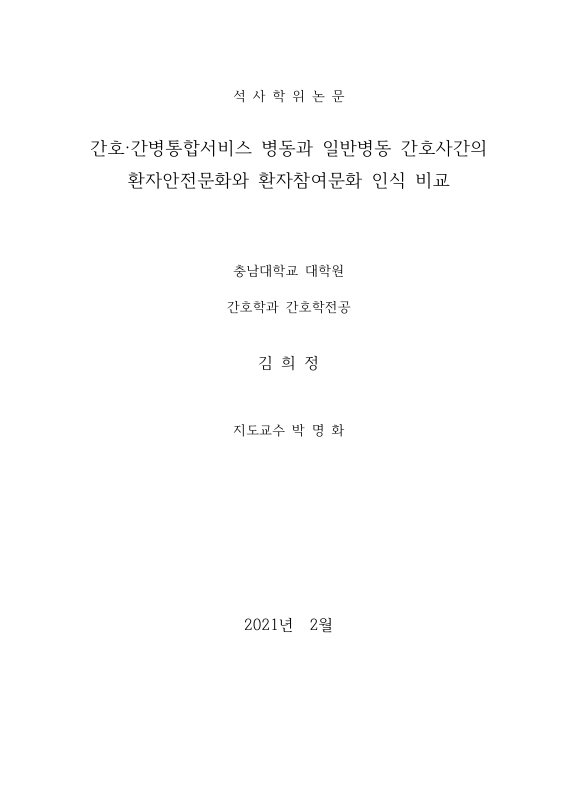
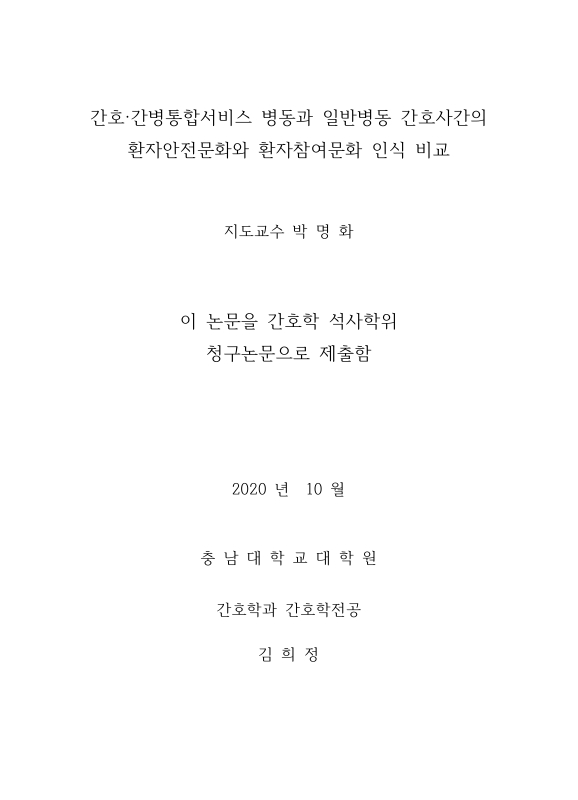
표제지
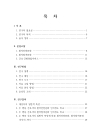
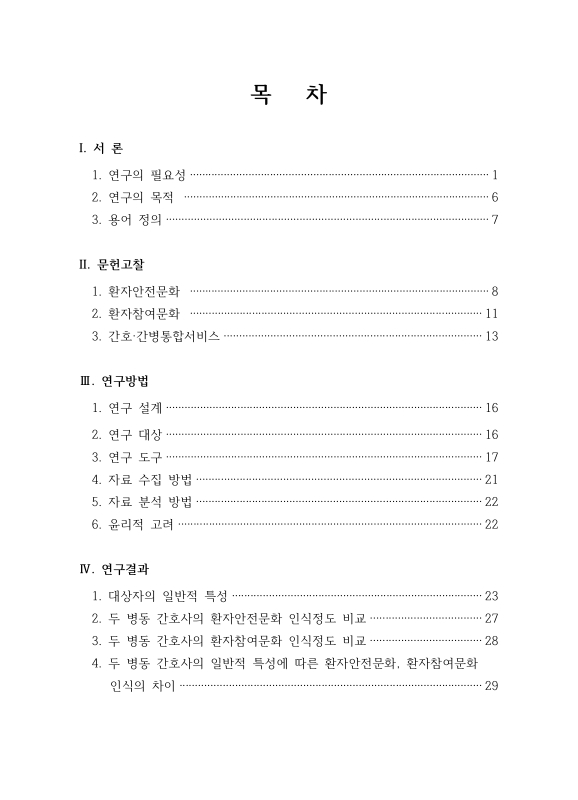
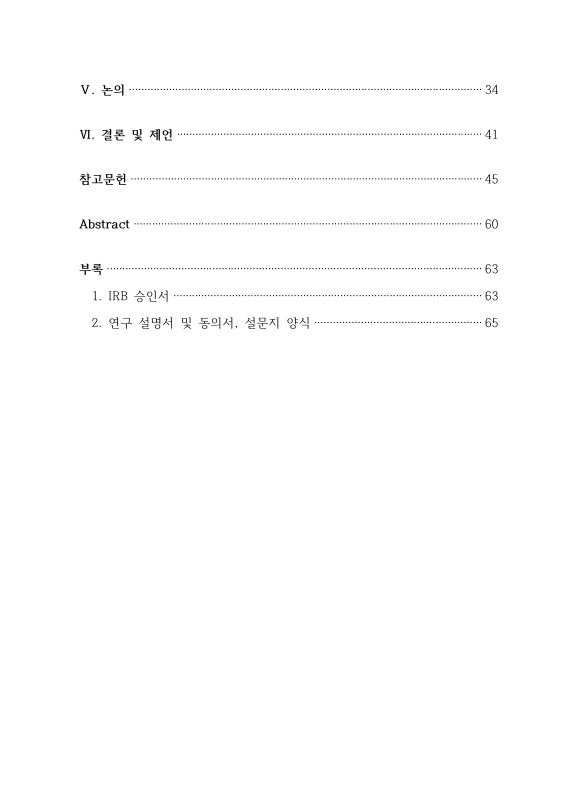
목차
I. 서론 7
1. 연구의 필요성 7
2. 연구의 목적 12
3. 용어의 정의 13
1) 환자안전문화 13
2) 환자참여문화 13
II. 문헌고찰 14
1. 환자안전문화 14
2. 환자참여문화 17
3. 간호·간병통합서비스 19
III. 연구 방법 22
1. 연구 설계 22
2. 연구 대상 22
3. 연구 도구 23
1) 환자안전문화 23
2) 환자참여문화 25
3) 일반적 특성 27
4. 자료 수집 방법 27
5. 자료 분석 방법 28
6. 윤리적 고려 28
IV. 연구결과 29
1. 대상자의 일반적 특성 29
2. 두 병동 간호사의 환자안전문화 인식정도 비교 33
3. 두 병동 간호사의 환자참여문화 인식정도 비교 34
4. 두 병동 간호사의 일반적 특성에 따른 환자안전문화, 환자참여문화 인식의 차이 35
1) 두 병동 간호사의 일반적 특성에 따른 환자안전문화 인식의 차이 35
2) 두 병동 간호사의 일반적 특성에 따른 환자참여문화 인식의 차이 37
V. 논의 40
VI. 결론 및 제언 47
참고문헌 51
ABSTRACT 66
부록 69
부록 1. IRB 승인서 69
부록 2. 연구 설명서 및 동의서, 설문지 양식 71
The purpose of this study is to improve patient safety and quality of nursing by comparing nurses' perceptions of patient safety culture and patient participation culture in comprehensive service and general wards.
The subjects of the study are nurses in comprehensive nursing care service ward nurses and general nursing service ward who work at four general hospitals. A total of 171 nurses completed questionnaires for data analysis(comprehensive service ward: 87, general ward: 81). The data collection was done from September 21 to October 6, 2020. Perceptions of patient safety culture and patient participation culture were investigated through self-reporting questionnaires. Statistical analysis were conducted by SPSS/WIN 25.0 program for descriptive analysis, t-test, ANOVA, Scheffé test and chronbach's alpha.
The results were as follows:
1. The perceptions of patient safety culture was 3.59±0.26 points for nurses in the comprehensive service ward and 3.51±0.27 points for nurses in the general ward out of 5 points, but there were no statistically significant results (t=1.79, p=.074).
2. The perceptions of patient participation culture was 3.30±0.42 in the comprehensive service ward and 3.15±0.30 in the general ward. There was a statistically significant difference (t=2.58, p=.001). Among the sub-domains of patient participation culture, comprehensive service ward nurse had 3.37 points for support, 3.06 points for information sharing and dialogue, and 3.27 points for acceptance of new roles. Nurses in general ward received 3.11 points in support, 2.97 points in information sharing and conversation, and 3.10 points in accepting new roles, which were statistically significantly higher than nurses in general ward(Support(t=3.63, p<.001), Information sharing and dialogue(t=2.99, p=.003), Acceptance of new roles(t=2.54, p=.012)).
There was no significant difference in the perception of patient safety culture by type of ward, but the perception of the patient safety participation was significantly higher among nurses in comprehensive service ward. Nurses in comprehensive service ward have more cooperative relationships with patients, indicating that their attitude toward patient participation is more positive.*표시는 필수 입력사항입니다.
| 전화번호 |
|---|
| 기사명 | 저자명 | 페이지 | 원문 | 기사목차 |
|---|
| 번호 | 발행일자 | 권호명 | 제본정보 | 자료실 | 원문 | 신청 페이지 |
|---|
도서위치안내: / 서가번호:

우편복사 목록담기를 완료하였습니다.
*표시는 필수 입력사항입니다.
저장 되었습니다.
