
 대표어
대표어
권호기사보기
| 기사명 | 저자명 | 페이지 | 원문 | 기사목차 |
|---|
결과 내 검색
동의어 포함
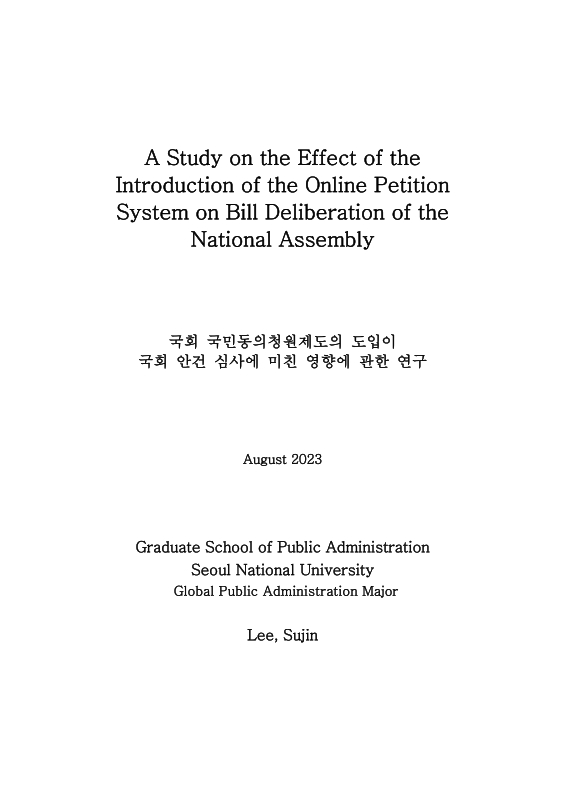
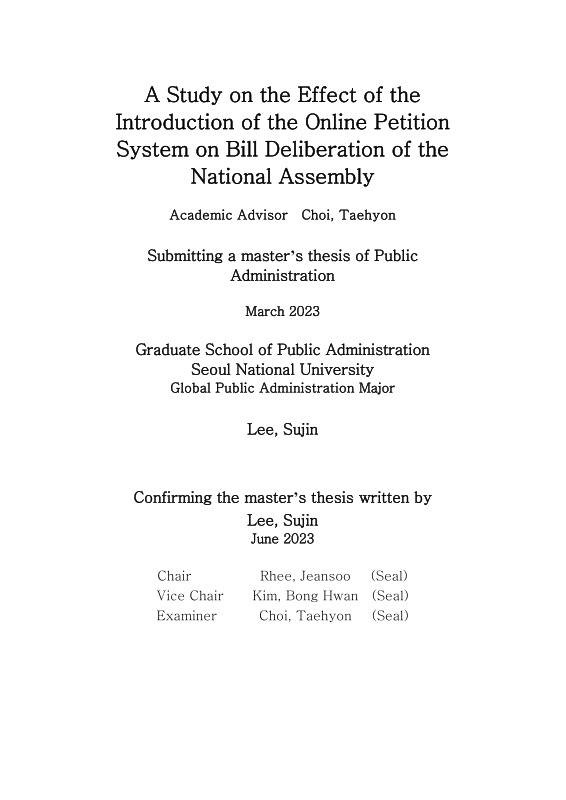
Title Page
Abstract
Contents
Chapter 1. Introduction 12
1.1. Purpose of Research 12
1.2. Scope and Method of Research 13
1.3. Petition System of the National Assembly 14
Chapter 2. Theoretical Backgrounds and Literature Review 17
2.1. Theoretical Backgrounds 17
2.1.1. Theory of Participatory Democracy 17
2.1.2. Theory of Policy Decision-making: Elite Model and Pluralist Model 18
2.1.3. Theory of Deliberative Democracy 19
2.1.4. Theory of Digital Democracy 21
2.1.5. Theories and Recent Debates on Online Petition System 23
2.2. Literature Review 24
2.2.1. Foreign Studies 24
2.2.2. Domestic Studies 25
2.3. Critical Review 27
Chapter 3. Research Design and Methods 28
3.1. Research Questions 28
3.2. Research Design 29
3.3. Data Collection 29
3.4. Analytical Framework 30
Chapter 4. Analysis 34
4.1. Amount of Petitions 34
4.2. Comparison of Agendas of Petitions 37
4.2.1. Policy Typology 37
4.2.2. Petition Topic 42
4.2.3. Petition Typology 43
4.2.4. Relevance to a Specific Region or Association 49
4.2.5. Cases in which multiple petitions have been submitted for the same issue 56
4.3. Comparison of Petition Processing Procedures 62
4.3.1. Processing Period 62
4.3.2. Number of Deliberation 65
4.3.3. Significant Issues in the Process 67
4.4. Comparison of Processing Results 68
4.4.1. Processing Results 68
4.4.2. Significant Issues in the Processing Results 72
Chapter 5. Conclusion 75
5.1. Research Results and Implications 75
5.2. Limitations of Research and Future Research 80
Bibliography 82
초록(국문) 89
Figure 1. Structure of study 14
Figure 2. Examination process of the petition in the National Assembly 16
Figure 3. Analytical framework 31
Figure 4. Petition related to the enactment of the Anti-Discrimination Act 57
Figure 5. Petition related to the repeal of the National Security Act 58
Figure 6. Petitions related to granting abortion 58
Figure 7. Petition related to the establishment of the Severe Crime Investigation Agency 59
Figure 8. Processing period of the two types of petitions 64
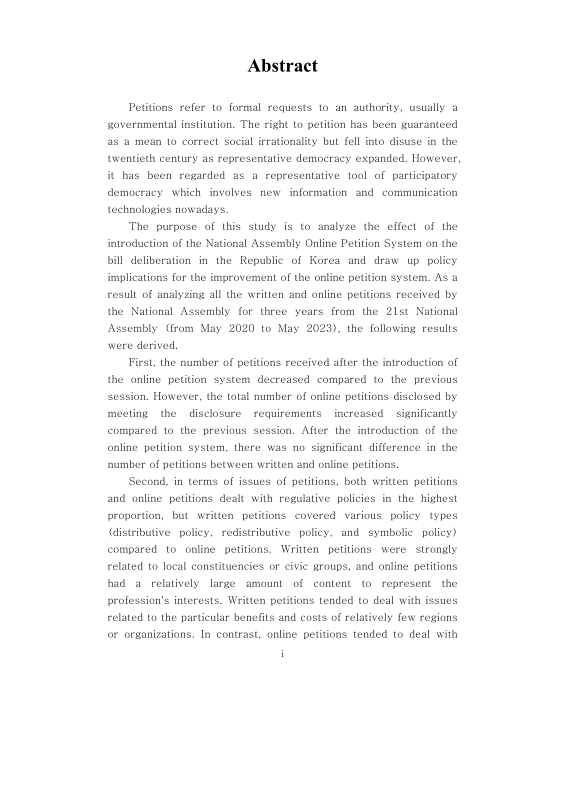
청원권은 국가기관에 대하여 자신의 의견이나 고충을 진술하고 적정한 처리를 요구할 수 있는 권리이다. 청원제도는 대의민주주의의 확대 이후 활용이 저하되어 그 위상이 약화된 측면이 있으나, 최근 정보통신기술의 발달로 전자적 방식을 통한 청원제도가 도입되면서 정치과정에서 국민의 참여를 증가시킬 수 있는 대표적인 수단으로 여겨지고 있다.
본 연구는 전자청원 플랫폼의 도입이 국회의 안건 심사에 미친 영향을 분석하는 것을 목적으로 한다. 연구방법은 제21대 국회(2020년 5월부터 2023년 5월까지) 3년간 국회에 접수된 의원소개청원(서면청원)과 국민동의청원(전자청원)에 대한 전수분석을 실시하고, 청원의 양, 이슈, 처리과정 및 처리결과 측면에서 비교연구를 수행하였다.
분석결과를 요약하면 다음과 같다. 첫째, 청원의 양 측면에서, 전자청원 제도의 도입 이후 접수된 청원의 건수는 종전 국회에 비하여 감소하였으나, 전자청원의 공개요건을 충족하여 공개된 총 건수는 종전 국회에 비하여 크게 증가하였다. 전자청원 도입 이후 서면청원과 전자청원의 접수 건수는 큰 차이를 보이지 않았다.
둘째, 청원의 이슈 측면에서, 서면청원과 전자청원 모두 규제정책을 다루고 있는 비중이 가장 높았으나, 서면청원이 전자청원에 비하여 다양한 정책 유형(배분정책, 재분배정책 및 상징정책)을 포괄하고 있었다. 서면청원은 지역구 또는 시민단체 관련성이 강하게 나타났으며, 전자청원은 상대적으로 직역의 이익을 대변하기 위한 내용이 다수 존재하였다. 서면청원이 상대적으로 일부 지역 또는 단체의 특수한 편익 및 비용에 관한 이슈를 다루는 경향이 있고, 전자청원은 이해관계자가 보다 광범위하거나 일반적인 공공 이슈를 다루는 경향이 있었다.
셋째, 차별금지법 제정, 국가보안법 폐지, 낙태죄 폐지 등 논쟁적이고 찬반 대립이 있는 이슈에 대하여 찬성과 반대의 의견이 각각 청원으로 접수된 사례가 다수 있으며, 대부분 전자청원이 활용되었다. 다양한 의견이 개진되고 국회에서 심의된다는 점에서 전자청원이 일정 부분 공론장의 역할을 수행하고 있는 것으로 해석할 수 있다.
넷째, 청원의 처리절차 측면에서, 서면청원보다 전자청원의 평균 처리기간, 최장 및 최단 처리기간은 모두 짧았으나, Wilcoxon 순위합 검정 결과 전자청원과 서면청원의 처리기간에는 통계적으로 유의한 차이가 없었다. 전자청원은 서면청원에 비하여 심사가 개시된 비율은 낮았으나, 소위원회에 회부된 이후 심사된 비율 및 평균 심사횟수는 높았다. 드물지만 전자청원의 청원인이 청원심사소위원회에 출석하여 청원의 취지를 직접 설명한 사례가 있었다.
다섯째, 청원의 처리결과 측면에서, 서면청원의 처리율(20.3%) 전자청원의 처리율(9.5%)보다 약 2배 정도 높았으며, 청원취지의 달성비율 또한 서면청원(15.9%)이 전자청원(6.3%)보다 2배 이상 높았다. 처리율은 종전 국회에 비하여 낮은 수준이나, 잔여임기 동안 청원의 심사 및 처리가 진행됨에 따라 처리율이 현재보다는 증가할 가능성이 있다.
결론적으로, 전자청원 제도의 도입은 국회의 안건 심사 과정에서 양적 및 질적으로 국민의 참여를 증가시키는 측면이 있다. 청원의 의제 측면에서 대표되는 이익과 이슈가 상이하고 특정 지역 또는 단체와의 관련성이 낮은 이슈가 전자청원으로 제기된다는 점에서, 인터넷의 이용이 새로운 형태의 정치 참여를 촉진한다는 동원이론의 적용 가능성을 확인할 수 있었다. 그러나 청원의 처리과정 및 처리결과를 보면, 전자청원 제도의 도입이 국회의 반응성을 강화시키는 데 이르지는 못하였으며, 국회의 전자청원 제도는 시민주도형-수요측면 모델보다는 정부주도형-공급측면 모델에 가까움을 확인할 수 있었다.
본 연구는 국회 국민동의청원제도 실시 이후 접수된 청원에 대하여 전수분석을 실시한 탐색적 연구로서 서면청원과 전자청원의 경향성을 실증적으로 분석한 것에 의의가 있다. 아울러, 분석 결과를 토대로 청원 심사횟수 증가, 청원에 대한 조속하고 적극적인 심사, 전자청원인들 간의 의견 개진 공간 마련, 심사 과정에서 청원인 의견 청취 기회 증가 등 청원에 대한 국회의 대응성과 책임성을 제고하기 위한 정책적 시사점을 도출하였다.
다만, 본 연구는 전자청원인 국민동의청원제도가 2020년에 실시되었기 때문에 2023년까지 3년간의 사례만 활용할 수 있었으며, 축적된 청원건수가 충분하지 않아 통계적으로 유의미한 양적 분석을 수행하지 못하였다. 향후 동 제도의 적용 사례가 축적되면 동 제도의 도입 영향을 양적으로 다시 분석해볼 필요가 있다. 또한, 연구방법 측면에서 전자청원제도의 도입이 참여자들의 인식 또는 행태에 미친 영향을 분석할 경우, 비교연구의 결과를 보완하여 제도 도입의 실질적 영향을 분석할 수 있을 것으로 생각된다.*표시는 필수 입력사항입니다.
| 전화번호 |
|---|
| 기사명 | 저자명 | 페이지 | 원문 | 기사목차 |
|---|
| 번호 | 발행일자 | 권호명 | 제본정보 | 자료실 | 원문 | 신청 페이지 |
|---|
도서위치안내: / 서가번호:

우편복사 목록담기를 완료하였습니다.
*표시는 필수 입력사항입니다.
저장 되었습니다.
