
 대표어
대표어
 학술연구정보서비스(KERIS)
권호기사보기
| 기사명 | 저자명 | 페이지 | 원문 | 기사목차 |
|---|
결과 내 검색
동의어 포함
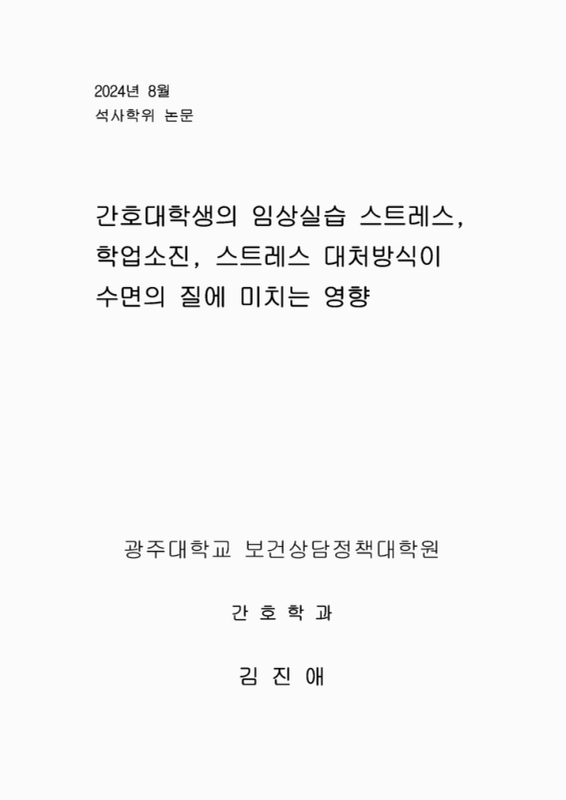
표제지 1
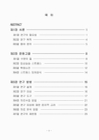
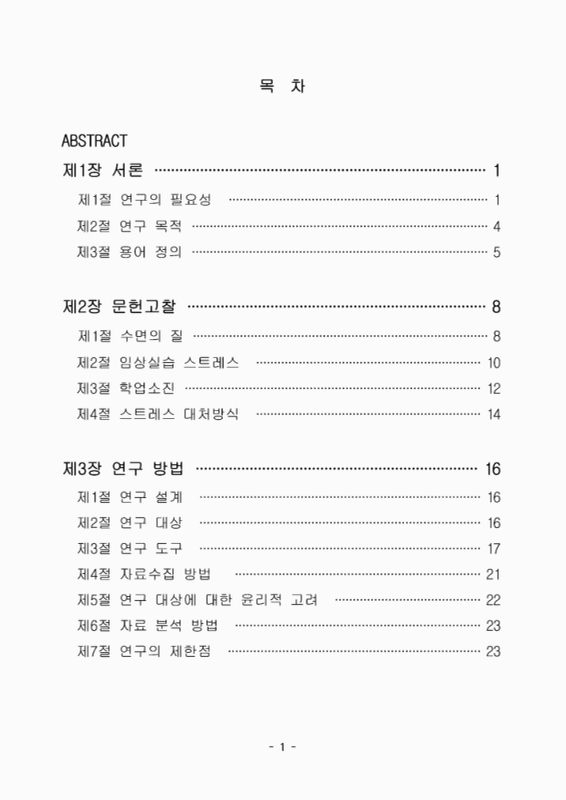
목차 4
ABSTRACT 7
제1장 서론 10
제1절 연구의 필요성 10
제2절 연구 목적 13
제3절 용어 정의 14
1. 수면의 질 14
2. 임상실습 스트레스 14
3. 학업소진 15
4. 스트레스 대처방식 15
제2장 문헌고찰 17
제1절 수면의 질 17
제2절 임상실습 스트레스 19
제3절 학업소진 21
제4절 스트레스 대처방식 23
제3장 연구 방법 25
제1절 연구 설계 25
제2절 연구 대상 25
제3절 연구 도구 26
1. 수면의 질 26
2. 임상실습 스트레스 27
3. 학업소진 28
4. 스트레스 대처방식 29
제4절 자료수집 방법 30
제5절 연구 대상에 대한 윤리적 고려 31
제6절 자료 분석 방법 32
제7절 연구의 제한점 32
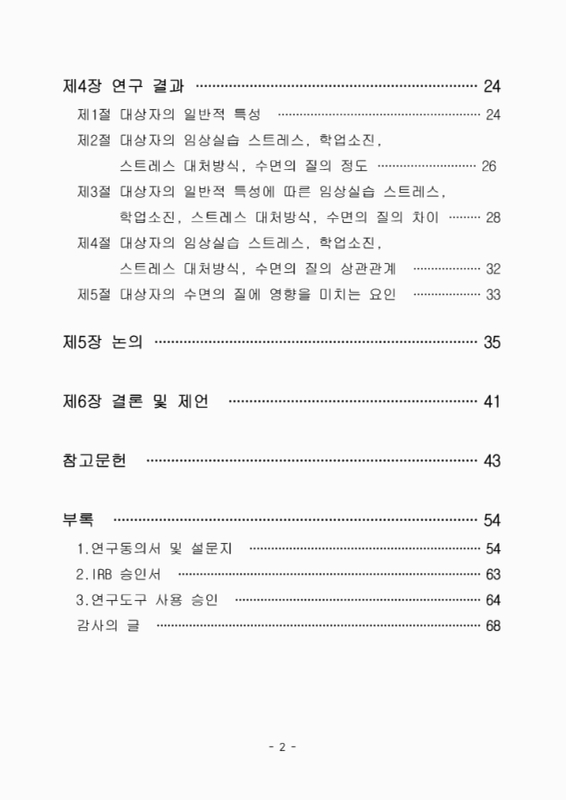
제4장 연구 결과 33
제1절 대상자의 일반적 특성 33
제2절 대상자의 임상실습 스트레스, 학업소진, 스트레스 대처방식, 수면의 질의 정도 35
제3절 대상자의 일반적 특성에 따른 임상실습 스트레스, 학업소진, 스트레스 대처방식, 수면의 질의 차이 37
제4절 대상자의 임상실습 스트레스, 학업소진, 스트레스 대처방식, 수면의 질의 상관관계 41
제5절 대상자의 수면의 질에 영향을 미치는 요인 42
제5장 논의 44
제6장 결론 및 제언 50
참고문헌 52
부록 63
부록1. 연구도구 63
부록2. IRB 승인서 72
부록3. 연구도구 사용 승인 73
This research was carried out to attempt both to figure out the clinical practice stress, the academic burnout, the stress coping style, the standard of the sleep quality of nursing students and to investigate the main factors that affect the sleep quality. Seeking some solutions to improve the sleep quality of nursing students with this research, I will secure the basic data for the promotion of physical and mental health.
The data collecting period for this research was 13 days from April 16th until April 29th, 2024. I collected the data from the junior and senior nursing students who had experienced the clinical practice for more than 4 weeks at 2 universities located in G metropolitan city and J province. I used G-Power 3.1.9.7 for the size of samples. Considering the not-returning rate of 20%, I handed out 243 paper copies of the questionnaire and got them. I analyzed 240 of them except inadequate 3 copies.
SPSS WIN 27.0 was used to analyze the data on this research. Independent t-test and one-way ANOVA were used for the differences of the clinical practice stress, the academic burnout, the stress coping style and the sleep quality according to the general characteristics of subjects. Pearson correlation coefficient was used to analyze the correlation of the clinical practice stress, the academic burnout, the stress coping style and the sleep quality. Multiple regression analysis was used to analyze the factors that affect the sleep quality.
As the result of this research, there is a meaningful positive correlation between the sleep quality and the clinical practice stress(r=.27, p〈.001), the academic burnout(r=.34, p〈.001). However there is a meaningful negative correlation between the sleep quality and the stress coping style(r=-.13, p=.039). Besides there is a meaningful positive correlation between the stress coping style and the clinical practice stress(r=.17, p=.008), the academic burnout(r=.19, p=.002). There is also a meaningful positive correlation between the academic burnout and the clinical practice stress(r=.51, p〈.001). In other words, the more clinical practice stress and the more academic burnout there are, the lower sleep quality of subjects. However the more effective stress coping style, the higher sleep quality.
About the factors that affect the sleep quality, mulitple regression analyses indicate this order. Out of contron variables, average sleeping hours_over 7 hours(B=-.590, p〈.001), mental health state_good(B=-.461, p〈.001), mental health state_normal(B=-.368, p〈.001), subjective health state_good(B=-.332, p=.004), average sleeping hours_5-6hours(B=-.251, p〈.001), the clinical practice satisfaction rate_noraml(B=.214, p=.046) and the academic burnout(B=.205, p=.004). These factors account for 43.8% of the sleep quality of subjects(F=15.321, p〈.001).
With the result of the regression analysis in this research, I confirm the main factors that affect the sleep quality of nursing students, therefore in order to improve the sleep quality of nursing students, the comprehensive management is needed, such as the secureness of enough sleeping hours, the individual management of mental and physical health, the positive awareness of healthcare, the maintenance of the regular sleep pattern, the enhancement of the clinical practice satisfaction rate, the management of the academic stress.*표시는 필수 입력사항입니다.
| 전화번호 |
|---|
| 기사명 | 저자명 | 페이지 | 원문 | 기사목차 |
|---|
| 번호 | 발행일자 | 권호명 | 제본정보 | 자료실 | 원문 | 신청 페이지 |
|---|
도서위치안내: / 서가번호:

우편복사 목록담기를 완료하였습니다.
*표시는 필수 입력사항입니다.
저장 되었습니다.
