
 대표어
대표어
 학술연구정보서비스(KERIS)
권호기사보기
| 기사명 | 저자명 | 페이지 | 원문 | 기사목차 |
|---|
결과 내 검색
동의어 포함
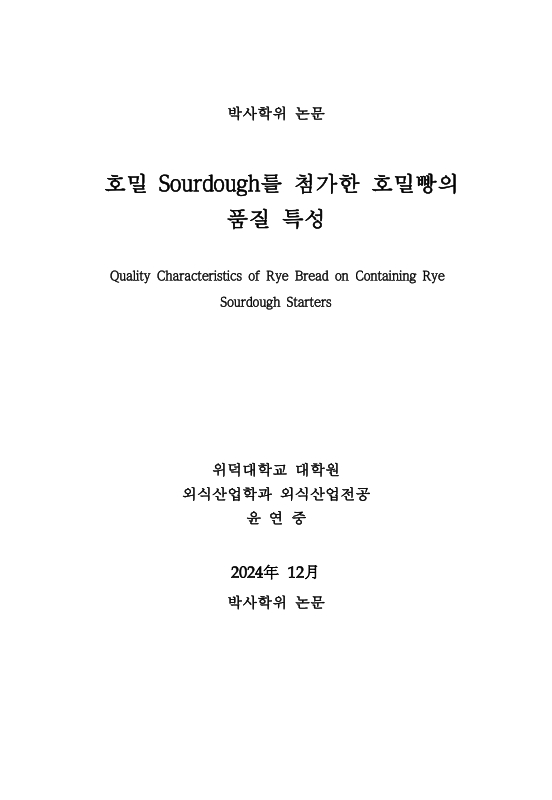
표제지 1
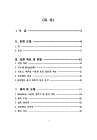
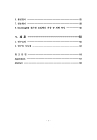
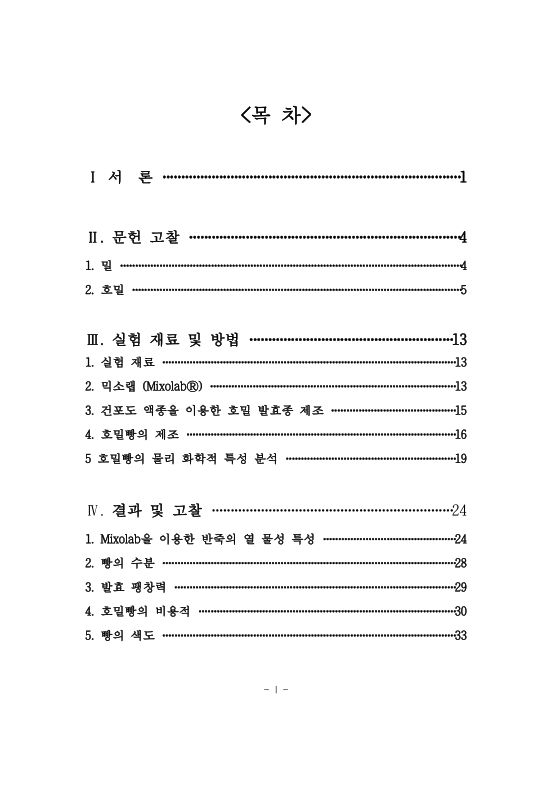
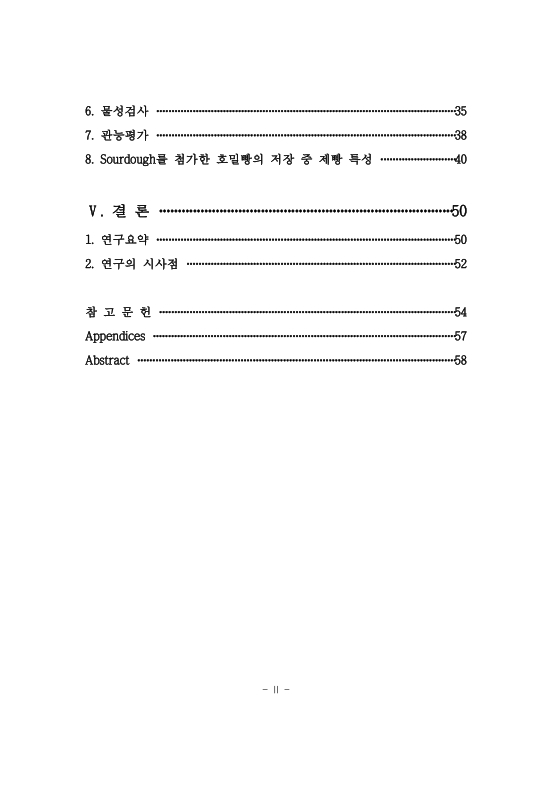
목차 4
Ⅰ. 서론 9
Ⅱ. 문헌 고찰 12
1. 밀 12
(1) 밀의 개요 12
2. 호밀 13
(1) 호밀의 개요 13
(2) 호밀의 특성 14
(3) 국가별 호밀의 분류 15
3. 효모(Yeast) 16
(1) 산소 18
(2) 습기 18
(3) 온도 18
Ⅲ. 실험 재료 및 방법 21
1. 실험 재료 21
2. 믹소랩 (Mixolab®) 21
1) Mixolab® Standard 21
3. 건포도 액종을 이용한 호밀 발효종 제조 23
4. 호밀빵의 제조 24
5 호밀빵의 물리 화학적 특성 분석 27
1) Mixolab® 분석 27
2) 수분 28
3) 발효 팽창력 28
4) 빵의 부피 및 비용적 28
5) 굽기 손실률(%) 28
6) 색도 측정 28
7) 호밀빵의 Texture 측정 29
8) 관능검사 30
9) Sourdough를 첨가한 호밀빵의 저장 중 품질 변화 30
10) 통계처리 31
Ⅳ. 결과 및 고찰 32
1. Mixolab을 이용한 반죽의 열 물성 특성 32
2. 빵의 수분 36
3. 발효 팽창력 37
4. 호밀빵의 비용적 38
5. 빵의 색도 41
6. 물성검사 43
7. 관능평가 46
8. Sourdough를 첨가한 호밀빵의 저장 중 제빵 특성 48
1) 수분함량 측정 48
2) 전자 현미경을 이용한 호밀빵의 표면구조 관찰 50
3) 물성검사 51
Ⅴ. 결론 58
1. 연구요약 58
2. 연구의 시사점 60
참고문헌 62
Appendices 65
Abstract 66
Figure 3-1. Typical cruve recorded by the Mixolab Zone(CHOPIN INC) 22
Figure 3-2. Diagram for making bread with Rye sourdough starter 26
Figure 3-3. TPA 곡선 및 변수요인 30
Figure 4-1. Typical Mixolab curve. Annotated Mixolab output 32
Figure 4-2. Mixollab parameters of rye997, 990, t130 and wheat flour 35
Figure 4-3. Specific gravity of Rye Bread on Containing Rye... 40
Figure 4-4. Specific gravity of Rye Bread on Containing Rye... 40
Figure 4-5. Effect of defatted an color value of Rye Bread on... 42
Figure 4-6. Textural properties of Rye Bread on Containing... 45
Figure 4-7. Sensory evaluation of Rye Bread on Containing Rye... 48
Figure 4-8. changes in moisture over time of Rye Bread... 49
Figure 4-9. changes in hardness over time of Rye... 53
Figure 4-10. changes in cohesiveness over time of Rye... 55
Figure 4-11. changes in gumminess over time of Rye... 56
Figure 4-12. changes in chewiness over time of Rye... 57
This study evaluated the quality characteristics of rye bread prepared with varying levels of sourdough substitution. Mixolab analysis confirmed that the compositional properties of wheat flour and stone-ground rye flour (T130) were similar. Additionally, the starch retrogradation properties of stone-ground rye flour (T130) were comparable to those of bread flour, justifying its selection for this study. Rye bread was prepared using sourdough made with raisins as a liquid starter at substitution levels of 25% (RS1), 50% (RS2), 75% (RS3), and 100% (RS4). Key parameters, including fermentation expansion, moisture content, weight, specific volume, baking loss rate, color, texture, and sensory attributes, were analyzed. The results are summarized below.
First, bread volume and weight measurements showed a control group volume of 1,698 ㎖. Bread samples with sourdough showed decreasing volumes: RS1 at 1,612 ㎖, RS2 at 1,316 ㎖, RS3 at 1,085 ㎖, and RS4 at 866 ㎖. Differences in specific volume across samples were statistically significant (p〈0.001).
Second, color analysis revealed significant differences in crust redness (a*) and yellowness (b*) values (p〈0.01), while lightness (L*) showed no significant differences. In the crumb, redness (a*) and yellowness (b*) values also showed significant differences (p〈0.05) depending on sourdough levels.
Third, texture profile analysis (TPA) indicated significant differences (p〈0.001) in hardness, adhesiveness, gumminess, and chewiness as sourdough levels increased.
Fourth, Mixolab analysis showed that stone-ground rye flour (T130) exhibited values closest to those of the wheat flour control for parameters such as WA (65.00), DDP (1.97), STB (10.50), C2 (0.58), C3 (1.70), C4 (1.58), C5 (2.54), α (0.12), β (0.27), and γ (0.03).
Fifth, sensory evaluation revealed that higher sourdough levels resulted in denser and firmer textures. RS2 scored the highest overall acceptability (4.7), with statistically significant differences (p〈0.001) compared to the control group.
Sixth, moisture content during storage showed RS4 with the highest value on day 1 (55.38). On day 3, the control group had 42.93, and on day 5, RS1 recorded the lowest value at 40.18. Higher sourdough levels significantly reduced moisture loss over 3 and 5 days (p〈0.001). Microscopic analysis revealed that bread surfaces became rougher over time, with mold observed in the control and RS1 samples by day 7. Higher sourdough levels improved storage stability.
Finally, hardness decreased sharply across all samples during the 5-day storage period. RS4 retained the highest hardness values of 37.33, 29.50, and 19.25. Gumminess and chewiness both decreased as sourdough levels increased, showing significant differences (p〈0.010) among samples.*표시는 필수 입력사항입니다.
| 전화번호 |
|---|
| 기사명 | 저자명 | 페이지 | 원문 | 기사목차 |
|---|
| 번호 | 발행일자 | 권호명 | 제본정보 | 자료실 | 원문 | 신청 페이지 |
|---|
도서위치안내: / 서가번호:

우편복사 목록담기를 완료하였습니다.
*표시는 필수 입력사항입니다.
저장 되었습니다.
