
 대표어
 학술연구정보서비스(KERIS)



권호기사보기
| 기사명 | 저자명 | 페이지 | 원문 | 기사목차 |
|---|
결과 내 검색
동의어 포함
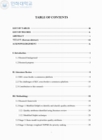
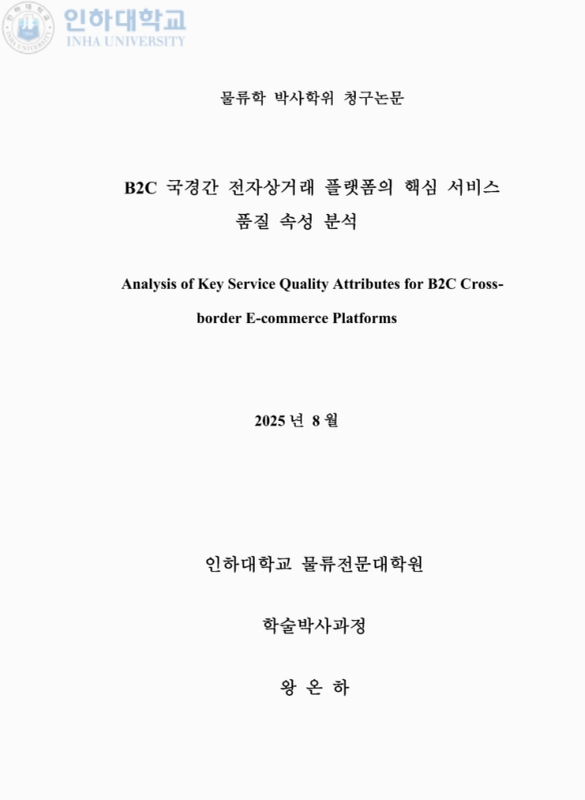
Title Page 2
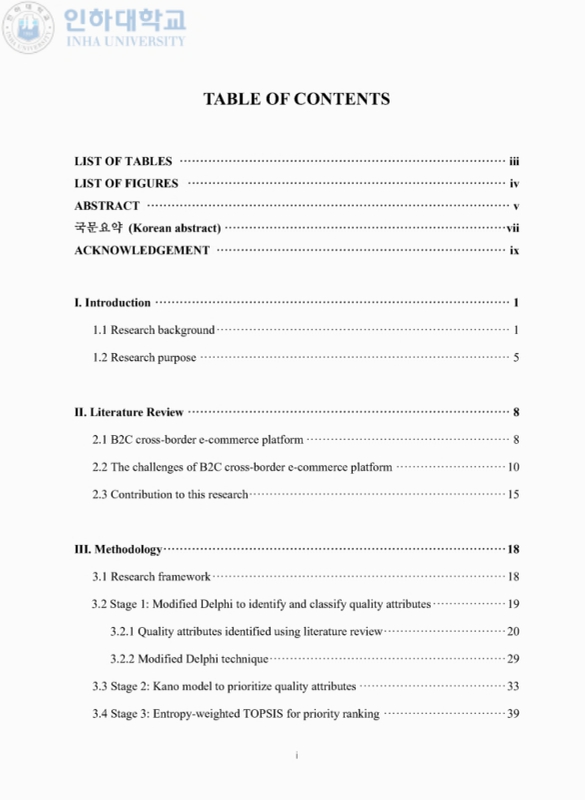
Contents 5
Abstract 9
국문요약 11
Ⅰ. Introduction 14
1.1. Research background 14
1.2. Research purpose 18
Ⅱ. Literature review 21
2.1. B2C cross-border e-commerce platform 21
2.2. The challenges of B2C cross-border e-commerce platform 23
2.3. Contribution to this research 28
Ⅲ. Methodology 31
3.1. Research framework 31
3.2. Stage 1: Modified Delphi to identify and classify quality attributes 32
3.2.1. Quality attributes identified using literature review 33
3.2.2. Modified Delphi technique 42
3.3. Stage 2: Kano two-dimensional model to prioritize quality attributes 46
Step 1. Two-way Kano quality satisfaction survey 48
Step 2. Attribute classifications with the Kano model 49
Step 3. Calculate Kano satisfaction coefficient and matrix creation 51
3.4. Stage 3: Entropy‑weighted TOPSIS for priority ranking 52
Step 1. Construct the decision matrix 52
Step 2. Data normalise and entropy weight calculation 53
Step 3. Weighted normalised matrix 54
Step 4. Positive and negative ideal solutions 54
Step 5. Separation measures and closeness coefficient 54
Step 6. Ranking 55
3.5. Data collection 55
Ⅳ. Analysis results 58
4.1. Identification and classification of quality attributes 58
4.2. Categorization of quality attributes with the Kano model analysis 61
4.2.1. The sample characteristics analysis 61
4.2.2. Reliability and validity test 63
4.2.3. Kano quality attributes categories and analysis 65
4.3. Prioritization of quality attributes with the Kano analysis 68
4.3.1. Customer satisfaction coefficient and distribution 68
4.3.2. Customer satisfaction matrix 74
4.4. Prioritization of quality attributes with the E-TOPSIS analysis 76
4.4.1. Entropy weight results and analysis 77
4.4.2. Respondents' perceived importance of quality attributes 82
Ⅴ. Discussion and implications 88
5.1. Theoretical implications 90
5.2. Practical implications 92
Ⅵ. Conclusion 96
6.1. Limitations 98
Reference 102
Appendix 118
Fig. 1. The scale of CBEC transactions in China, 2013-2020 15
Fig. 2. Research framework 32
Fig. 3. Material selection and validation 35
Fig. 4. Framework of B2C CBEC platform 36
Fig. 5. Kano quality model 48
Fig. 6. Compare satisfaction and dissatisfaction coefficients 71
Fig. 7. Customer satisfaction matrix 75
Fig. 8. Entropy weight comparison of better and worse coefficients 79
비즈니스-소비자(B2C) 형태의 국경 간 전자상거래(CBEC) 플랫폼은 소비자의 심리적·실제적 장벽을 낮춤으로써 국제 거래 촉진에 중요한 역할을 하고 있다. 그 중요성에도 불구하고, 소비자 만족도에 영향을 미치는 CBEC 플랫폼의 서비스 품질 속성에 대한 체계적인 규명 및 우선순위 분석 연구는 매우 부족한 실정이다. 본 연구는 정성적 방법과 정량적 방법을 결합한 종합적 평가 프레임워크를 제안하여 이 연구 공백을 보완하고자 하였다.
본 연구는 우선 수정 델파이(Modified Delphi) 기법을 이용하여 기존 학술 문헌과 산업 전문가의 평가를 바탕으로 CBEC 플랫폼의 핵심 품질 속성들을 체계적으로 도출하고 검증하였다. 이어서 카노(Kano) 모델을 활용하여 소비자 만족도와 품질 속성 간의 관계를 바탕으로 속성들을 분류하였으며, 이를 통해 기본적으로 충족되어야 하는 필수 속성과 소비자 만족도를 크게 향상시킬 수 있는 매력 속성을 명확히 구분하였다. 마지막으로 소비자 설문조사를 통해 확보한 데이터를 바탕으로 엔트로피 가중치 기반 TOPSIS(E-TOPSIS) 기법을 적용하여 각 품질 속성의 상대적 중요도를 객관적으로 평가하고 우선순위를 도출하였다.
분석 결과, 정보 흐름, 물류 흐름, 금융 흐름을 포괄하는 총 19 개의 주요 품질 속성들이 분류 및 순위화되었다. 일반적 예상과 달리, 소비자들은 금융안전성(결제 보안성, 환불 정책의 명확성 등) 및 정보 투명성(상품 정보 신뢰성, 개인정보 보호 등)과 관련된 품질 속성을 가장 중요한 만족 요인으로 인식하는 것으로 나타났다. 반면, 물류와 관련된 품질 속성들은 기본적 요구사항으로 인식되어 상대적으로 낮은 차별화 효과를 보였으며, 이는 물류 서비스가 이미 국제 소비자 시장에서 표준화된 기대수준으로 자리 잡았기 때문으로 해석된다.
본 연구는 B2C CBEC 플랫폼의 설계자와 운영자들에게 실무적으로 중요한 시사점과 명확한 전략 방향을 제시하며, 집중 투자 및 개선이 필요한 주요 영역을 강조하였다. 또한 델파이, 카노 및 E-TOPSIS 기법을 통합한 본 연구의 종합적 평가 프레임워크는 향후 다양한 전자상거래 환경에서 품질 속성 분석을 위한 강력하고 반복 가능한 연구 모델로서 활용될 수 있을 것으로 기대된다.*표시는 필수 입력사항입니다.
| 전화번호 |
|---|
| 기사명 | 저자명 | 페이지 | 원문 | 기사목차 |
|---|
| 번호 | 발행일자 | 권호명 | 제본정보 | 자료실 | 원문 | 신청 페이지 |
|---|
도서위치안내: / 서가번호:

우편복사 목록담기를 완료하였습니다.
*표시는 필수 입력사항입니다.
저장 되었습니다.
