
 대표어
대표어
권호기사보기
| 기사명 | 저자명 | 페이지 | 원문 | 기사목차 |
|---|
결과 내 검색
동의어 포함
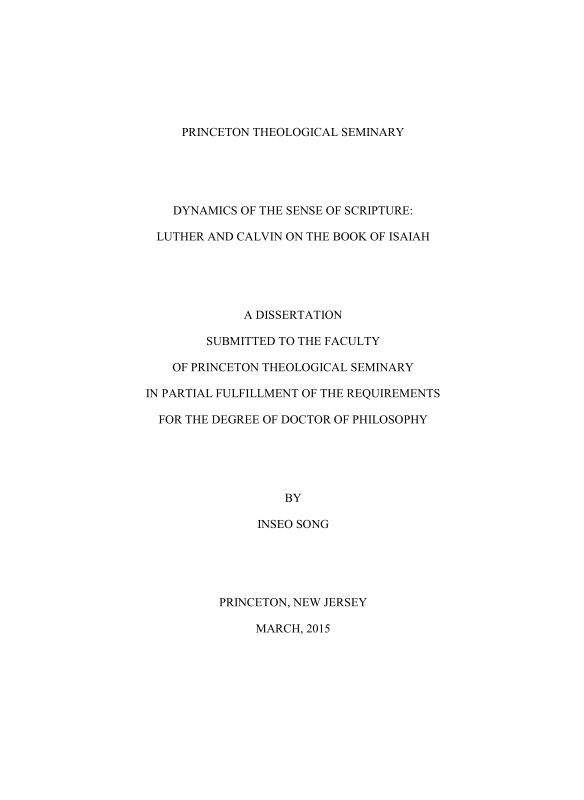
Title Page
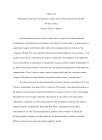
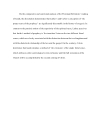
Abstract
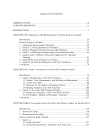
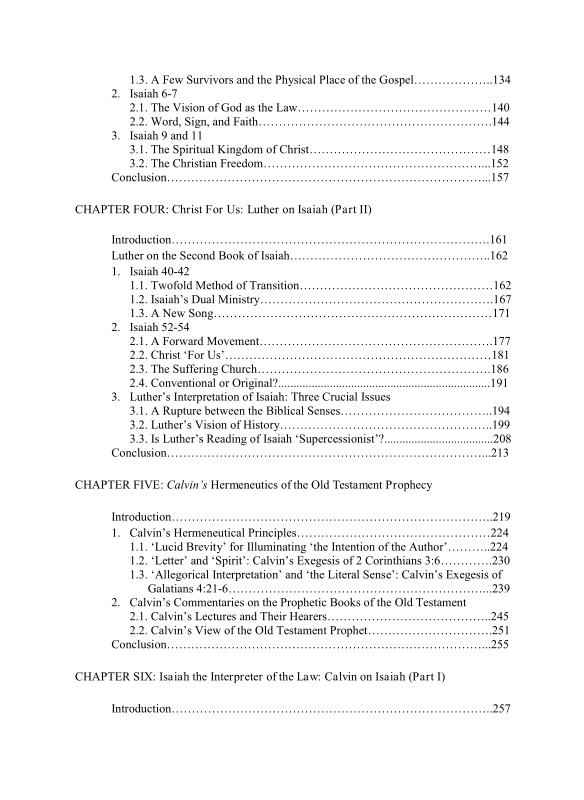
Contents
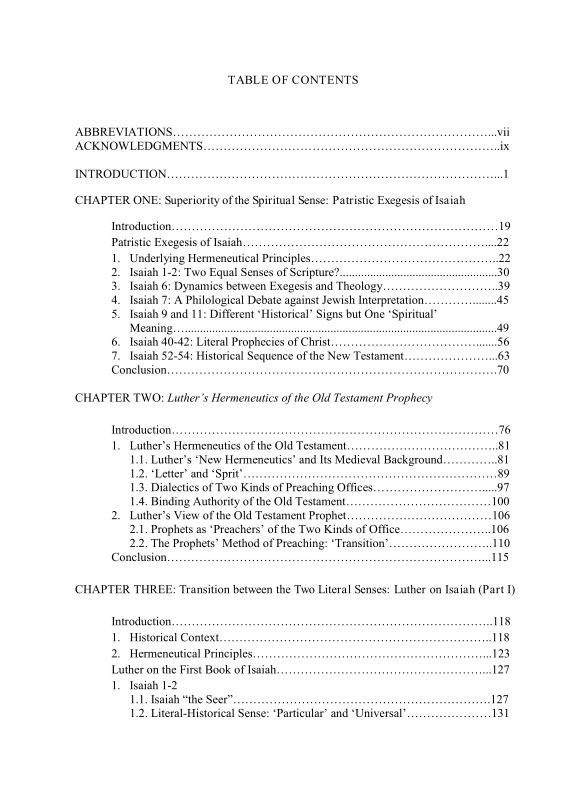
ABBREVIATIONS 7
INTRODUCTION 11
CHAPTER ONE SUPRIORITY OF THE SPIRITUAL SENSE: PATRISTIC EXEGESIS OF ISAIAH 29
Introduction 29
Patristic Exegesis of Isaiah 32
1. Underlying Hermeneutical Principles 32
2. Isaiah 1 and 2: Two Equal Senses of Scripture? 40
3. Isaiah 6: Dynamics between Exegesis and Theology 49
4. Isaiah 7: A Philological Debate against Jewish Interpretation 55
5. Isaiah 9 and 11: Different 'Historical' Signs but One 'Spiritual' Meaning 59
6. Isaiah 40-42: Literal Prophecies of Christ 66
7. Isaiah 52-54: Historical Sequence of the New Testament 73
Conclusion 80
CHAPTER TWO LUTHER'S HEMENEUTICS OF THE OLD TESTAMENT PROPHECY 86
Introduction 86
1. Luther's Hermeneutics of the Old Testament 91
1.1. Luther's 'New Hermeneutics' and Its Medieval Background 91
1.2. 'Letter' and 'Sprit' 99
1.3. Dialectics of Two Kinds of Preaching Offices 107
1.4. Binding Authority of the Old Testament 110
2. Luther's View of the Old Testament Prophet 116
2.1. Prophets as 'Preachers' of the Two Kinds of Offices 116
2.2. The Prophets' Method of Preaching: 'Transition' 120
Conclusion 125
CHAPTER THREE TRANSITION BETWEE THE TWO LITERAL SENSES: LUTHER ON ISIAHA (Part I) 128
Introduction 128
1. Historical Context 128
2. Hermeneutical Principles 133
Luther on the First Book of Isaiah 137
1. Isaiah 1-2 137
2. Isaiah 6-7 150
3. Isaiah 9 and 11 158
Conclusion 167
CHAPTER FOUR CHRIST FOR US: LUTHER ON ISIAHA (Part II) 171
Introduction 171
Luther on the Second Book of Isaiah 172
1. Isaiah 40-42 172
2. Isaiah 52-54 187
3. Luther's Interpretation of Isaiah: Three Crucial Issues 204
Conclusion 223
CHAPTER FIVE CALVIN'S HEMENEUTICS OF THE OLD TESTMENT PROPHECY 229
Introduction 229
1. Calvin's Hermeneutical Principles 234
1.1. 'Lucid Brevity' for Illuminating 'the Intention of the Author' 234
1.2. 'Letter' and 'Spirit': Calvin's Exegesis of 2 Corinthians 3:6 240
1.3. 'Allegorical Interpretation' and 'the Literal Sense': Calvin's Exegesis of Galatians 4:21-6 249
2. Calvin's Commentaries on the Prophetic Books of the Old Testament 255
2.1. Calvin's Lectures and Their Hearers 255
2.2. Calvin's View of the Old Testament Prophet 261
Conclusion 265
CHAPTER SIX ISAIAH THE INTERPRETER OF THE LAW: CALVIN ON ISAIAH (Part I) 267
Introduction 267
Calvin on the First Book of Isaiah 273
1. Isaiah 1-2 273
2. Isaiah 6-7 291
3. Isaiah 9 and 11 311
Conclusion 324
CHAPTER SEVEN EXTENSION OF A SINGLE LITERAL SENSE: CALVIN ON ISAIAH (Part II) 328
Introduction 328
Calvin on the Second Book of Isaiah 329
1. Isaiah 40-42 329
2. Isaiah 52-54 346
3. The Lutheran Controversy with Calvin's Exegesis of Isaiah 363
Conclusion 375
CONCLUSION 382
BIBLIOGRAPH 389
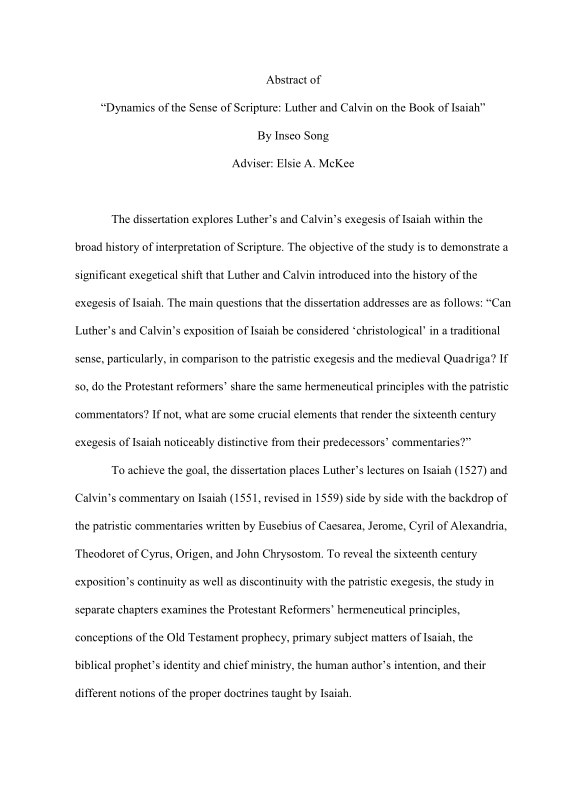
The dissertation explores Luther's and Calvin's exegesis of Isaiah within the broad history of interpretation of Scripture. The objective of the study is to demonstrate a significant exegetical shift that Luther and Calvin introduced into the history of the exegesis of Isaiah. The main questions that the dissertation addresses are as follows: "Can Luther's and Calvin's exposition of Isaiah be considered 'christological' in a traditional sense, particularly, in comparison to the patristic exegesis and the medieval Quadriga? If so, do the Protestant reformers' share the same hermeneutical principles with the patristic commentators? If not, what are some crucial elements that render the sixteenth century exegesis of Isaiah noticeably distinctive from their predecessors' commentaries?"
To achieve the goal, the dissertation places Luther's lectures on Isaiah (1527) and Calvin's commentary on Isaiah (1551, revised in 1559) side by side with the backdrop of the patristic commentaries written by Eusebius of Caesarea, Jerome, Cyril of Alexandria, Theodoret of Cyrus, Origen, and John Chrysostom. To reveal the sixteenth century exposition's continuity as well as discontinuity with the patristic exegesis, the study in separate chapters examines the Protestant Reformers' hermeneutical principles, conceptions of the Old Testament prophecy, primary subject matters of Isaiah, the biblical prophet's identity and chief ministry, the human author's intention, and their different notions of the proper doctrines taught by Isaiah.
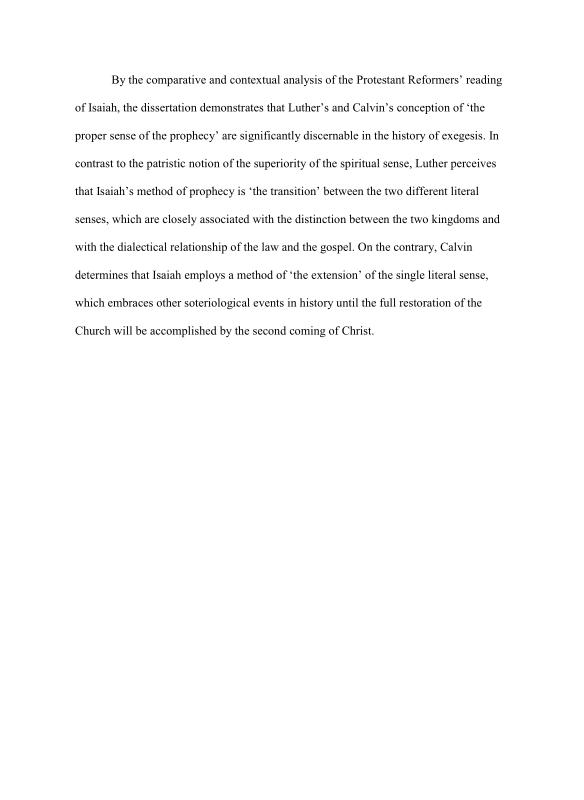
By the comparative and contextual analysis of the Protestant Reformers' reading of Isaiah, the dissertation demonstrates that Luther's and Calvin's conception of 'the proper sense of the prophecy' are significantly discernable in the history of exegesis. In contrast to the patristic notion of the superiority of the spiritual sense, Luther perceives that Isaiah's method of prophecy is 'the transition' between the two different literal senses, which are closely associated with the distinction between the two kingdoms and with the dialectical relationship of the law and the gospel. On the contrary, Calvin determines that Isaiah employs a method of 'the extension' of the single literal sense, which embraces other soteriological events in history until the full restoration of the Church will be accomplished by the second coming of Christ.
본 논문은 루터와 칼빈의 이사야서 강해를 성서 해석사의 보다 넓은 지평가운데에서 이해함을 주목적으로 한다. 본 연구의 학문적 목표는 루터와 칼빈이 이사야서 강해가 성서 해석사에 소개한 중요한 주석학적 변화를 증명하는데 있다. 본 논문이 다루고 있는 주요 질문들은 다음과 같다: "루터와 칼빈의 이사야서 해석이 전통적인 의미에서, 특별히 초대교부의 해석과 중세의 사중해석과의 비교적인 관점에서, '기독론적'인 해석으로 간주될 수 있는가? 만약에 그렇다면, 종교개혁자들이 초대교부들과 동일한 해석학적 원칙들을 공유하였는가? 만약 그렇지 않다면, 어떤 중요한 요소들이 16세기 종교개혁자들의 이사야서 강해를 그들의 해석학적 선임자들의 주석서들과 차별적인 것으로 만든 것인가"
위 목적을 성취하기 위해서, 본 논문은 루터의 이사야서 주석(1527)과 칼빈의 이사야서 주석 (1551 출판, 1559년 개정)을 유세비우스, 제롬, 시릴, 테오도레트, 오리겐, 그리고 크리소스톰과 같은 초대교부들에 의해 쓰여진 주석서들의 배경하에서 상호 비교 분석하고자 한다. 16세기 종교개혁자들의 이사야서 해석의 연속성과 불연속성을 동시에 드러내기 위하여 본 연구는 각각의 장에서 다음과 같은 주제들을 다루고자 한다: 종교개혁자들의 해석학적인 원칙들, 구약 성서 예언에 대한 개념들, 이사야서의 주요 주제들, 성서의 예언자들의 정체성 및 그들의 주요 사역, 성서 속에 나타난 인간 저자의 의도, 그리고 예언자 이사야가 가르쳤다고 믿는 각기 다른 주요 신학 사상들.
프로테스탄트 개혁자들의 이사야서 해석에 대한 상호 비교적이고 또한 상황적인 분석을 통하여서, 본 논문은 루터와 칼빈의 "적절한 예언의 의미" (the proper sense of the prophecy)에 대한 서로 다른 개념이 성서 해석사에서 두드러진 차이들을 불러일으켰다고 주장한다. 초대교부들의 개념이었던 영적인 성서의미의 우위성에 반하여, 루터는 이사야 선지자 자신의 방법론이 다름 아닌 두 가지 다른 문자적 의미들 간의 이동 (transition between the two different literal senses), 즉, 두 왕국들 사이, 그리고 율법과 복음의 변증법적 관계 사이를 이동하는 문자적 의미의 역동성에 있다고 보았다. 루터의 두가지 문자적 의미들 사이의 이동에 반하여, 칼빈은 그의 이사야서 강해에서 선지자가 오직 하나의 문자적 의미의 확장 방법 (the extension of the single literal sense)을 사용했다고 주장한다. 그리고 칼빈에 따르면 이 하나의 단일한 역사적 의미는 그리스도의 역사적 두번째 재림시에 이루어질 교회의 완전한 회복의 그 순간까지 모든 구원론적 사건들을 포괄한다고 역설한다.*표시는 필수 입력사항입니다.
| 전화번호 |
|---|
| 기사명 | 저자명 | 페이지 | 원문 | 기사목차 |
|---|
| 번호 | 발행일자 | 권호명 | 제본정보 | 자료실 | 원문 | 신청 페이지 |
|---|
도서위치안내: / 서가번호:

우편복사 목록담기를 완료하였습니다.
*표시는 필수 입력사항입니다.
저장 되었습니다.
