
 대표어
대표어
권호기사보기
| 기사명 | 저자명 | 페이지 | 원문 | 기사목차 |
|---|
결과 내 검색
동의어 포함
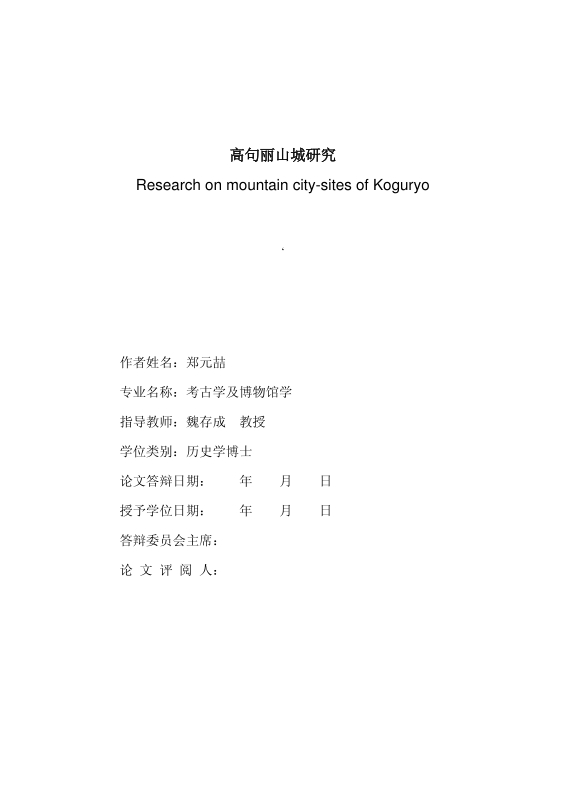
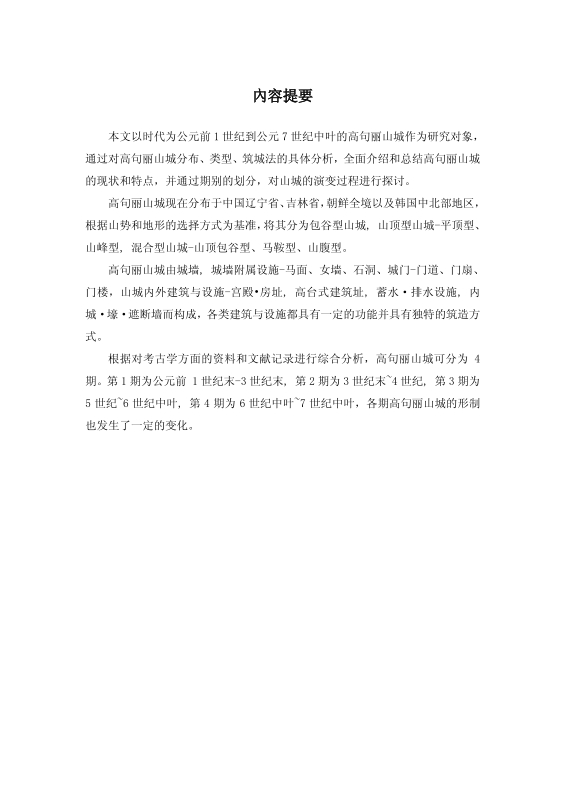
Koguryo mountain city-sites consist mainly of a city-wall, the city-wall auxiliary facilities, and various installations inside and outside each city. This study examines the major components that constituted Koguryo mountain city-sites in order to investigate how Koguryo mountain city-sites reflected typical city construction characteristics. Additionally, a new periodization is established, and the process of evolution for each period is analyzed.The thesis is divided into five chapters:The first chapter is the introduction. The second chapter focuses on the analysis of distribution and typology of Koguryo mountain city-sites. In the first part, distribution analysis takes into consideration contemporary national territories and levels of research. The main Koguryo mountain city-sites can be divided into three regions ?namely China, North Korea and South Korea - as well as partitions based on environmental conditions. The second part establishes a typology of the Koguryo mountain city-sites. The criteria used include localization and topography. Categories include: valley type, summit type - which includes flat summit type, peak type and mixed type - summit and valley type, saddle type and mid-slope type. This study analyses the scale and architectural materials of each type.The main part of the thesis, the third chapter, focuses on the architectural methods of city building used in Koguryo mountain city-sites. This chapter is divided into four parts. The first part concentrates on the architectural method used during the construction of the basic facilities of the city-wall. On these sites various techniques were employed to build the foundation and basic facilities of the city-wall. The second part analyzes the various types of Wengcheng(瓮城)and their basic structure. The third part inspects the auxiliary facilities of city-walls, especially Mamian(?面), Nuqiang(女?) and Shidong(石洞), which all are typical features of Koguryo mountain city-sites. The paper analyzes their distribution patterns, form and structure to clarify their functions. The fourth part divides the inner and outer features of mountain city-sites into palatial sites, houses and terrace architectural types, water supply and drain off system, inner-city wall, moats and obstruction wall, and their form and structure are analyzed.The fourth chapter focuses on the periodization and evolution of Koguryo mountain city-sites. After synthesizing records in transmitted texts with the changes in architectural methods explained in the third chapter, the developing process of Koguryo mountain city-sites can be divided into four stages. The first period extends from the foundation of the Koguryo state to the end of the 3rd century CE, the second period from the end of the 3rd century to the 4th century, the third period from the 5th to the middle of the 6th century, and the fourth period from the middle of the 6th century until the middle of the 7th century. The fifth chapter is the conclusion. After summarizing research results, new topics and directions for future research are proposed.
본 논문은 기원전 1세기~7세기 중엽까지를 시간적 범위로 하고 있으며, 공간적 범위는 중국, 북한, 한국까지를 포함하고 있다. 이 시간적, 공간점 범위 내에 있는 고구려산성의 분포, 유형, 축성법 등을 구체적으로 분석하여 고구려산성의 주요 특징과 기능, 연대 등을 심층적으로 연구하고자 하였다. 본 논문은 모두 5장으로 구성되어 있다. 제1장은 서론이다. 제2장은 고구려산성의 분포와 유형이다. 제1절은 고구려산성의 분포로 현재의 국경과 연구 정도를 고려하여 중국, 북한, 한국 3구역으로 구분하여 그 분포를 파악하였다. 제2절은 고구려산성의 유형을 고구려산성이 위치하고 있는 지리 위치, 지형 등을 기준으로 하여 분석하였다. 본 절에서는 고구려산성을 포곡식산성, 산정식산성-평정식, 산봉식, 그밖의 유형-산정포곡식, 마안식, 산복식으로 구분하였으며, 각 유형을 규모와 축성재료로 구분하여 각 특징을 분석하였다. 제3장에서는 고구려산성의 축성법을 구체적으로 분석하였다. 모두 4절로 이루어져 있다. 제1절에서는 고구려산성의 가장 기본시설이라고 할 수 있는 성벽의 축조방식을 분석하였다. 제2절에서는 산성의 주요 시설 가운데 하나인 성문의 기본 구조와 성문의 독특한 양식인 옹성의 유형에 대하여 분석하였다. 제3절에서는 성벽의 부속시설인 치, 성가퀴, 돌구덩이 등과 같은 고구려산성에서 대표적으로 확인되는 시설에 대한 분석을 시도하여 그 분포와 구조적 특징, 기능 등에 대하여 유추하고자 하였다.제4절에서는 고구려산성의 내외시설인 궁전 및 집터, 고대식 건물지, 저수시설 및 배수시설, 내성, 해자, 차단벽 등 다양한 시설의 형태와 구조 등에 대한 분석을 진행하였다. 제4장은 고구려산성의 시대구분과 각 시기별 변화과정을 분석하였다. 문헌기록과 앞에 있는 3장까지의 내용을 종합하여 고구려산성의 시기를 4기로 구분하였다. 제1기는 서기전 3세기~3세기 말, 제2기는 3세기말~4세기, 제3기는 5세기~6세기 중엽, 제4기는 6세기 중엽~7세기 중엽으로 구분하였다.*표시는 필수 입력사항입니다.
| 전화번호 |
|---|
| 기사명 | 저자명 | 페이지 | 원문 | 기사목차 |
|---|
| 번호 | 발행일자 | 권호명 | 제본정보 | 자료실 | 원문 | 신청 페이지 |
|---|
도서위치안내: / 서가번호:

우편복사 목록담기를 완료하였습니다.
*표시는 필수 입력사항입니다.
저장 되었습니다.
