
 대표어
대표어


권호기사보기
| 기사명 | 저자명 | 페이지 | 원문 | 기사목차 |
|---|
결과 내 검색
동의어 포함
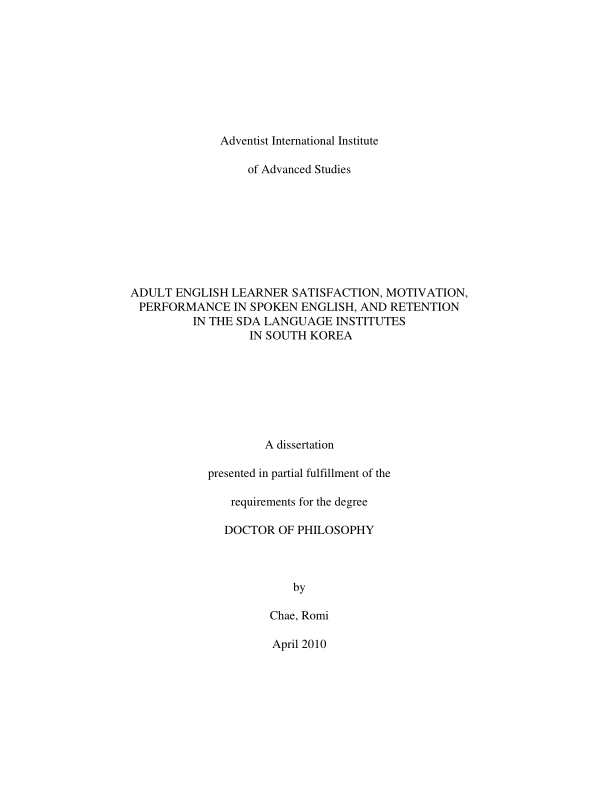
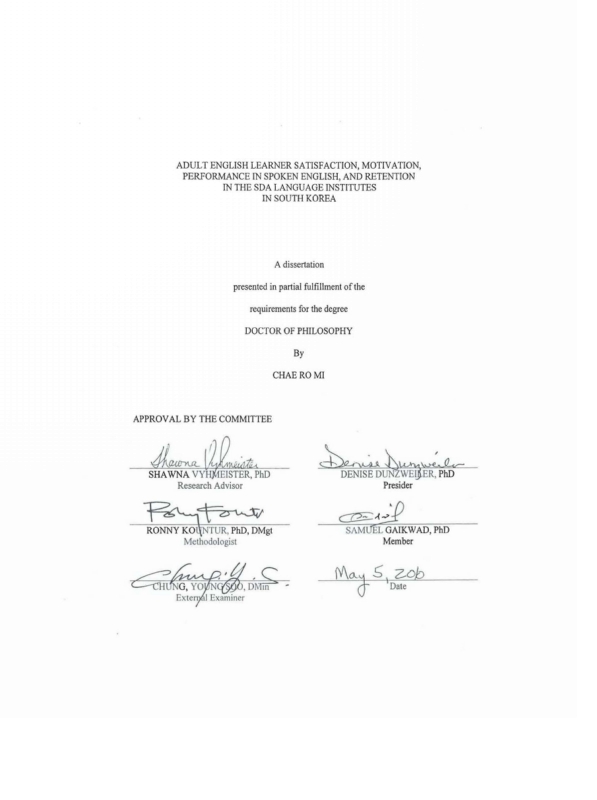
Title Page
Contents
LIST OF ABBREVIATIONS 15
ABSTRACT OF GRADUATE STUDENT RESEARCH 16
CHAPTER 1. INTRODUCTION 18
Background of the Study 22
Statement of the Problem 24
Purpose of the Study 25
Significance of the Study 25
Research Questions 26
Research Hypotheses 26
Basic Assumptions 27
Delimitations of the Study 27
Limitations of the Study 28
Operational Definition of Terms 28
CHAPTER 2. REVIEW OF RELATED LITERATURE 31
Why Adults Participate in Learning 31
Characteristics of Adult Learners 34
Adult Learning Theory 35
Theory of Adult Language Learning 41
Motivation of Adult Learners 49
Motivation in Language Learning 50
Prior Research on Motivation in Adult Language Learning 64
Customer Satisfaction 66
Definition of Customer Satisfaction 67
Advantages of Customer Satisfaction 68
What Causes Customer Dissatisfaction? 78
Adult Students as Customers 82
Student Satisfaction and Retention 83
Conceptual Framework of the Study 98
CHAPTER 3. RESEARCH METHODOLOGY 101
Research Design 101
Population and Sample 102
Determination of Sample Size 103
Sampling Procedure 104
Instrumentation 105
Student Satisfaction With the SDA Language Institutes Questionnaire (SSLI) 105
The Motivation in Language Learning Inventory (MILL) 108
Data Collection Procedures 110
Ethical Principles 110
Administration and Collection of the Instruments 111
Statistical Treatment of Data 115
CHAPTER 4. FINDINGS AND DATA ANALYSIS 117
Descriptive Analyses 118
Profile of the Students 118
Student Retention 125
Performance in Spoken English 130
Student Satisfaction 132
Student Satisfaction Subscales 135
Student Motivation 150
Student Motivation Subscales 152
Path Analysis 165
Factors That Affect Student Retention 168
Factors That Affect Student Satisfaction 171
The Effect of Student Motivation on Performance in Spoken English 172
Student Retention Model 173
CHAPTER 5. CONCLUSIONS, RECOMMENDATIONS AND FUTURE RESEARCH 175
Conclusions 175
Recommendations 181
Recommendations for Future Research 184
REFERENCES 188
APPENDIXES 204
APPENDIX A. Correspondence 205
APPENDIX B. Questionnaires and Subscale Data 206
APPENDIX C. ANALYSES NORMALITY TESTS 217
Figure 1. The satisfaction-profit chain. 71
Figure 2. Conceptual framework of the study. 100
Figure 3. Student retention model. 174
As the social and professional need for English competence increases, private education has become a massive industry in Korea. Maintaining existing students is less costly than attracting new ones. Using descriptive and path analysis, this study sought to describe and investigate the causal relationships among student satisfaction, motivation, performance in spoken English, and student retention.
Modified random sampling methods were utilized, with a total of 664 respondents who completed 2 questionnaires: the Motivation in Language Learning Inventory (MILL), consisting of 7 subscales (Kim-Yoon, 2000), and the researcher-developed Student Satisfaction with the SDA Language Institutes Questionnaire (SSLI), with 6 subscales. MILL findings showed that students were mainly instrumentally motivated, but that integratively motivated students had higher performance in spoken English than the instrumentally motivated. SSLI findings showed that the majority of the students in the SDA Language Institutes were satisfied with the institute, but over 20% were either dissatisfied or had mixed experiences. Only half the respondents (54.6%) intended to enroll and actually enrolled for the next term.
Males were more satisfied and had higher self-confidence than females, who showed stronger commitment to the learning task. No significant difference in performance by gender was identified. Students age 29 to 39 tended to be less satisfied than younger or older students. Students in the middle English levels were less motivated and less satisfied, especially with the social learning climate. Students were more satisfied with single teachers than married ones; and with Whites or Asians than Blacks. Beginning students preferred Korean teachers over foreigners.
The degree of student retention was directly affected by student satisfaction and performance in spoken English, and indirectly by student motivation. Satisfaction was affected by motivation. Ten percent of the variance in student satisfaction was due to student motivation. Performance in spoken English was a better predictor of retention than student satisfaction. The predictive model for student retention accounted for only 4% of the variance. It is clearly not easy to predict the retention of adult learners due to the nature of the complexity of their lives. For this reason, institutes need to be alert to students' needs and expectations based on their English level, age, and gender in order to increase student satisfaction and retention.
영어능력에 대한 사회적 전문적 필요가 증가됨에 따라 한국 사교육이 거대한 산업으로 자리잡고 있다. 새로운 학생들을 끌어 모으는 것보다 기존의 학생들을 유지하는 것이 훨씬 적은 비용이 든다. 기술통계 분석과 경로분석을 사용하여 본 연구는 학습자의 만족도, 학습동기, 회화 성취도와 재등록 사이의 인과관계 기술하고 조사하였다.
수정무작위표본추출법을 사용한 총 664명의 참가자가 두 개의 설문에 응했으며, 언어 학습동기 설문지 (Motivation in Language Learning Inventory, MILL)와 본 연구자가 개발한 삼육(SDA)외국어 학원 만족도 설문지(Student Satisfaction with the SDA Language Institutes Questionnaire, SSLI)가 사용되었고 각각의 설문지는 7개와 6개의 하위척도로 되어있다. MILL 설문 조사 결과에서 학생들은 주로 외적인 학습동기를 보였으나, 내적 학습동기를 가진 학생들이 외적 학습동기를 가진 학생들보다 더 높은 회화 성취도를 나타내었다. SSLI 설문조사결과, 학생들 대부분은 삼육 외국어 학원에 만족하고 있는 것으로 나타났으나, 20%이상의 학생들은 불만족스럽거나 혼합적인 반응을 보였다. 응답자의 절반(54.6%)만이 재수강 의사를 밝혔고 실제로 그 다음 학기에 등록하였다.
남성 응답자들이 여성 응답자들보다 더 높은 만족도와 자신감을 가지고 있었는데 학습과제에 더 전념하는 것으로 나타났다. 그러나 성별에 따른 성취도에 있어는 통계적으로 유의미한 결과를 보이지는 않았다. 29~39세 연령 범주에 속한 학생들은 나이가 더 어리거나 더 많은 학생들에 비해 좀더 낮은 만족도를 보이는 경향이 있었다. 중급단계의 학생들의 경우 더 낮은 학습동기를 가지고 있었으며, 특히 사회적 학습분위기에 대한 만족도는 더 낮은 것으로 나타났다. 학생들은 기혼 영어교사보다 미혼 영어교사에게 좀더 높은 만족도를 보였으며, 흑인 영어교사보다는 백인이나 동양인 영어교사에 대한 만족도가 더 높았다. 초급단계 학생들의 경우 외국인 영어교사 보다는 한국인 영어교사를 더 선호하는 것으로 나타났다.
재등록은 학생의 만족도와 회화성취도가 직접적인 영향요인으로 나타났으며 학생의 학습동기는 간접적 영향요소로 나타났다. 학생 만족도 분산의 10%가 학습동기에 기인되었다. 회화성취도가 학생 만족도 보다 더 좋은 재등록 예측 변수임을 보여주었다. 학생 재등록에 대한 예측모델은 분산의 4%만을 설명하였다. 성인 삶의 복잡성의 특성을 지닌 성인 학습자들의 재등록을 예측하는 것이 쉽지 않다는 것은 분명하다. 따라서, 학원은 학생들의 만족도와 재등록을 높이기 위해서 그들의 영어수준, 연령, 성별에 따른 학습자들의 필요와 기대에 민감하게 대처해야 할 필요가 있다.*표시는 필수 입력사항입니다.
| 전화번호 |
|---|
| 기사명 | 저자명 | 페이지 | 원문 | 기사목차 |
|---|
| 번호 | 발행일자 | 권호명 | 제본정보 | 자료실 | 원문 | 신청 페이지 |
|---|
도서위치안내: / 서가번호:

우편복사 목록담기를 완료하였습니다.
*표시는 필수 입력사항입니다.
저장 되었습니다.
