
 대표어
대표어
 한국학술지인용색인(NRF)
권호기사보기
| 기사명 | 저자명 | 페이지 | 원문 | 기사목차 |
|---|
결과 내 검색
동의어 포함
목차
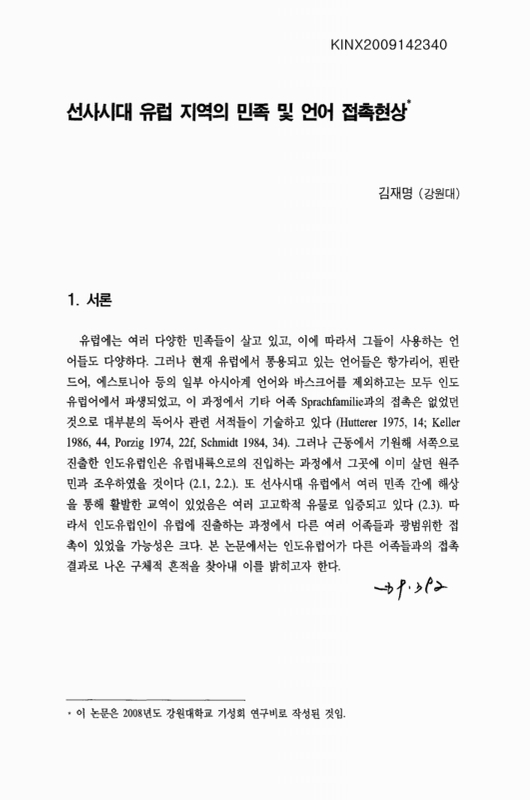
선사시대 유럽 지역의 민족 및 언어 접촉현상 / 김재명 1
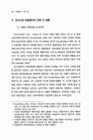
1. 서론 1
2. 선사시대 유럽에서의 민족 간 접촉 2
2.1. 유럽의 원주민은 누구인가? 2
2.2. 농경의 확산과 인도유럽인 4
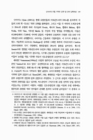
2.3. 선사시대 셈인의 해상활동 7
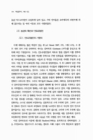
3. 인도유럽어와 바스콘어, 셈어 간의 언어적 접촉 10
3.1. 바스콘어 Vaskonisch의 영향 10
3.2. 셈계 언어의 영향 14
4. 결론 20
참고문헌 21
Zusammenfassung 26
Die meisten Sprachen, die heute in Europa gesprochen werden, geh?en der indoeurop?schen Sprachfamilie an und haben sich mit der Zeit zu den einzelnen Sprachen entwickelt. Nur wenige Sprachen geh?en ihr nicht an, z.B. die asiatischen Sprachen wie Ungarisch, Finnisch, Estonisch und noch Baskisch. Dabei habe das Indoeurop?sche nach den traditionellen Auffassungen keine Kontakte zu anderen Sprachfamilien gehabt. Aber in den verschiedenen Sprachen Europas, die sich vom fr?eren Indoeurop?schen entwickelt haben, sind ziemlich viele nicht-indoeurop?sche sprachliche Z?e noch zu finden, was durch die Kontake der Indoeurop?r mit den Nonindogermanen entstanden sein muss.
In dieser Arbeit wird untersucht, welche non-indoeurop?schen Faktoren in den Sprachen noch vorliegen, die der fr?eren indoeurop?schen Sprachfamilie angeh?t haben und welche Non-Indoeurop?r dabei eine Rolle gespielt haben.| 번호 | 참고문헌 | 국회도서관 소장유무 |
|---|---|---|
| 1 | Grandt, M. et al. (2003): Lexikon der antiken Mythen und Gestalten, dtv. | 미소장 |
| 2 | Language-tree divergence times support the Anatolian theory of Indo-European origin  |
미소장 |
| 3 | Haarmann, H. (2006): Weltgeschichte der Sprachen,Beck. | 미소장 |
| 4 | Hamel, E. (2002): Die Ursprache der Alteuropäer, in: Spektrum, Mai 2002, 32-40. | 미소장 |
| 5 | Hamel, E. (2007): Das Werden der Völker, Tenea. | 미소장 |
| 6 | Hanna, P. N. A. (ed.) (2003): Europa Vasconia - Europa Semitica, M. de Gruyter. | 미소장 |
| 7 | Häusler, A. (2003): Urkultur der Indogermanen und Bestattungsriten, in: Bammersberger et al. (eds.), 49-84. | 미소장 |
| 8 | Häusler, A. (2005): Ursprung und Ausbreitung der Indogeramanen: Sprachkontakt oder Sprachwandel?, in: G. Meiser et al. (hg): Sprachkontakt und Sprachwandel, Wiesbaden: Reichert 237-249. | 미소장 |
| 9 | Hualde, J. I.(1995): Reconstructing the Ancient Basque Accentual System: Hypotheses and evidence, in: Hualde, J. I. et al. (eds.): Towards a Histroy of the Basque Language, J. Benjamins, 171-188. | 미소장 |
| 10 | Hutterer, C. (1975): Die germanischen Sprachen, Budapest: Akadémiai Kaidó. | 미소장 |
| 11 | Keller, R. E. (1986): Die deutsche Sprache, übertragen aus dem Englischen von K.-H. Mulak, H. Buske. | 미소장 |
| 12 | Krahe, H. (1954): Sprache und Vorzeit, Quelle & Meyer. | 미소장 |
| 13 | Krahmaikow, Ch. R. (2001): A Phoenician-Punic Grammarm, Brill. | 미소장 |
| 14 | Levin, S. (1995): Semitic and Indo-European. The Prinicipal Etymologies with Observations on Afro-Asiatic, J. Benjamins. | 미소장 |
| 15 | Mailhammer, R. (2006): On the Origin of Germanic strong verbs, in: SpW 31, 1-52. | 미소장 |
| 16 | Mailhammer, R. (2007): The Germanic strong verbs, M. de Gruyter. | 미소장 |
| 17 | Mailhammer, R. et al. (2003): PGMC. +drepa-, G. treffen ‘to hit’, in: Studia Etymologica Cracoviensia 8, 103-110. | 미소장 |
| 18 | Mallory, J. P. 1989): In Search of the Indo-Europeans, Thames & Hudson. | 미소장 |
| 19 | Meurman-Solin, A. (2002): The progressive in Older Scots, in: T. Fanego et al. (eds.): English Historical Syntax und Morphology, J. Benjamins, 203-229 | 미소장 |
| 20 | Pokorney, J. (1969): Altirische Grammatik, 2 Aufl, W. de Gruyter. | 미소장 |
| 21 | Porzig, W. (1974): Die Gliederung des indogermanischen Sprachgebiets, C. Winter. | 미소장 |
| 22 | Renfrew, C. (1987): Archaeology and Language: The Puzzle of Indo-European Origins, London: Jonathan Cape. | 미소장 |
| 23 | Archaeology and language: The puzzle of Indo-European origins . By Colin Renfrew. New York: Cambridge University Press. 1987. Pp. xiv, 346. |
미소장 |
| 24 | Renfrew, C. (1989, Okt.): The Origins of Indo-European Languages, in: Scientic American, 82-90. | 미소장 |
| 25 | ARCHAEOLOGY MAGAZINE: Travel Guide to the New World 1991 |
미소장 |
| 26 | Renfrew, C. (1994): World Linguistic Diversity, in: Scientic American, Jan. 104-110. | 미소장 |
| 27 | Renfrew, C. (2003): Convergence Theory, and Innovation in Proto-Indo-European: ‘Old Europe’ as a PIE Linguistic Area, in: A. Bammersberger et al.: Languages in Prehistoric Europe, C. Winter, 17-48. | 미소장 |
| 28 | Inception of agriculture and rearing in the Middle East |
미소장 |
| 29 | ‘Indo-European’ designates languages: not pots and not institutions |
미소장 |
| 30 | Archaeology NEWS |
미소장 |
| 31 | Schmidt, W. et al. (1984): Geschichte der deutschen Sprache, Volk und Wissen. | 미소장 |
| 32 | Schmoeckel, R. (1999): Die Indoeuropäer, B. Lübbe. | 미소장 |
| 33 | Segert, St. 1976): A Grammar of Phoenician and Punic, Beck. | 미소장 |
| 34 | The Genetic Legacy of Paleolithic Homo sapiens sapiens in Extant Europeans: A Y Chromosome Perspective |
미소장 |
| 35 | The archaeology of Indo-European: an alternative view |
미소장 |
| 36 | Genetics, linguistics, and prehistory: thinking big and thinking straight |
미소장 |
| 37 | Genetic evidence for the spread of agriculture in Europe by demic diffusion. |
미소장 |
| 38 | Sykes, Bryan (2003): Die sieben Töchter Evas, übers. von a. Kamphuis, B. Lübbe. | 미소장 |
| 39 | Tetzner, R. (1992): Germanische Götter- und Heldensagen, Reclam. | 미소장 |
| 40 | Trask, R. L. (19979: The History of Basque, Routledge. | 미소장 |
| 41 | Vennemann, Th. (1993): Zur Erklärung bayerischer Gewässer- und Siedlungsnamen, in: SpW 18, 425-483. | 미소장 |
| 42 | Vennemann, Th. (1994a): Der Name der Landeshauptstadt München, in: Literatur in Bayern 37, 2-7. | 미소장 |
| 43 | LINGUISTIC RECONSTRUCTION IN THE CONTEXT OF EUROPEAN PREHISTORY |
미소장 |
| 44 | Vennemann, Th. (1995): Etymologische Beziehungen im Alten Europa, in: Der Ginkgo Baum 13, 39-115. | 미소장 |
| 45 | Vennemann, Th. (1996): German Eisvogel, Greek halkyōn, English alder, in: Journal of Germanic Liguistics and Semiotic Analysis 1, 113-145. | 미소장 |
| 46 | Vennemann, Th. (1997a): Atlantiker in Nordwesteuropa: Pikten und Vanen. in: Eliasson, St. et al. (eds.): Language and its Ecology, M. de Gruyter, 451-476. | 미소장 |
| 47 | Vennemann, Th. (1997b): Der Kastalische Quell, die Gastein und das Rätische, mit einem Anhang zu Kassandra und Kastianeira, in: Glaeser, E. et al. (hg.): Gramatica Ianu Artium, Fs. für R. Bergmann zum 60. Geburtstag, C. Winter, 475-503. | 미소장 |
| 48 | Vennemann, Th. (1998a): Baken, Semiten, Indogermanen. Urheimatfragen in linguistischer und anthropologischer Sicht, in: Meid, W. (hg.): Sprache und Kultur der Idg., Innsbrucker Institut für Sprachwissenschaft, 119-138. | 미소장 |
| 49 | Vennemann, Th. (1998b): +plog-/+pleg-, +furh-/+farh-, +folk-/+flokk-, +felh-/+folg-, in: K. Donauser et al. (hg.): Dt. Grammatik - Thema in Variationen, Fs. für H. W. Eroms zum 60. Geburtstag, C. Winter, 246-261. | 미소장 |
| 50 | Vennemann, Th. (1998c): Zur Etymologie von Eire, dem Namen Irlands, in: SpW 23, 461-469. | 미소장 |
| 51 | Vennemann, T. (1998d): Germania Semitica: biene und Imme, in: SpW 23, 471-487. | 미소장 |
| 52 | Vennemann, Th. (1998e): Andromeda and the Apples of the Hesperides, in: Jones-Bley, B. et al. (eds.): Proceedings of the Ninth annual UCLA Indo-European Conference, LA 1997, Washington D.C., 1-68. | 미소장 |
| 53 | Vennemann, Th. (1999): Remarks on some British place names, in: Carr, G. F. (ed.): Interdigitations, Essays for I. Rauch, P. Lang, 25-62. | 미소장 |
| 54 | Vennemann, Th. (2000a): Zur Entstehung des Germanischen, in: SpW 25, 233-269. | 미소장 |
| 55 | Vennemann, Th. (2000b): English as a „Celtic„ Language. Atlantic Influences from above and from below, in: Tristram, H. L.: The Celtic English II, C. Winter, 375-398. | 미소장 |
| 56 | Vennemann, Th. (2001a): Germania Semitica: +aþal- (OE œðel-, G. Adel) nobility, in: SpW 26, 189-204. | 미소장 |
| 57 | Vennemann, Th. (2001b): Structural contact features in Celtic and English, in: Laurel, B. (ed.) (2001): Historical Linguistics 1999, J. Benjamins, 351-369. | 미소장 |
| 58 | Vennemann, Th. (2002a): On the Rise of ‘Celtic’ Syntax in Middle English, in: Lucas, P. J. et al. (eds.): Middle English from tongue to text, P. Lang, 203-234. | 미소장 |
| 59 | Vennemann, Th. (2002b): “Semitic -> Celtic -> English: The transitivity of language contact”. in: M. Filppula et al. (eds.): The Celtic roots of English, Joensuu (Univ. of Joensuu, Faculty of Humanities), 295-330. | 미소장 |
| 60 | Vennemann, Th. (2002c): “Key issues in English etymology”, in: T. Fanego et al. (eds.), Sounds, words, texts and change, J. Benjamins, 227-330. | 미소장 |
| 61 | Vennemann, Th. (2003a): Languages in prehistoric Europe north of the Alps, in: A. Bammesberger et al. (eds.): Language in Prehistoric Europe, C. Winter, 319-332. | 미소장 |
| 62 | Vennemann, Th. (2003b): Syntax und Sprachkontakt: Mit besonderer Berücksichtigung der indogermanischen Sprachen des Nordwestens, in: Bammesberger, et al. (eds.), 333-364. | 미소장 |
| 63 | Vennemann, Th. (2003c): Volksetymologie und Ortsnamenforschung, in: Hanna (ed.), 753-802 | 미소장 |
| 64 | Vennemann, Th. (2003d): Grundfragen der Ortsnamenforschung, in: Hanna (ed.), 820-855. | 미소장 |
| 65 | Vennemann, Th, (2003e): Water all over the place: The Old European toponyms and their Vasconic origin, in: Hanna (ed.), 857-870. | 미소장 |
| 66 | Vennemann, Th. (2003f): Languages in prehistoric Europe north of the Alps, in: Bammesberger et al. (eds.), 319-332. | 미소장 |
| 67 | Vennemann, Th. (2003g): Germania Semitica: +sibjō, in: W. Heizmann et al.: Runica-Germanoca-Mediaevalia, M. de Gruyter, 871-891. | 미소장 |
| 68 | Vennemann, Th. (2004): Phol, Balder, and the birth Etymologie, Entlehnungen und Entwicklungen, Helsinki, 439-457. | 미소장 |
| 69 | Vennemann, Th. (2006a): Germanische Runen und phönizisches Alphbeth, in: SpW 31, 367-429. | 미소장 |
| 70 | Vennemann, Th. (2006b): Ortsnamen von Personennamen? Das letzte Beispiel, in: G. Ursula et al. (eds.): Neue Perspektive der Sprachgeschichte, Winter, 269-283. | 미소장 |
| 71 | Vennemann, Th. (2008): Zur Etymologie von Busch und boscus sowie zu Bus- und Bos- in der alteuropäischen Toponymie, in: SpW 3, 107-138. | 미소장 |
| 72 | At the Interface of Archaeology, Linguistics and Genetics: Indoeuropean Dispersals and the Agricultural Transition in Europe |
미소장 |
| 73 | Agricultural transition and Indo-European dispersals |
미소장 |
*표시는 필수 입력사항입니다.
| 전화번호 |
|---|
| 기사명 | 저자명 | 페이지 | 원문 | 기사목차 |
|---|
| 번호 | 발행일자 | 권호명 | 제본정보 | 자료실 | 원문 | 신청 페이지 |
|---|
도서위치안내: 정기간행물실(524호) / 서가번호: 국내03
2021년 이전 정기간행물은 온라인 신청(원문 구축 자료는 원문 이용)

우편복사 목록담기를 완료하였습니다.
*표시는 필수 입력사항입니다.
저장 되었습니다.
