
 대표어
대표어
 한국학술지인용색인(NRF)
권호기사보기
| 기사명 | 저자명 | 페이지 | 원문 | 기사목차 |
|---|
결과 내 검색
동의어 포함
목차
충남 연기지역 납석제 불상군 연구 / 박영민 1
I. 머리말 1
II. 충남 연기지역 납석제 불상군의 개요 2
III. 충남 연기지역 납석제 불상군의 명칭 재고 6
1. 비상의 개념 6
2. 충남 연기지역 납석제 불상군의 유형과 명칭 재고 10
IV. 충남 연기지역 납석제 불상군의 도상적 특징 11
1. 아미타삼존과 극락정토 11
2. 기타 도상 16
V. 충남 연기지역 납석제 불상군의 양식적 특징 16
1. 당 양식의 영향 17
2. 백제 지역 양식의 계승 20
VI. 충남 연기지역 납석제 불상군의 성격 규명 24
VII. 맺음말 26
국문초록 27
Abstract 28
참고문헌 30
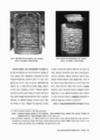
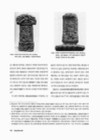
본 연구는 1960년대 초반 충남 연기군 비암사, 서광암, 연화사와 그 인근의 공주 정안면 등지에서 발견된 총 7구의 납석제불상을 대상으로 한다. 이 불상들은 재질 뿐 아니라 도상, 양식, 조각기법 등에 공통성을 지니고 있어 동일한 제작집단에 의하여 만들어진 것으로 파악할 수 있다. 또한 이 중 네 구에 干支名, 尊像名, 人名 등을 포함한 銘文이 남아 있다. 이 불상군은 통일신라 직후인 673년에서 689년 무렵에 제작된 백제계 상으로써, 7세기와 8세기의 경계선상에서 그 과도기적 성격을 드러내고 있다. 본고에서는 이들 7개의 불상을 ‘燕岐佛像郡’이라 총칭하도록 하며, 선행연구를 토대로 형상적 특징을 통한 명칭 재고 및 도상과 양식의 재고찰을 통하여, 계승과 수용이라는 양면성을 지닌 이 불상군의 성격을 규명해보고자 하였다.
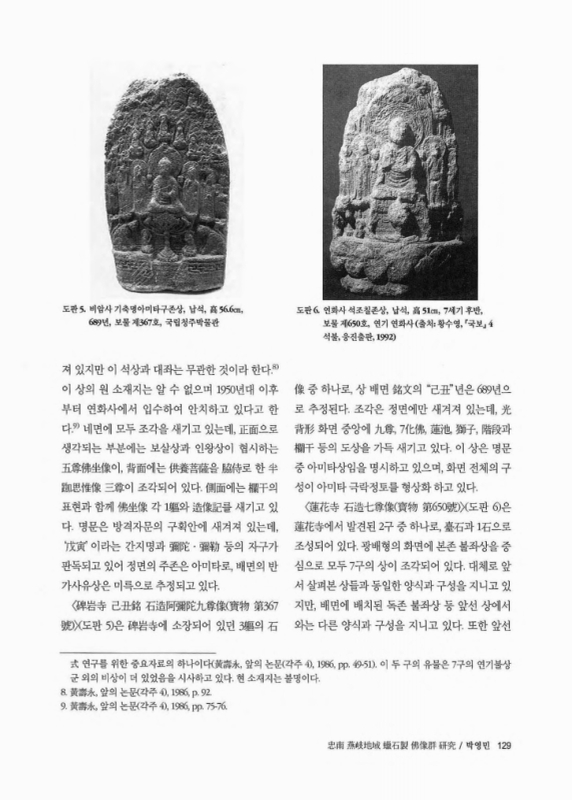
먼저 본고에서는 연기불상군의 형태적 특징의 분석을 통하여 현재 그 명칭이 혼용되고 있는 7구의 상을 형태분류하고, 각 상의 명칭에 대한 再考를 제안하였다. 중국, 일본, 한국에서 현재 사용하고 있는 ‘碑像’이라는 용어를 정의하고, 그 형태적 특징을 각 상에 대입시켜 분석한 결과, 연기불상군의 7개 상 중 비상의 범주에 속하는 것은 〈계유명 전씨 아미타구존불비상〉을 비롯한 4개의 상이며, 나머지 3개의 상은 비상의 범주에 포함되지 않는 것으로 분류할 수 있다.
연기불상군은 도상·양식적 특징에 있어 7세기 말의 시대적 특수성을 반영하고 있다. 우선 도상적 특징에서 가장 주목되는 것은 아미타정토의 형상화를 비롯한 다양한 도상이 표현되어 있다는 점이다. 아미타정도의 표현은 7세기에서 8세기 초반 중국, 일본, 한국에서 모두 유행하던 것으로, 연기불상군에 표현된 도상은 당시의 도상적 유행을 충실히 반영하고 있다. 또한 양식적으로는 백제의 고양식을 토대로 새롭게 받아들여지고 있던 당 양식의 영향이 간취된다. 673년에 제작된 〈계유명 전씨 아미타구존불비상〉과 〈계유명 삼존천불비상〉은 연기불상군의 도상·양식적 모본이 되고 있는데, 그 이후에 제작된 상들은 기본적 형식을 토대로 당 양식을 점차 반영하여 통일신라 양식으로 이행하는 과정을 보여주고 있다. 이는 연기불상군이 백제의 古樣式이라는 기본 틀을 채택함으로써 ‘백제’적 정체성을 드러내고 있지만 시대적 흐름에도 민감하게 반응하고 있었다는 것을 보여준다.
특히 연기불상군의 특징은 ‘達率’ 등의 백제 최고위 관등명과 백제의 유력성씨명이 포함된 명문 내용 등은 이 백제계 제작집단이 이 상을 통하여 백제 고양식의 재현을 의도했을 가능성을 보여준다. 이와 함께 중국 6세기 산동성 양식의 영향을 받은 납석제 조각이 백제에서 빈번히 제작되었다는 점 또한 연기불상군의 양식적 특수성에 영향을 미쳤다고 생각된다.
결론적으로 연기불상군은 백제의 마지막 조상으로써, 그리고 통일기 백제양식을 계승한 첫 번째 작품으로서 정치·사회·사상적 과도기였던 7세기말~8세기 초반의 양식적 터닝포인트를 제시하고 있는 작품이다.
This study focuses on dealing with total 7 Buddhist statues made from agalmatolite, which were all found in Biam Temple, Seogwang-am and Yeonhwa Temple located in Yeongi county, Chungnam province as well as neighboring areas (including Jeongan-myeon) in the first half of 1960's. These Buddhist statues have something in common with one another in many aspects including material, composition, mode and sculptural techniques, so it is estimated that they had been made by a same group of sculptors. Moreover, 4 pieces of these 7 Buddhist statues still keep epitaphs including sexagenary name, Buddhist sacred image's title and personal name. Historically, it is estimated that the 4 Buddhist statues were such works in the style of Baekjae as made possibly from AD 673 to 689 immediately after the foundation of Unified Silla Dynasty. They reveal a nature of transitional period between 7th and 8th century. In general term, this study called these 7 Buddhist statues as ‘a collection of Yeongi Buddhist statues’ and also referred to preceding studies to review statue designations based on shape characteristics and reexamine composition and mode of statues, so that it sought to examine the nature of these Buddhist statue collection implying both sides, i.e. succession and assimilation.
First, this study sought to analyze morphologic characteristics found in the collection of Yeongi Buddhist statues, so that it could categorize the 7 statues with mingled designations among one another by their shapes and propose re-considering designation of each Buddhist statue. And it sought to define ‘Bisang / Bei Xiang / Hizo (碑像: Buddhist stele)’ in Korean / Chinese / Japanese language and analyze morphologic characteristics of Bisang reflected on each statue image. As a result, it was found that 4 of 7 Buddhist statues (including ‘Gyeyumyeong Jeonssi Amita Guzonbulbisang’) fall under the category of stele, while remaining 3 statues don't fall under the category of stele.
The collection of Yeongi Buddhist statues reflects historical settings of the late 7th century in Korea from perspectives of composition and mode characteristics. In the aspect of composition, it is most noteworthy that they are expressions of various compositions including artistic embodiment of Amitabha's Pure Land. Such expressions of Amitabha's Pure Land were widely popularized across Northeast Asia (China, Korea and Japan) from 7th century to the early half of 8th century. The compositions expressed in the collection of Yeongi Buddhist statues are full reflections of contemporary compositional trends during the period. Also, they reveal cultural influence of Chinese Tang Dynasty's sculptural modes as newly embraced on the basis of ancient Baekjae's styles. In particular, ‘Gyeyumyeong Jeonssi Amita Guzonbulbisang (AD 673)’ and ‘Gyeyumyeong Cheonbulbisang (AD 673)’ become a model of composition and mode for the collection of Yeongi Buddhist statues. Follow-up statues sculpted came to gradually assimilate contemporary modes of Tang Dynasty on the basis of their ancestral models on the way to emerging fashions of Unified Silla Dynasty. This change implies that the collection of Yeongi Buddhist statues revealed original identity of ‘Baekjae’ on the adopted framework of ancient Baekjae's mode, but responded sensitively to their contemporary cultural mainstreams.
Notably, the collection of Yeongi Buddhist statues shows that their inscriptions of Baekjae Dynasty's top official rank (‘Dalsol’) and influential people's name suggest a possibility that this group of sculptural workers who were former subjects of Baekjae Dynasty might have intentions to revive the ancient Baekjae's styles through these statues. And it is estimated that the fact that agalmatolite statutes - as a sign of influences from the mode of Chinese Shantung in the 6th century - were frequently sculpted during the period of Baekjae Dynasty could have influences on modal specialty found in collection of Yeongi Buddhist statues.
Summing up, it is concluded that the collection of Yeongi Buddhist statues was the first artworks based on ancient Baekjae styles inherited by the last people of Baekjae Dynasty during the period of Unified Silla, and suggest a modal turning point from the late 7th century to early 8th century - as a period of sociopolitical and ideological transition in ancient Korean peninsula.| 기사명 | 저자명 | 페이지 | 원문 | 목차 |
|---|---|---|---|---|
| 都市文化의 해석과 미술 | 윤범모 | pp.7-22 |
|
보기 |
| 현대 한국미술과 도시문화 :1980·90년대 미술에 표현된 서울의 도시풍경을 중심으로 | 최태만 | pp.23-46 |
|
보기 |
| 都市·江戶의 虛構의 공간 :吉原에 대하여 | 이미림 | pp.47-69 |
|
보기 |
| 皇都에서 유토피아의 광장, 北京 | 문정희 | pp.71-88 |
|
보기 |
| 도시 공간 구조를 통해 본 권력자의 속성 연구 :샤자하나바드(Shahjahanabad)와 뉴델리(New Delhi)의 경우 | 이춘호 | pp.89-104 |
|
보기 |
| 신라 왕경의 형성과정과 사원 | 이근직 | pp.105-123 |
|
보기 |
| 忠南 燕岐地域 蠟石製 佛像群 硏究 | 박영민 | pp.125-155 |
|
보기 |
| 後百濟 佛敎美術의 特徵과 性格 | 陳政煥 | pp.157-188 |
|
보기 |
| 江華 禪源寺址 出土 高麗靑瓷 硏究 | 鄭在恩 | pp.189-219 |
|
보기 |
| 정선의 그림 수요 대응 및 작화 방식 | 장진성 | pp.221-236 |
|
보기 |
| 吐魯番 出土 <佛說預修十王生七經變相圖> | 조성금 | pp.237-259 |
|
보기 |
| L. A. County Museum of Art 소장 香林寺 <羅漢圖> | 신광희 | pp.261-284 |
|
보기 |
| 번호 | 참고문헌 | 국회도서관 소장유무 |
|---|---|---|
| 1 | 曹魏天竺三藏康僧鎧譯, 『無量壽經』 | 미소장 |
| 2 | 姚秦龜 三藏鳩摩羅什譯, 『佛說阿彌陀經』 | 미소장 |
| 3 | 大唐西明寺沙門釋道宣撰, 『續高僧傳』 | 미소장 |
| 4 | 『三國史記』 | 미소장 |
| 5 | 『三國遺事』 | 미소장 |
| 6 | 황수영, 『國寶』4 석불, 웅진출판, 1992. | 미소장 |
| 7 | 백제문화개발연구소, 『백제조각·공예도록』, 1992. | 미소장 |
| 8 | 國立淸州博物館, 『國立淸州博物館圖錄』, 2001. | 미소장 |
| 9 | 국립경주박물관, 『문자로 본 신라』, 2001. | 미소장 |
| 10 | 국립중앙박물관, 『영원한 생명의 울림 통일신라 조각』,2008. | 미소장 |
| 11 | 大村西崖, 『支那美術史彫塑篇』, 佛書刊行會圖像部, 1915. | 미소장 |
| 12 | 大阪市立美術館, 『大阪市立美術館藏品選集』, 1986. | 미소장 |
| 13 | 日本經濟新聞社, 『中國麥積山石窟展』, 1992. | 미소장 |
| 14 | 松原三郞, 『中國佛敎彫刻史論』, 吉川弘文館, 1996. | 미소장 |
| 15 | 東京國立博物館, 『金銅佛-中國·朝鮮·日本-』, 1998. | 미소장 |
| 16 | 朝日新聞社, 『三藏法師の道: 西遊記のシルクロ—ド』, 1999. | 미소장 |
| 17 | 東京國立博物館, 『法隆寺獻納寶物金銅佛Ⅰ』, 2000. | 미소장 |
| 18 | 故宮博物院, 『海外遺珍』, 1986. | 미소장 |
| 19 | 西安碑林博物館, 『西安碑林博物館』, 2001. | 미소장 |
| 20 | 北京出版社, 『靑州北朝佛敎造像』, 2002. | 미소장 |
| 21 | 外門出版社, 『響堂山石窟-流失海外石刻造像硏究-』, 2004. | 미소장 |
| 22 | 中國敦煌壁畵全集編輯委員會, 『中國敦煌壁畵全集』5, 燉煌初唐, 天津人民美術出版社, 2006. | 미소장 |
| 23 | 郭東錫, 『金銅佛』, 藝耕, 2000.4. | 미소장 |
| 24 | 金理那, 『韓國古代佛敎彫刻史硏究』, 一潮閣, 1989. | 미소장 |
| 25 | ___金理那___, 『韓國古代佛敎彫刻比較硏究』, 文藝出版社, 2003. | 미소장 |
| 26 | 金英美, 『新羅佛敎思想史硏究』, 民族社, 1994.9. | 미소장 |
| 27 | 文明大, 『韓國彫刻史』, 悅話堂, 1980. | 미소장 |
| 28 | 鄭禮京, 『중국 北齊·北周불상연구』, 혜안, 1998. | 미소장 |
| 29 | 최성은, 『석불·마애불』, 예경, 2004. | 미소장 |
| 30 | 勝木言一郞, 『初唐·盛唐期の敦煌における阿彌陀淨土圖の硏究』, 創土社, 2006.2. | 미소장 |
| 31 | 金申, 『中國美術叢考』, 科學出版社, 2004. | 미소장 |
| 32 | Dorothy C. Wong, “Chinese steles : pre-Buddhist and Buddhist use of a symbolic form”,Honolulu, University of Hawaii Press, 2004. | 미소장 |
| 33 | 郭東錫, 「燕岐지방의 佛碑像」, 『百濟의 彫刻과 美術』, 公州大學校博物館·忠淸南道, 1992. | 미소장 |
| 34 | 百濟 佛像의 훼龍文系 火焰光背 | 소장 |
| 35 | 新羅 文武王代의 對服屬民 政策 : 百濟遺民에 대한 官等授與를 中心으로 | 소장 |
| 36 | 연기 불상군 명문을 통해 본 연기지방 백제유민의 동향 | 소장 |
| 37 | 癸酉銘阿彌陀三尊佛碑像의 銘文 | 소장 |
| 38 | 中國 山東省 佛像과 三國時代 佛像 | 소장 |
| 39 | A Study on the Agalmatolite Buddhist Images in the Second Half of 6th Century, Baekje | 소장 |
| 40 | 朴相俊, 「新羅下代塔碑硏究」, 동국대학교 대학원 석사학위논문, 2002. | 미소장 |
| 41 | 燕岐 碑岩寺石佛碑像과 眞牟氏 | 소장 |
| 42 | 燕岐 佛碑像과 충남지역의 백제계 불상 | 소장 |
| 43 | 趙容重, 「益山蓮洞里石彫如來坐像光背의 圖像硏究-文樣을 통하여 본 백제불상광배의 特性-」, 『美術資料』49, 1992. | 미소장 |
| 44 | 燕岐의 三尊千佛 碑像 | 소장 |
| 45 | A Image of Buddha in Baekje | 소장 |
| 46 | ___秦弘燮___, 「癸酉銘三尊千佛碑像에 對하여」, 『燕岐石佛碑像의 硏究』, 연기군, 1986. | 미소장 |
| 47 | 黃壽永, 「忠南燕岐石像調査-百濟遺民에 의한 造像活動-」,『燕岐石佛碑像의 硏究』, 燕岐郡, 1986. | 미소장 |
| 48 | 燕岐 蓮花寺의 石像 | 소장 |
| 49 | 癸酉銘千佛三尊碑像의 天蓋石 | 소장 |
| 50 | 石松日奈子, 「中國佛敎造像碑の調査硏究」, 『鹿島美術硏究』年報13號別冊, 鹿島美術財團, 1996. | 미소장 |
| 51 | ____石松日奈子_______, 「中國佛敎造像碑の調査硏究(2)」, 『鹿島美術硏究』2, 1998. | 미소장 |
| 52 | 大西修也, 「百濟の石佛坐像-益山郡蓮洞里石造如來像をめぐって-」,『 佛敎藝術』107, 1976. | 미소장 |
| 53 | ____大西修也_____,「 軍威石窟三尊佛考」,『 佛敎藝術』129, 1980. | 미소장 |
| 54 | _____大西修也____, 「阿彌陀·彌勒信仰の實態と圖像」, 『論叢佛敎美術史』, 吉川弘文館, 1986. | 미소장 |
| 55 | _____大西修也____, 「造像銘にみる阿彌陀·彌勒信仰の實態」, 『日韓古代彫刻史論』, 中國書店, 2002.2 | 미소장 |
| 56 | 大西磨希子, 「初唐期の西方淨土變と『觀無量壽經』-敦煌莫高窟の作例をてがかりに-」,『 佛敎藝術』273, 2004.3. | 미소장 |
| 57 | 郭東錫, 「小倉蒐集韓國金銅佛再考-製作技法を中心に-」,『日韓兩國に所在する韓國佛敎美術の共同調査硏究硏究成果報告書』, 奈良國立博物館, 1993. | 미소장 |
| 58 | 張硯, 「中國陝西省耀縣の碑林(1)-藥王山の彫像碑」, 『佛敎藝術』205, 1992.12. | 미소장 |
| 59 | Sunkyung Kim, Contestind the Lost Land, New Land, and Pure Land: Buddhist Steles of Seventh-Century Korea, Archives of Asian Art vol.59, 2009. | 미소장 |
*표시는 필수 입력사항입니다.
| 전화번호 |
|---|
| 기사명 | 저자명 | 페이지 | 원문 | 기사목차 |
|---|
| 번호 | 발행일자 | 권호명 | 제본정보 | 자료실 | 원문 | 신청 페이지 |
|---|
도서위치안내: 정기간행물실(524호) / 서가번호: 국내04
2021년 이전 정기간행물은 온라인 신청(원문 구축 자료는 원문 이용)

우편복사 목록담기를 완료하였습니다.
*표시는 필수 입력사항입니다.
저장 되었습니다.
