
 대표어
대표어
 한국학술지인용색인(NRF)
권호기사보기
| 기사명 | 저자명 | 페이지 | 원문 | 기사목차 |
|---|
결과 내 검색
동의어 포함
목차
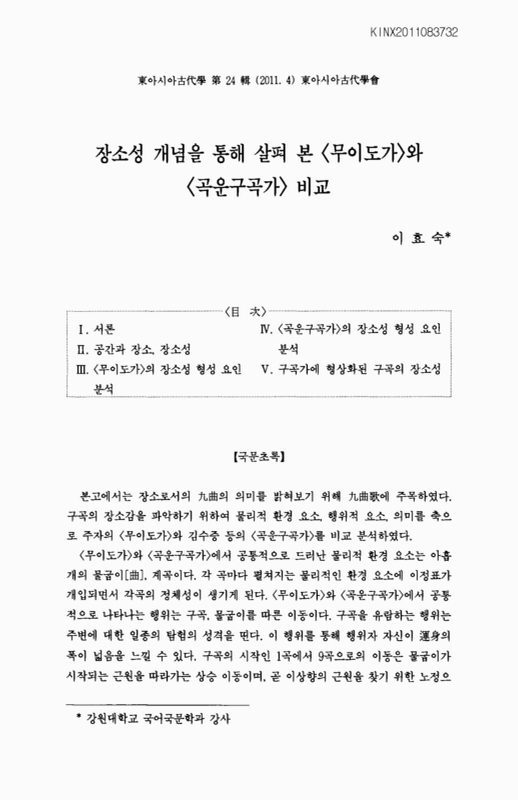
장소성 개념을 통해 살펴 본 〈무이도가〉와 〈곡운구곡가〉 비교 / 이효숙 1
【국문초록】 1
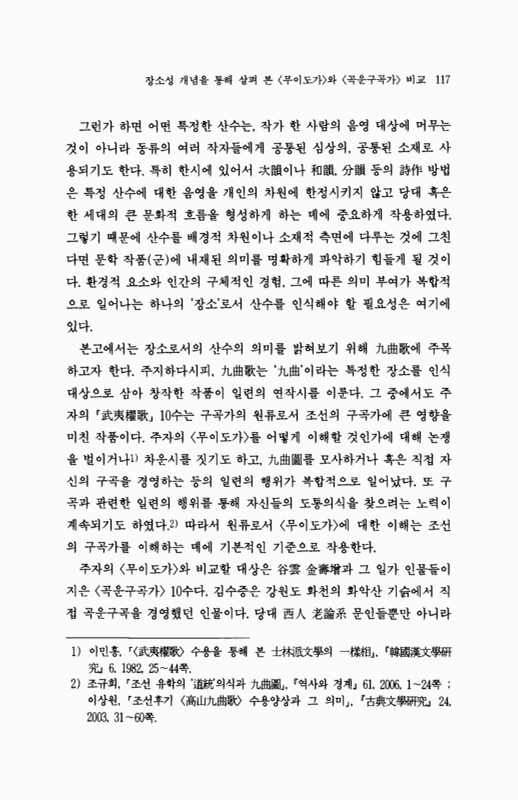
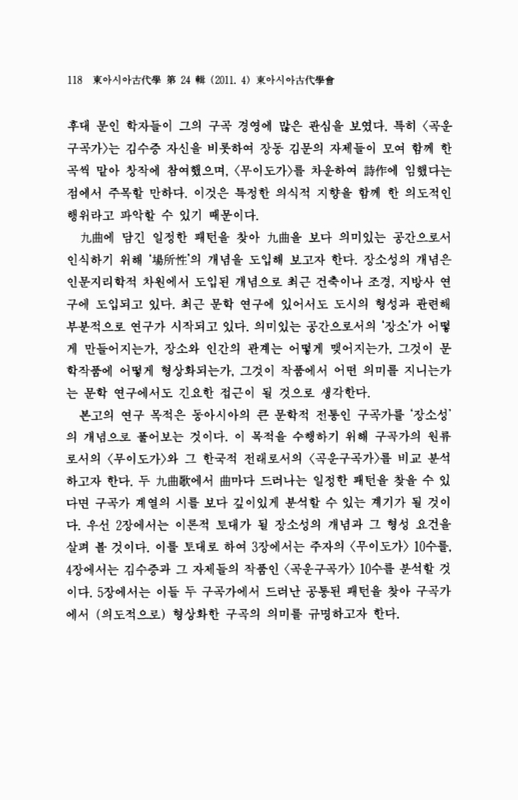
I. 서론 2
II. 공간과 장소, 장소성 5
III. 〈무이도가〉의 장소성 형성 요인 분석 8
IV. 〈곡운구곡가〉의 장소성 형성 요인 분석 16
V. 구곡가에 형상화된 구곡의 장소성 25
【참고문헌】 29
〈Abstract〉 31
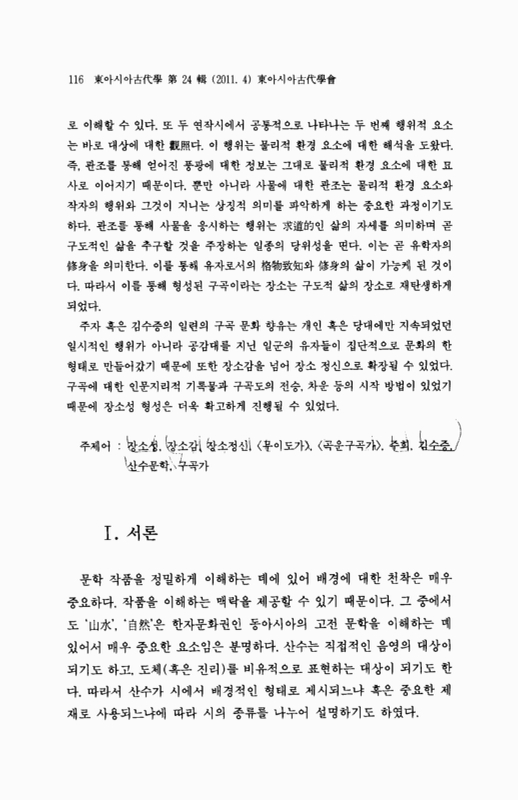
This paper paid attention to Gugokga in order to reveal the meaning of mountain and water as place. In order to do so, this paper comparatively analyzed Chu-tzu’s
Sence of place of Gugoks depicted in the two Gugokgas is formed by basic factors like winding creeks as physical environment and additional signs. Hereafter, an uprising movement in seeking a source of creek (utopia) and specific behaviors that one observes scenery of each valley are added. By these, it became possible for Confucianists to “gain knowledge by the study of things” and “develop their mind.” Therefore, Gugok is reborn as the place of life that is seeking the truth.
Common physical environments appeared in
| 기사명 | 저자명 | 페이지 | 원문 | 목차 |
|---|---|---|---|---|
| 북한강유역 철기시대 주거지 연구 :영동지역과의 비교를 중심으로 | 박성우 ,남재영 | pp.3-61 |
|
보기 |
| 홍산문화 옥저룡, 쌍수수황형기, 쌍수수삼공기의 상징적 의미와 '환일(Sundog)' 현상 | 우실화 | pp.63-113 |
|
보기 |
| 장소성 개념을 통해 살펴 본 <무이도가>와 <곡운구곡가> 비교 | 이효숙 | pp.115-146 |
|
보기 |
| 명청대 장강 하류 문예부흥의 두 가지 표상 : 소주의 패트로니지(patronage)와 물길을 중심으로 | 權錫煥 | pp.147-173 |
|
보기 |
| 고대 동아시아의 칠석문학에 나타난 漢水의 수용과 의미 | 李相俊 | pp.175-200 |
|
보기 |
| <吉野讚歌>에 나타난 강(河·川)의 이미지 | 尹永水 | pp.201-223 |
|
보기 |
| 東明·朱蒙 出生譚의 類型別 特徵과 文學文化로의 傳承 | 金鏞基 | pp.227-264 |
|
보기 |
| 백제의 태자 책봉제 수용 과정 고찰 | 김병곤 | pp.265-295 |
|
보기 |
| 『林下筆記』에 나타난 儀禮 硏究 | 宋宰鏞 | pp.297-330 |
|
보기 |
| 지역축제와 무형문화유산의 정체성 :강릉단오제의 사례로 | 이창식 | pp.331-365 |
|
보기 |
| 石鼓文의 특색과 기타 秦系文字 와의 비교 | 徐再仙 | pp.367-387 |
|
보기 |
| 漢武帝시기 上林苑 출토 文字瓦當 試論 | 許仙瑛 | pp.389-407 |
|
보기 |
| 에가미 나미오(江上波夫) 일본민족 기원론에서의 왜인과 한인 :왜인과 한족의 민족이동 | 세키네 히데유키 | pp.409-439 |
|
보기 |
| 고구려 '온달'과 몽골 산악신앙의 완곡어 'Öndör'와의 작명관 비교 연구 | 김기선 | pp.441-472 |
|
보기 |
| 번호 | 참고문헌 | 국회도서관 소장유무 |
|---|---|---|
| 1 | 주 희, 주자대전 | 미소장 |
| 2 | 김수증, 곡운집 , 1978년 영인본. | 미소장 |
| 3 | 김수증, 곡운집 , 한국문집총간 125, 민족문화추진회. | 미소장 |
| 4 | 김창업, 老稼齋集 , 한국문집총간 , 민족문화추진회. | 미소장 |
| 5 | 金昌緝, 圃陰集 , 한국문집총간 , 민족문화추진회. | 미소장 |
| 6 | 조 익, 浦渚先生集 , 한국문집총간 , 민족문화추진회. | 미소장 |
| 7 | 董天工 纂, 武夷山志 상, 강소고적출판사. | 미소장 |
| 8 | 에드워드 렐프, 장소와 장소상실 , 김덕현・김현주・심승희 역, 논형, 2005, 1-352쪽. | 미소장 |
| 9 | 이-푸 투안, 공간과 장소 , 구동회・심승희 역, 도서출판 대윤, 1995, 1-328쪽. | 미소장 |
| 10 | 유준영, 「谷雲九曲圖를 중심으로 본 17세기 實景圖發展의 일례」, 정신문화 8, 한국정신문화연구소, 1980, 38-46쪽. | 미소장 |
| 11 | 「 武夷櫂歌」 受容을 通해본 士林派文學의 一樣相  |
미소장 |
| 12 | An appropriation of Gosangugok-ga in Late Choseon and the meaning of it |
미소장 |
| 13 | 장소와 장소성의 다의적 개념에 관한 연구 | 소장 |
| 14 | In the second half of the 17th century, The Aspects of Understanding Kim Si-seup(金時習) in Illustrious Officials(士大夫) and The Significance | 소장 |
| 15 | 이효숙, 「16・17世紀 西人における西人の<金時習> 認識」, 朝鮮學報 206, 2008, 조선학회, 99-130쪽. | 미소장 |
| 16 | 이효숙, 「17-18세기 장동 김문의 산수문학 연구」, 강원대학교 박사학위논문, 2008, 1-165쪽. | 미소장 |
| 17 | A Sense of Dotong and Gugokdo of the Joseon Dynasty | 소장 |
*표시는 필수 입력사항입니다.
| 전화번호 |
|---|
| 기사명 | 저자명 | 페이지 | 원문 | 기사목차 |
|---|
| 번호 | 발행일자 | 권호명 | 제본정보 | 자료실 | 원문 | 신청 페이지 |
|---|
도서위치안내: 정기간행물실(524호) / 서가번호: 국내03
2021년 이전 정기간행물은 온라인 신청(원문 구축 자료는 원문 이용)

우편복사 목록담기를 완료하였습니다.
*표시는 필수 입력사항입니다.
저장 되었습니다.
