
 대표어
대표어
 한국학술지인용색인(NRF)
권호기사보기
| 기사명 | 저자명 | 페이지 | 원문 | 기사목차 |
|---|
결과 내 검색
동의어 포함
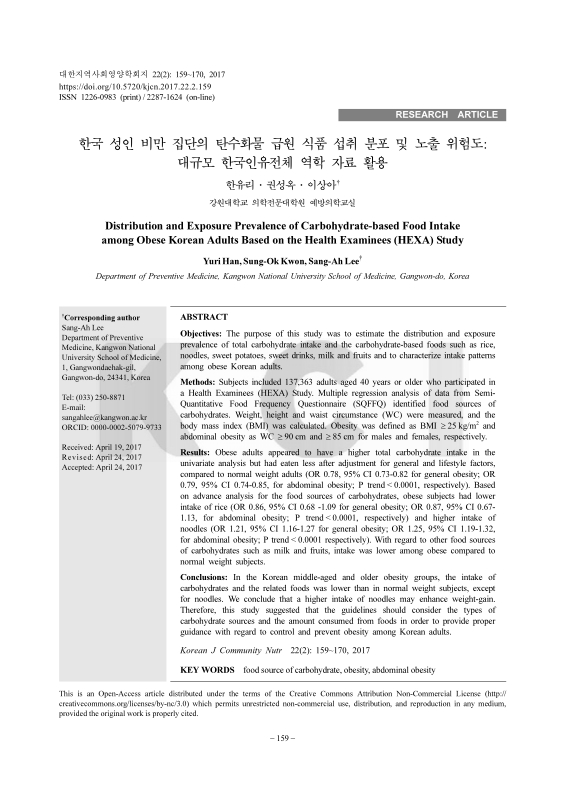
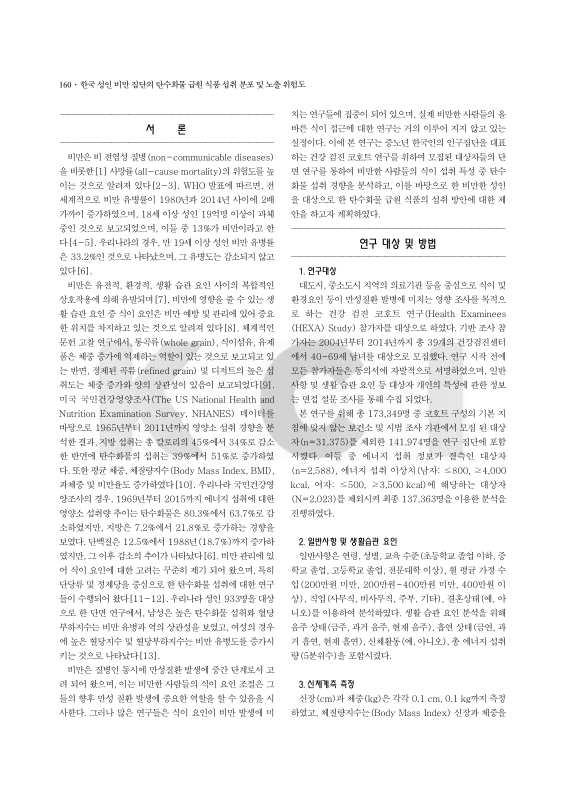
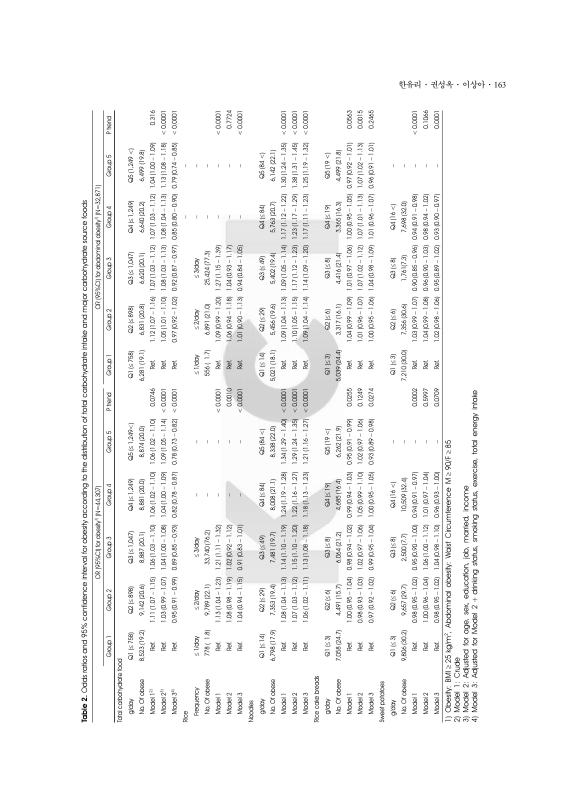
Objectives: The purpose of this study was to estimate the distribution and exposure prevalence of total carbohydrate intake and the carbohydrate-based foods such as rice, noodles, sweet potatoes, sweet drinks, milk and fruits and to characterize intake patterns among obese Korean adults.
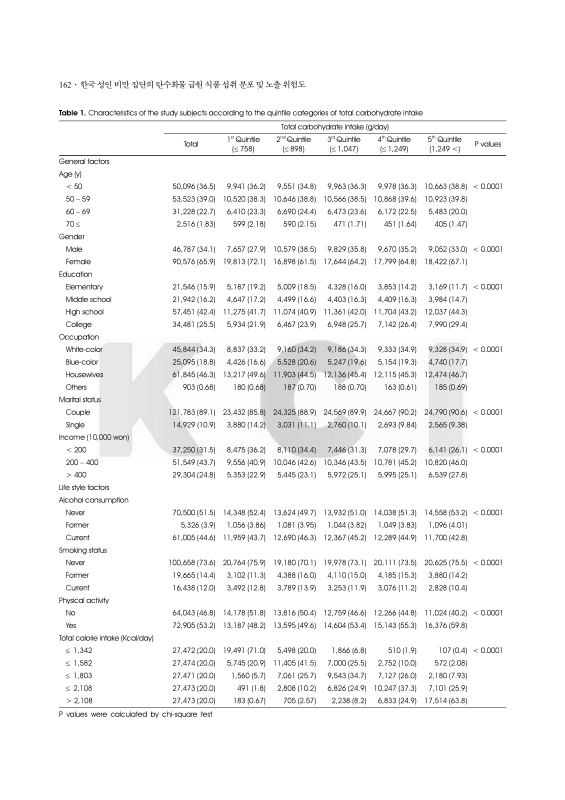
Methods: Subjects included 137,363 adults aged 40 years or older who participated in a Health Examinees (HEXA) Study. Multiple regression analysis of data from Semi-Quantitative Food Frequency Questionnaire (SQFFQ) identified food sources of carbohydrates. Weight, height and waist circumstance (WC) were measured, and the body mass index (BMI) was calculated. Obesity was defined as BMI ≥ 25 kg/m2 and abdominal obesity as WC ≥ 90 cm and ≥ 85 cm for males and females, respectively.
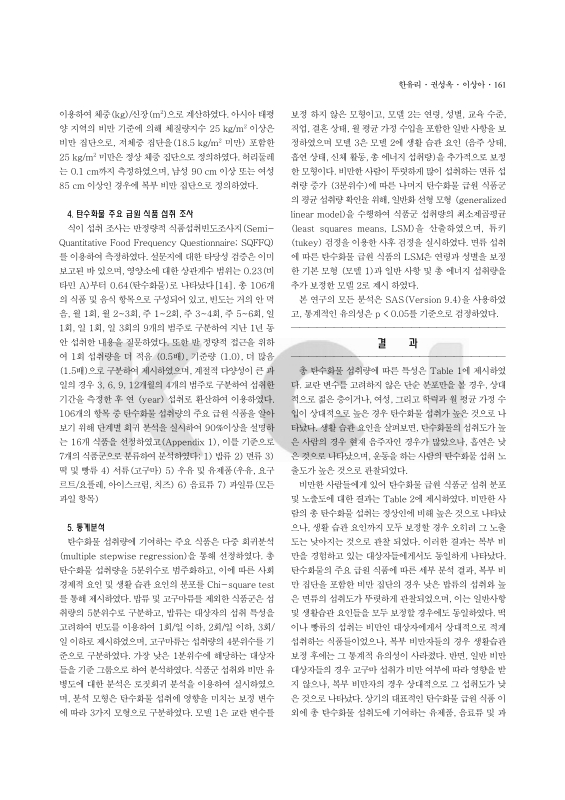
Results: Obese adults appeared to have a higher total carbohydrate intake in the univariate analysis but had eaten less after adjustment for general and lifestyle factors, compared to normal weight adults (OR 0.78, 95% CI 0.73-0.82 for general obesity; OR 0.79, 95% CI 0.74-0.85, for abdominal obesity; P trend < 0.0001, respectively). Based on advance analysis for the food sources of carbohydrates, obese subjects had lower intake of rice (OR 0.86, 95% CI 0.68 -1.09 for general obesity; OR 0.87, 95% CI 0.67-1.13, for abdominal obesity; P trend < 0.0001, respectively) and higher intake of noodles (OR 1.21, 95% CI 1.16-1.27 for general obesity; OR 1.25, 95% CI 1.19-1.32, for abdominal obesity; P trend < 0.0001 respectively). With regard to other food sources of carbohydrates such as milk and fruits, intake was lower among obese compared to normal weight subjects.
Conclusions: In the Korean middle-aged and older obesity groups, the intake of carbohydrates and the related foods was lower than in normal weight subjects, except for noodles. We conclude that a higher intake of noodles may enhance weight-gain. Therefore, this study suggested that the guidelines should consider the types of carbohydrate sources and the amount consumed from foods in order to provide proper guidance with regard to control and prevent obesity among Korean adults.| 번호 | 참고문헌 | 국회도서관 소장유무 |
|---|---|---|
| 1 | Changes in Intake of Fruits and Vegetables and Weight Change in United States Men and Women Followed for Up to 24 Years: Analysis from Three Prospective Cohort Studies | 미소장 |
| 2 | Relationship between bread and obesity | 미소장 |
| 3 | Sugar-Sweetened and Artificially-Sweetened Beverages in Relation to Obesity Risk | 미소장 |
| 4 | Validation and reproducibility of food frequency questionnaire for Korean genome epidemiologic study | 미소장 |
| 5 | The Cardiovascular Continuum in Asia-A New Paradigm for the Metabolic Syndrome | 미소장 |
| 6 | Comparison of estimated energy intake from 2×24-hour recalls and a seven-day food record with objective measurements of energy expenditure in children | 미소장 |
| 7 | The Epidemiology of Obesity | 미소장 |
| 8 | Dietary Pattern Classifications and the Association with General Obesity and Abdominal Obesity in Korean Women | 미소장 |
| 9 | Statistical review of US macronutrient consumption data, 1965–2011: Americans have been following dietary guidelines, coincident with the rise in obesity | 미소장 |
| 10 | Associations of dietary glycaemic index and glycaemic load with food and nutrient intake and general and central obesity in British adults | 미소장 |
| 11 | Association between dietary carbohydrate, glycemic index, glycemic load, and the prevalence of obesity in Korean men and women | 미소장 |
| 12 | Sugar-Sweetened Beverages, Obesity, Type 2 Diabetes Mellitus, and Cardiovascular Disease Risk | 미소장 |
| 13 | General and abdominal obesity parameters and their combination in relation to mortality: a systematic review and meta-regression analysis | 미소장 |
| 14 | Dietary macronutrients and food consumption as determinants of long-term weight change in adult populations: a systematic literature review | 미소장 |
| 15 | Refined grain consumption and the metabolic syndrome in urban Asian Indians (Chennai Urban Rural Epidemiology Study 57) | 미소장 |
| 16 | Nutrition and Bone Health in Women after the Menopause | 미소장 |
| 17 | Whole grain consumption and weight gain: a review of the epidemiological evidence, potential mechanisms and opportunities for future research | 미소장 |
| 18 | Whole- and refined-grain intakes are differentially associated with abdominal visceral and subcutaneous adiposity in healthy adults: the Framingham Heart Study | 미소장 |
| 19 | International table of glycemic index and glycemic load values: 2002, | 미소장 |
| 20 | Starches, Sugars and Obesity | 미소장 |
| 21 | Rice and noodle consumption is associated with insulin resistance and hyperglycaemia in an Asian population | 미소장 |
| 22 | Association of All-Cause Mortality With Overweight and Obesity Using Standard Body Mass Index Categories | 미소장 |
| 23 | Changes in Diet and Lifestyle and Long-Term Weight Gain in Women and Men | 미소장 |
| 24 | Milk Consumption and Framingham Risk Score: Analysis of the Korea National Health and Nutrition Examination Survey Data (2008-2011) | 미소장 |
| 25 | Association of Dietary Sugars and Sugar-Sweetened Beverage Intake with Obesity in Korean Children and Adolescents | 미소장 |
| 26 | Association of dairy products consumption with risk of obesity in children and adults: a meta-analysis of mainly cross-sectional studies | 미소장 |
| 27 | Prevalence and prevention of cardiovascular disease and diabetes mellitus | 미소장 |
| 28 | International Tables of Glycemic Index and Glycemic Load Values: 2008 | 미소장 |
*표시는 필수 입력사항입니다.
| 전화번호 |
|---|
| 기사명 | 저자명 | 페이지 | 원문 | 기사목차 |
|---|
| 번호 | 발행일자 | 권호명 | 제본정보 | 자료실 | 원문 | 신청 페이지 |
|---|
도서위치안내: 정기간행물실(524호) / 서가번호: 국내03
2021년 이전 정기간행물은 온라인 신청(원문 구축 자료는 원문 이용)

우편복사 목록담기를 완료하였습니다.
*표시는 필수 입력사항입니다.
저장 되었습니다.
