
 대표어
대표어
 한국학술지인용색인(NRF)
권호기사보기
| 기사명 | 저자명 | 페이지 | 원문 | 기사목차 |
|---|
결과 내 검색
동의어 포함
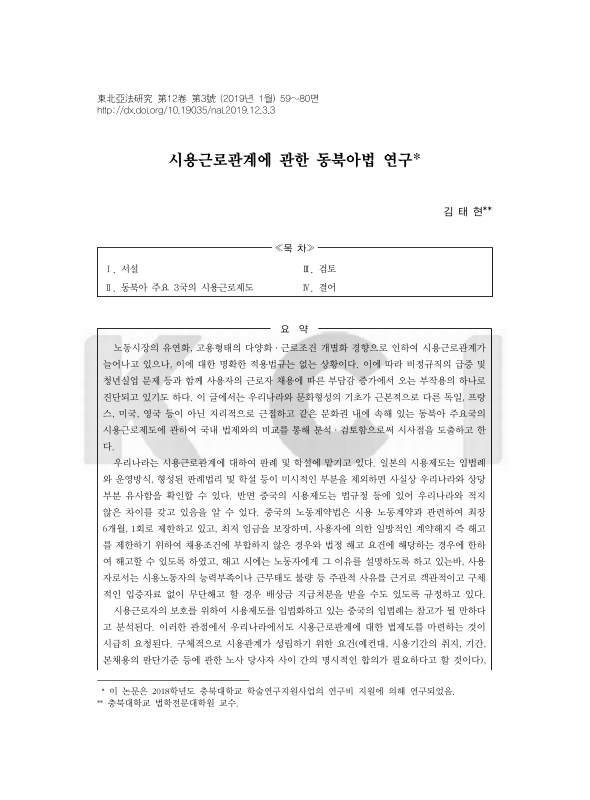
노동시장의 유연화, 고용형태의 다양화·근로조건 개별화 경향으로 인하여 시용근로관계가 늘어나고 있으나, 이에 대한 명확한 적용법규는 없는 상황이다. 이에 따라 비정규직의 급증 및 청년실업 문제 등과 함께 사용자의 근로자 채용에 따른 부담감 증가에서 오는 부작용의 하나로 진단되고 있기도 하다. 이 글에서는 우리나라와 문화형성의 기초가 근본적으로 다른 독일, 프랑스, 미국, 영국 등이 아닌 지리적으로 근접하고 같은 문화권 내에 속해 있는 동북아 주요국의 시용근로제도에 관하여 국내 법제와의 비교를 통해 분석‧검토함으로써 시사점을 도출하고 한다.
우리나라는 시용근로관계에 대하여 판례 및 학설에 맡기고 있다. 일본의 시용제도는 입법례와 운영방식, 형성된 판례법리 및 학설 등이 미시적인 부분을 제외하면 사실상 우리나라와 상당 부분 유사함을 확인할 수 있다. 반면 중국의 시용제도는 법규정 등에 있어 우리나라와 적지 않은 차이를 갖고 있음을 알 수 있다. 중국의 노동계약법은 시용 노동계약과 관련하여 최장 6개월, 1회로 제한하고 있고, 최저 임금을 보장하며, 사용자에 의한 일방적인 계약해지 즉 해고를 제한하기 위하여 채용조건에 부합하지 않은 경우와 법정 해고 요건에 해당하는 경우에 한하여 해고할 수 있도록 하였고, 해고 시에는 노동자에게 그 이유를 설명하도록 하고 있는바, 사용자로서는 시용노동자의 능력부족이나 근무태도 불량 등 주관적 사유를 근거로 객관적이고 구체적인 입증자료 없이 무단해고 할 경우 배상금 지급처분을 받을 수도 있도록 규정하고 있다.
시용근로자의 보호를 위하여 시용제도를 입법화하고 있는 중국의 입법례는 참고가 될 만하다고 분석된다. 이러한 관점에서 우리나라에서도 시용근로관계에 대한 법제도를 마련하는 것이 시급히 요청된다. 구체적으로 시용관계가 성립하기 위한 요건(예컨대, 시용기간의 취지, 기간, 본채용의 판단기준 등에 관한 노사 당사자 사이 간의 명시적인 합의가 필요하다고 할 것이다), 본채용 거절의 기준, 시용기간의 상한, 연장‧갱신 가능성 및 사유, 근로기준법 상의 해고제한 규정(제23조, 제26조, 제27조 등)의 적용 여부, 기타 계속근로년수 계산, 평균임금 산정 방법 등이 될 것이다. 이런 사항들이 국민적 합의를 거쳐 입법화될 경우 시용근로관계에 있어 사용자와 근로자에게 명확한 기준을 제시해 줌으로써 양 당사자의 예측가능성이 높아질 것이고, 법적 안정성의 제고에도 도움이 될 것이다.
In an increasingly flexible labor market with diversified employment forms and customized employment contracts, “probationary employment” is on the increase. However, there are no clear statutory provisions to regulate this employment form, which is diagnosed as one of the adverse effects of the employer-side burden related to new employees, along with a rapid rise in irregular jobs and youth unemployment problems. This article draws out the implications of increasing probationary employment in Korea by analyzing and reviewing the currently applicable legal framework for probationary employment contracts in comparison with those of geographically and culturally close northeast Asian countries, instead of those of Western countries (e.g., Germany, France, US, and UK) whose cultural foundation is fundamentally different from ours.
In Korea, matters regarding probationary employment are governed by case law and legal theories. Japan’s situation is substantially similar except for some minor aspects such as legislation, operation modalities, and judicial jurisprudence and theories. In contrast, China has statutory legal provisions for probationary employment. The Chinese Labor Contract Law limits the maximum probationary period to six months, prohibits its renewal, guarantees the minimum wage, and prohibits unilateral termination of contracts by the employing unit by allowing dismissal only if the terms of contract are breached or any of the legal requirements for dismissal are applicable. In case of dismissal during the probationary period, it is also mandatory to explain the reasons to the worker. If an employing unit revokes a labor contract during the probation period for subjective reasons such as poor job performance or negligence without providing any objective and concrete evidence, compensation payment is mandatory.
The Chinese legislation around statutory rights of probationary employees may serve as an urgently needed model for similar legislation in Korea. As requirements for entering into a probationary employment contract, explicit agreements between the contracting parties will have to be specified, specifically regarding the intent and duration of the probationary period, judgment criteria for regular employment after the termination of the probationary period, criteria for the refusal of regular employment, maximum duration of the probationary period, possibility and reason for a renewal of the probationary period, application of the termination restrictions stipulated under the Labor Standards Act (Articles 23, 26, and 27), and other details such as the calculation of the number of years of continuous employment and the average monthly wage. If a public consensus is gained on these points of consideration, which will then be reflected in legislation, it will contribute to increasing the predictability for both contracting parties and improving legal stability by providing employers and employees with legal provisions and guidelines regarding probationary hiring.| 번호 | 참고문헌 | 국회도서관 소장유무 |
|---|---|---|
| 1 | 김형배, 새로 쓴 노동법(제25판), 박영사, 2016. | 미소장 |
| 2 | 김형배·박지순, 노동법강의(제5판), 신조사, 2016. | 미소장 |
| 3 | 노동법실무연구회, 근로기준법주해[Ⅰ], 박영사, 2014. | 미소장 |
| 4 | 노병호, 노동법Ⅰ(제3판), 진원사, 2017. | 미소장 |
| 5 | 문무기 외 3, 과도적 근로관계 연구, 한국노동연구원, 2008. | 미소장 |
| 6 | 문무기, 중국 노동법제 분석을 통한 북한 노동법제 변화전망, 한국노동연구원, 2002. | 미소장 |
| 7 | 임종률, 노동법(제16판), 박영사, 2018. | 미소장 |
| 8 | 조계숙, 중국노동법실무, 동현출판사, 2003. | 미소장 |
| 9 | 하갑래, 근로기준법(전정 제30판 ), 중앙경제, 2018. | 미소장 |
| 10 | 管野和夫, 勞働法(第十一版), 弘文堂, 2016. | 미소장 |
| 11 | 鄭尙元(노정환·중국정법학회·사법연수원 중국법학회 옮김), 中國勞動法, 삼성경제연구소, 2008. | 미소장 |
| 12 | 강선희, 인사평가와 사법심사Ⅱ, 노동법포럼 제24호, 노동법이론실무학회, 2018. | 미소장 |
| 13 | 김도형, 시용근로자에 대한 해고의 정당성 판단기준, 노동법연구 제25호, 서울대학교 노동법연구회, 2008. | 미소장 |
| 14 | 김병옥, 고용의 유연안정성(Flexicurity)과 근로계약법의 법제화 방향, 진원사, 2013. | 미소장 |
| 15 | 김윤수, 채용내정과 시용기간의 법률관계, 재판자료 제39집 근로관계소송상의 제문제(상), 법원도서관, 1987. | 미소장 |
| 16 | 김태현, 기간제근로자에 대한 갱신기대권 법리의 적용에 관한 법적 검토, 노동법학 제61호, 한국노동법학회, 2017. | 미소장 |
| 17 | 노병호, 시용근로관계에 대한 연구, 강원법학 제33권, 강원대학교 비교법학연구소, 2011. | 미소장 |
| 18 | 문무기, 기간제고용과 과도적 근로관계, 법학논고 제31집, 경북대학교 법학연구원, 2009. | 미소장 |
| 19 | 서상문·오수균, 중국의 근로계약법 적용사례 및 한국기업의 시사점, 관세학회지 제16권 4호, 한국관세학회, 2015. | 미소장 |
| 20 | 유성재·이안빙, 중국 노동계약법의 주요내용과 시사점, 노동법논총 제16집, 2009. | 미소장 |
| 21 | 이광택, 중국 노동법의 새로운 경향, 법학논총, 국민대학교 법학연구소 제21권 제2호, 2009. | 미소장 |
| 22 | 이안빙, 중국 노동계약법 연구, 중앙대학교 법학박사학위논문, 2014. | 미소장 |
| 23 | 일본에서의 「노동계약법제」 도입을 둘러싼 논의 | 소장 |
| 24 | 하갑래, 중국과 일본의 근로계약법제와 입법론적 시사점, 노동법논총 제13집, 2008. | 미소장 |
| 25 | 국제노동브리프 Vol. 10, No. 6 목차  |
미소장 |
| 26 | 外尾健一, 試用期間の法理, 討論 : 勞働法 第60号, 1957. | 미소장 |
| 27 | 北沢貞男·石塚章夫, 試用労働者とその解雇基準, 法律時報 第509号, 1971. | 미소장 |
| 28 | 노동부, 근로계약법제에 입각한 근로기준법 개선방안 연구, 2008. | 미소장 |
| 29 | 외교부, 알기쉬운 유럽노동법 해설, 2013. | 미소장 |
| 30 | 법제처, 중국 노동계약법 연구, 2008. | 미소장 |
*표시는 필수 입력사항입니다.
| 전화번호 |
|---|
| 기사명 | 저자명 | 페이지 | 원문 | 기사목차 |
|---|
| 번호 | 발행일자 | 권호명 | 제본정보 | 자료실 | 원문 | 신청 페이지 |
|---|
도서위치안내: 정기간행물실(524호) / 서가번호: 대학02
2021년 이전 정기간행물은 온라인 신청(원문 구축 자료는 원문 이용)

우편복사 목록담기를 완료하였습니다.
*표시는 필수 입력사항입니다.
저장 되었습니다.
