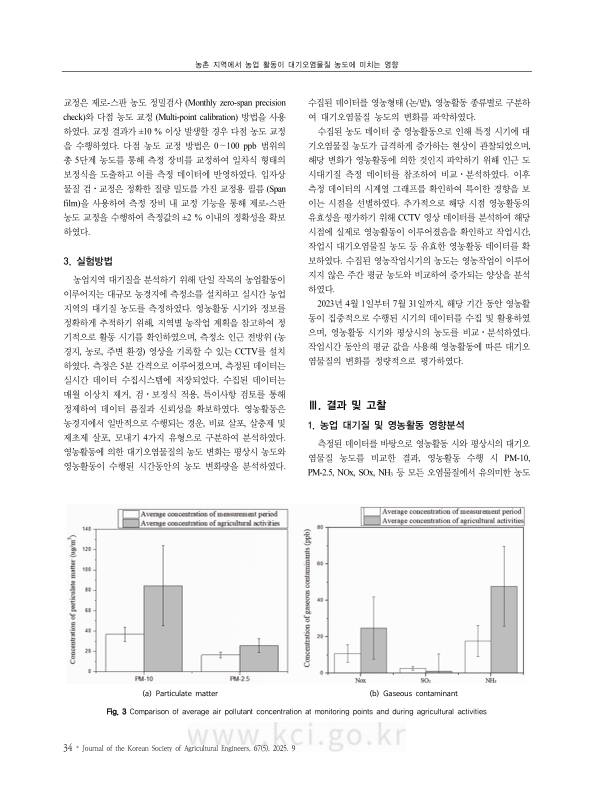
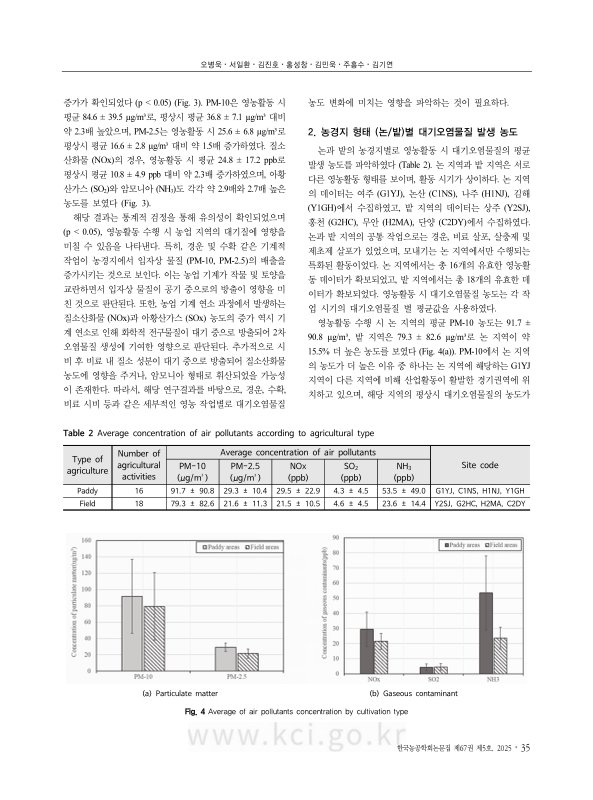
This study examined the impact of agricultural activities on air quality in rural areas by monitoring air pollutant concentrations in different types of farmland, including paddy fields and upland areas. Real-time air quality monitoring stations were installed at eight rural sites to continuously measure concentrations of particulate matter (PM-10, PM-2.5), nitrogen oxides (NOx), sulfur oxides (SO₂), and ammonia (NH₃). The results revealed that air pollutant levels increased significantly during periods of active farming. For example, PM-10 and PM-2.5 concentrations were 2.3 and 1.5 times higher, respectively, compared to non-farming periods. Likewise, NOx and NH₃ concentrations rose substantially during agricultural operations. These increases are attributable to mechanical activities such as tilling and harvesting, as well as chemical applications including the use of fertilizers and pesticides. The findings highlight the necessity of developing differentiated air quality management strategies that reflect the specific characteristics of agricultural practices.

 대표어
대표어
 한국학술지인용색인(NRF)
 학술연구정보서비스(KERIS)