대표어
대표어
 한국학술지인용색인(NRF)
 학술정보포털(DBpia)
 학술연구정보서비스(KERIS)
권호기사보기
| 기사명 | 저자명 | 페이지 | 원문 | 기사목차 |
|---|
결과 내 검색
동의어 포함
This article offers a comprehensive reassessment of segmentation (fenzhang) and sequencing (bianlian) in the Guodian bamboo-slip text “Liude” (Six Virtues). Starting from the 1998 Jingmen Museum editio princeps, we compare key proposals: Qiu Xigui’s cautious partial reconnection (slips 7–8), Li Ling’s principle of prioritizing contiguous readable units, Chen Wei’s “co-compilation thesis” (integrating Liude with Zunde yi and Cheng zhi wen zhi), Shan Yuchen’s systematization, and Zhang Guye’s “new arrangement” (micro-moves of slips 1–5, 47, 48 and use of verso marks). Evaluated along two axes—codicological evidence (length, string-hole spacing, script, verso marks) and internal textual logic (argument flow, thematic cohesion, stylistics, intertextual controls)—our findings support the co-compilation framework at the macro level (due to strong physical concordance and doctrinal continuity across virtue–role–duty and “Heavenly Constants” modules). At the micro level, Zhang’s specific relocations improve both cohesion and alignment with material cues. We further show how disputed loci (e.g., “governing inside/outside the gate,” “wei fu jue jun”) shift interpretive weight under different arrangements, demonstrating that ordering is itself interpretive. We propose a two-tier “evidence-weighted rule”: (1) prioritize codicological constraints; (2) validate with readability and intertextual comparison. Situating Liude vis-à-vis Wuxing (virtue ethics vs role ethics), we argue that Liude articulates an early Confucian role-ethical architecture with the “Ren-inside/Yi-outside” principle contextualized across mourning, family, and civic domains. Future convergence requires high-resolution IR/multispectral imaging, cross-corpus collation with Tsinghua/Shanghai slips, and standardized digital workflows.
This article offers a comprehensive reassessment of segmentation (fenzhang) and sequencing (bianlian) in the Guodian bamboo-slip text “Liude” (Six Virtues). Starting from the 1998 Jingmen Museum editio princeps, we compare key proposals: Qiu Xigui’s cautious partial reconnection (slips 7–8), Li Ling’s principle of prioritizing contiguous readable units, Chen Wei’s “co-compilation thesis” (integrating Liude with Zunde yi and Cheng zhi wen zhi), Shan Yuchen’s systematization, and Zhang Guye’s “new arrangement” (micro-moves of slips 1–5, 47, 48 and use of verso marks). Evaluated along two axes—codicological evidence (length, string-hole spacing, script, verso marks) and internal textual logic (argument flow, thematic cohesion, stylistics, intertextual controls)—our findings support the co-compilation framework at the macro level (due to strong physical concordance and doctrinal continuity across virtue–role–duty and “Heavenly Constants” modules). At the micro level, Zhang’s specific relocations improve both cohesion and alignment with material cues. We further show how disputed loci (e.g., “governing inside/outside the gate,” “wei fu jue jun”) shift interpretive weight under different arrangements, demonstrating that ordering is itself interpretive. We propose a two-tier “evidence-weighted rule”: (1) prioritize codicological constraints; (2) validate with readability and intertextual comparison. Situating Liude vis-à-vis Wuxing (virtue ethics vs role ethics), we argue that Liude articulates an early Confucian role-ethical architecture with the “Ren-inside/Yi-outside” principle contextualized across mourning, family, and civic domains. Future convergence requires high-resolution IR/multispectral imaging, cross-corpus collation with Tsinghua/Shanghai slips, and standardized digital workflows.*표시는 필수 입력사항입니다.
| 전화번호 |
|---|
| 기사명 | 저자명 | 페이지 | 원문 | 기사목차 |
|---|
| 번호 | 발행일자 | 권호명 | 제본정보 | 자료실 | 원문 | 신청 페이지 |
|---|
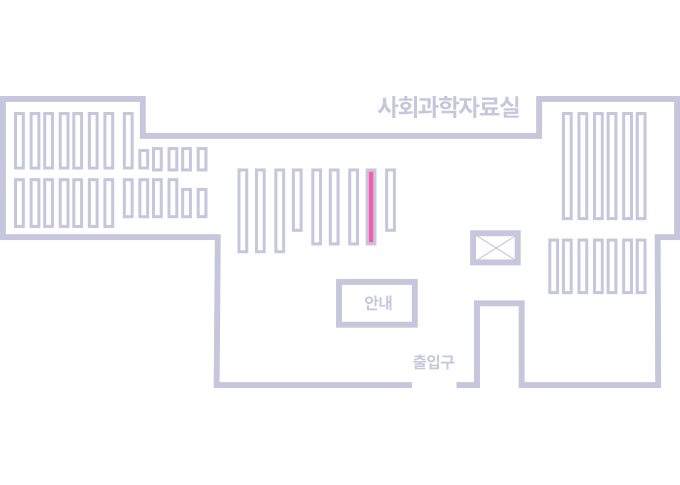
도서위치안내: 정기간행물실(524호) / 서가번호: 국내03
2021년 이전 정기간행물은 온라인 신청(원문 구축 자료는 원문 이용)
우편복사 목록담기를 완료하였습니다.
*표시는 필수 입력사항입니다.
저장 되었습니다.