
 대표어
대표어
권호기사보기
| 기사명 | 저자명 | 페이지 | 원문 | 기사목차 |
|---|
결과 내 검색
동의어 포함
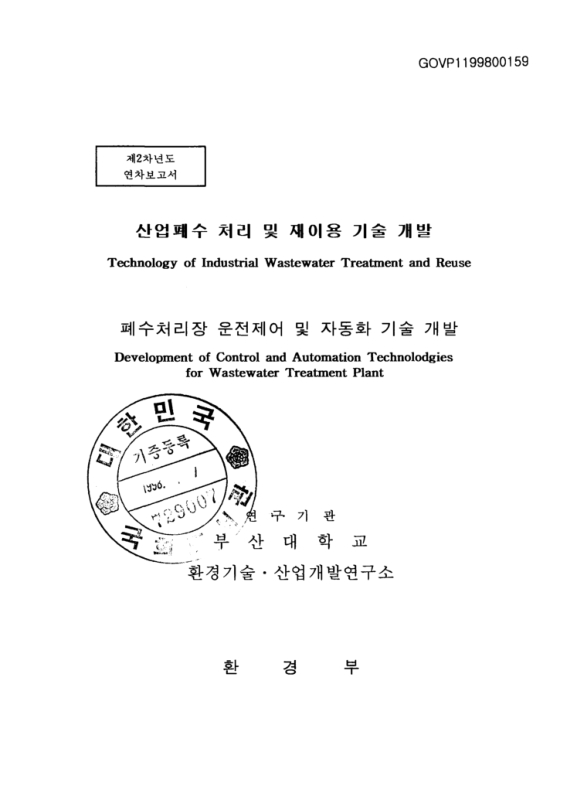
표제지
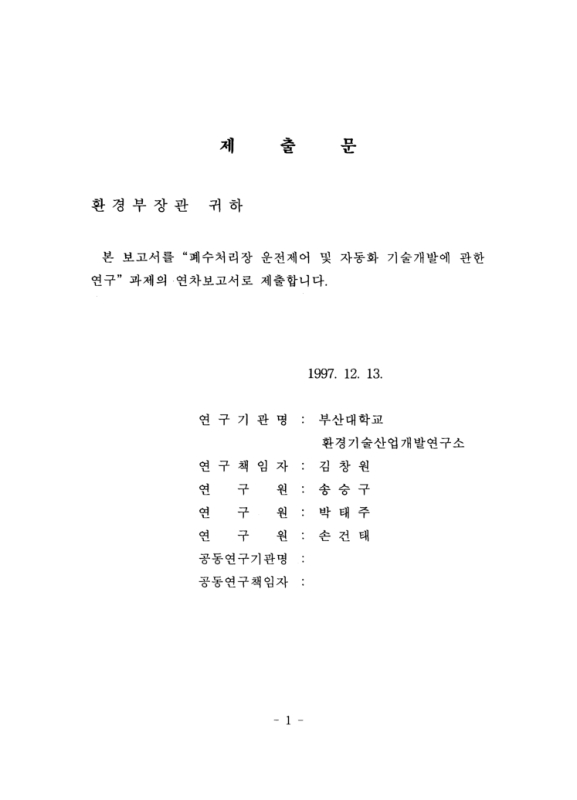
제출문
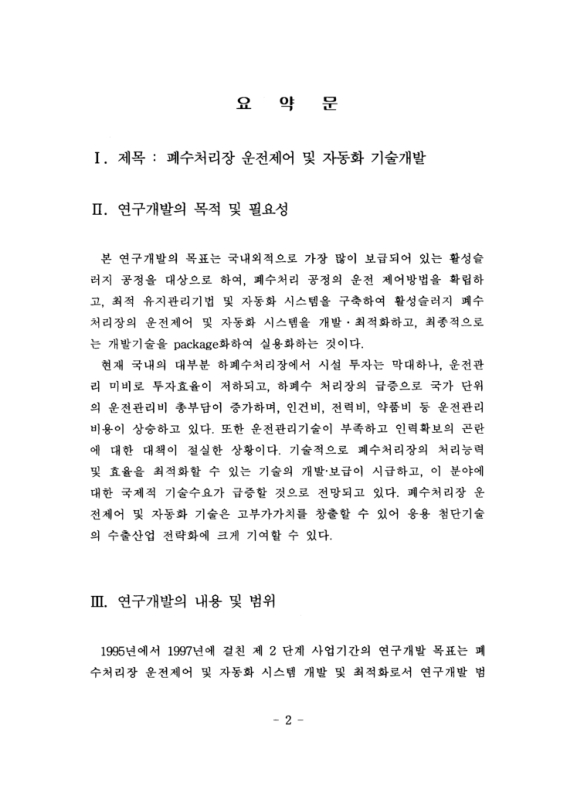
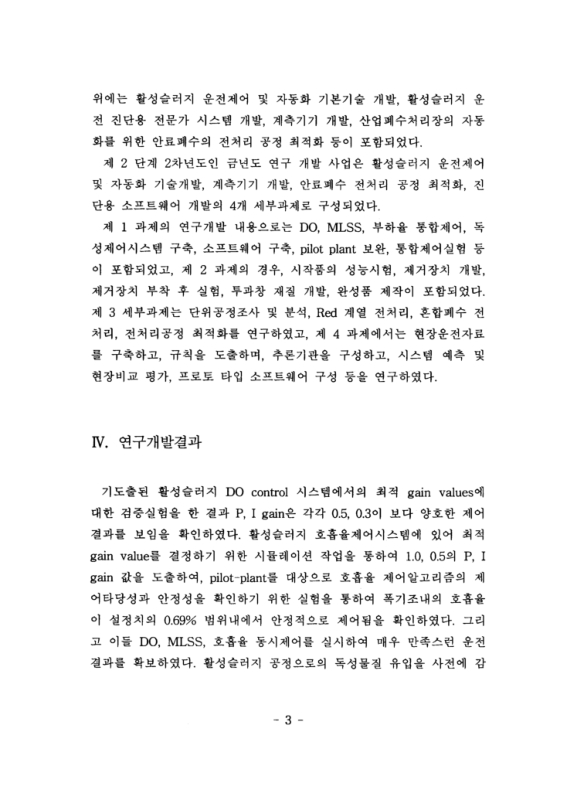
요약문
SUMMARY
칼라
목차
제1장 서론 24
제1절 연구개발의 경제, 사회, 기술적 중요성 및 필요성 24
1. 경제, 사회적 중요성 및 필요성 24
2. 기술적 중요성 및 필요성 24
제2절 연구개발 목표 및 내용 25
1. 연구개발의 최종목표 25
2. 연구개발 목표 및 내용 26
제2장 국내외 기술개발 현황 30
제1절 제어구조 및 제어기 기술 현황 30
제2절 공정모델 및 software (simulator) 개발 현황 31
제3절 인공지능 전문가 시스템에 의한 자동제어 현황 34
제4절 폐수처리장 진단용소프트웨어 개발 현황 38
제5절 계측기 개발 현황 39
제6절 유기안료산업 및 폐수처리 기술 현황 39
제3장 활성슬러지 운전제어 및 자동화 기술 개발 42
제1절 제어용 소프트웨어 구축 42
1. 소프트웨어 파일 구성 42
2. 제어 프로그램 내용 43
제2절 DO, MLSS, 호흡율 제어 50
1. 제어 알고리즘 50
2. DO 제어 검증 실험 56
3. 호흡율 제어시스템의 시뮬레이션 및 제어 실험 59
4. 요약 80
제3절 비호흡율을 이용한 통합 제어 실험 81
1. 통합제어 실험 결과 81
2. 통합 제어의 중요성 85
3. 요약 88
제4절 독성 감지 시스템 90
1. 독성 감지 시스템 구축 90
2. 독성 감지 시스템의 최적 운전 조건 도출 98
3. pH가 실제 호흡율 및 최대 호흡율에 미치는 영향 104
4. DO, MLSS, 호흡율 제어시스템 및 독성 감지 시스템의 연계운전 방법 정립 113
5. 요약 114
제5절 결론 115
제4장 폐수 처리장 진단용 소프트웨어 개발 117
제1절 세부연구내용 및 방법 117
1. 진단 대상 117
2. 개발 과정 118
제2절 진단 소프트웨어의 구조 119
1. 진단 소프트웨어 구성 원칙 119
2. 진단 소프트웨어의 계층 구조 122
제3절 진단 소프트웨어 수행 방법 123
1. 표지와 시스템 구조도 화면 123
2. 아이콘 상자 125
3. 진단과정 125
제4절 진단 소프트웨어 화면 구성 129
1. 화면 구성 계층구조 129
2. 초기 로고화면 129
3. 시스템 구조도 화면 130
4. 유입수 화면 133
5. 폭기조 화면 133
6. 이차침전조 화면 133
7. 방류수 화면 133
8. 도움말 화면 134
제5절 불량 원인 및 대책 파일 135
1. 유입수 135
2. 폭기조 139
3. 이차침전조 147
4. 방류수 150
제6절 진단 소프트웨어 구성 프로그램 162
1. 시스템의 내부 구성 162
2. 화면 제어 프로그램 구조 166
제7절 결론 177
제5장 MLSS Meter 개발 178
제1절 서론 178
제2절 세부연구내용 및 방법 184
1. 계측기기의 기기적인 특성 184
2. 활성슬러지의 특성 185
3. 투과창의 부착특성 193
제3절 실험 196
1. 흡광도를 이용한 활성슬러지 농도 측정 196
2. 투과창 재질개발 237
3. 기기회로 247
제4절 결론 248
제6장 안료 폐수 전처리공정 최적화 249
제1절 서론 249
1. 연구의 목적 249
2. 연구의 내용 250
제2절 실험장치 및 실험방법 251
1. 전처리 pilot Fenton plant 제작 251
2. 후처리 현장 Fenton plant 제작 254
3. 혼합폐수 pilot Fenton plant 운전 259
4. 후처리 현장 Fenton plant 운전 261
5. 생분해도 실험장치의 설계 및 제작 262
6. 생분해도 실험의 운전 조건 263
제3절 Pilot plant 전처리 실험결과 및 고찰 264
1. Fenton 산화처리 264
2. Ozone 산화처리 273
3. 전처리 공정의 비교 276
4. 요약 276
제4절 생분해도 실험 281
1. Fenton 산화 처리수의 생분해 실험 281
2. Ozone 산화 처리수의 생분해 실험 282
3. 생분해 실험의 비교 286
제5절 Fenton 산화 후처리 연속처리 실험 291
1. 최종 방류수의 Fenton 산화 Lab 실험 291
2. 최종 방류수의 Fenton 산화 연속처리 결과 295
3. Lab실험과 현장실험의 비교 299
4. 요약 302
제6절 결론 306
제7장 연구개발목표 달성도 및 대외기여도 308
제1절 연구개발목표 달성도 308
제2절 대외기여도 309
제8장 연구개발 결과의 활용계획 311
제9장 참고문헌 313
[Appendix] 323
[title page etc.]
SUMMARY
Contents
Chapter 1. Introduction 24
Section 1. Ecological, social and technical significance and necessity of research·development 24
1. Ecological and social significance and necessity 24
2. Technical significance and necessity 24
Section 2. Scope of study 25
1. final objectives of study 25
2. Objectives and contents of study 26
Chapter 2. State of the Art Report 30
Section 1. State of the control structure and controller technology 30
Section 2. State of the control model and software(simulator) 31
Section 3. State of the automatic control with artificial intelligence expert system 34
Section 4. State of the diagnostic software for wastewater treatment plant 38
Section 5. State of the measuring devices 39
Section 6. State of the azo pigment industry and wastewater treatment technology 39
Chapter 3. Development of control and automation technologies for the activated sludge process 42
Section 1. Establishment of control software 42
1. Organization of software file 42
2. Contents of control program 43
Section 2. DO, MLSS, respiration rate control 50
1. Control algorithm 50
2. DO control verification test 56
3. Simulation and control experiment of respiration control system 59
4. Summary 80
Section 3. Unified control experiment by using the specific respiration rate 81
1. Results of unified control experiment 81
2. Importance of unified control 85
3. Summary 88
Section 4. Toxicity monitoring system 90
1. Establishment of toxicity monitoring system 90
2. Test for the optimum operating conditions of toxicity monitoring system 98
3. Effect of pH on the actual and maximum respiration rate 104
4. Study on the unified operating method including DO, MLSS, respiration rate control system and toxicity monitoring system 113
5. Summary 114
Section 5. Conclusions 115
Chapter 4. Diagnostic software for activated-sludge sastewater(wastewater) treatment plants 117
Section 1. Experimental(Exprimental) approach and methods 117
1. Objectives for diagnostics(disagnostics) 117
2. Procedure of development(developement) 118
Section 2. Structure of diagnostic software 119
1. Principles of organization of diagnostic software 119
2. Hierachical structure of diagnostic software 122
Section 3. How to process the diagnostic software 123
1. Logo window and system structure window 123
2. Icon box 125
3. Proposed step for processing the diagnostic software 125
Section 4. Output windows 129
1. Hierachical structure of output windows 129
2. Initial logo window 129
3. Window for system structure 130
4. Windows for the influent 133
5. Windows for the aeration tank 133
6. Windows for the final settling tank 133
7. Window for effluent 133
8. Help window 134
Section 5. Files of resources and remedies 135
1. Influent 135
2. Aeration tank 139
3. Final settling tank 147
4. Effluent 150
Section 6. Program for diagnostic software 162
1. Program for internal processing 162
2. Program for window control 166
Section 7. Conclusions 177
Chapter 5. Fabrication of MLSS meter 178
Section 1. Introduction 178
Section 2. Experimental(Exprimental) approach and methods 184
1. Mechanical(Mechenical) characteristic of MLSS meter 184
2. Characteristic of activated sludge 185
3. Attachment characteristic of transmission window 193
Section3. Experiment 196
1. Measurement of activated sludge concentration using absorbance 196
2. Fabrication of transmission window material 237
3. Circuit 247
Section 4. Conclusions 248
Chapter 6. Optimization of pigment wastewater pretreatment process 249
Section 1. Introduction 249
1. Objective of study 249
2. Content of study 250
Section 2. Experimental materials and methods 251
1. Set up of Fenton pilot plant as pretreatment 251
2. Set up of Fenton field plant as post-treatment 254
3. Operation of Fenton pilot plant for Mixed wastewater 259
4. Operation of Fenton field plant as post-treatment 261
5. Design and set up of experimental apparatus for activated sludge process 262
6. Operating condition for 263
Section 3. Results and considerations of pilot plant as pretreatment 264
1. Fenton oxidation treatment 264
2. Ozone oxidation treatment 273
3. Comparison of pretreatment process 276
4. Summary 276
Section 4. Biodegradability experiment 281
1. Biodegradability experiment of effluent after Fenton oxidation 281
2. Biodegradability experiment of effluent after Ozone oxidation 282
3. Comparison of biodegradability experiment 286
Section 5. Continuous treatment of Fenton oxidation as post-treatment 291
1. Lab test of Fenton oxidation for final effluent 291
2. Continuous treatment results of Fenton oxidation for final effluent 295
3. Comparison of Lab test and Field test 299
4. Summary 302
Section 6. Conclusions 306
Chapter 7. Achievement degree of research objectives and contribution 308
Chapter 8. Practical use plans of results 311
Chapter 9. References 313
[Appendix] 323
jpg
| 등록번호 | 청구기호 | 권별정보 | 자료실 | 이용여부 |
|---|---|---|---|---|
| 0000729007 | 628.540285 ㅎ259ㅍ | v.2 | 서울관 서고(열람신청 후 1층 대출대) | 이용가능 |
*표시는 필수 입력사항입니다.
| 전화번호 |
|---|
| 기사명 | 저자명 | 페이지 | 원문 | 기사목차 |
|---|
| 번호 | 발행일자 | 권호명 | 제본정보 | 자료실 | 원문 | 신청 페이지 |
|---|
도서위치안내: / 서가번호:

우편복사 목록담기를 완료하였습니다.
*표시는 필수 입력사항입니다.
저장 되었습니다.
