대표어


권호기사보기
| 기사명 | 저자명 | 페이지 | 원문 | 기사목차 |
|---|
결과 내 검색
동의어 포함
목차
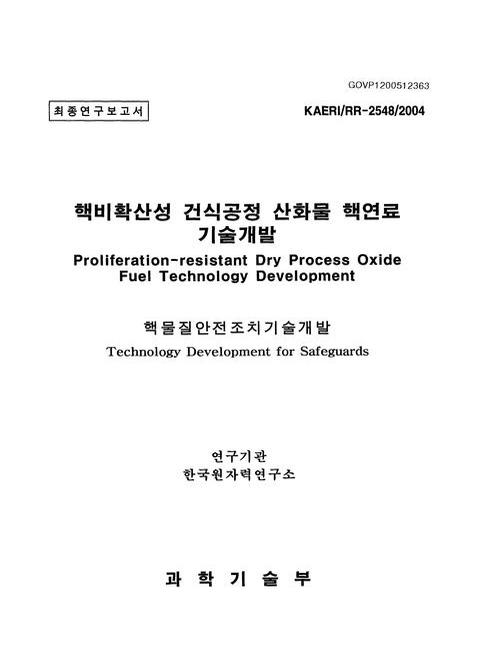
표제지=0,1,1
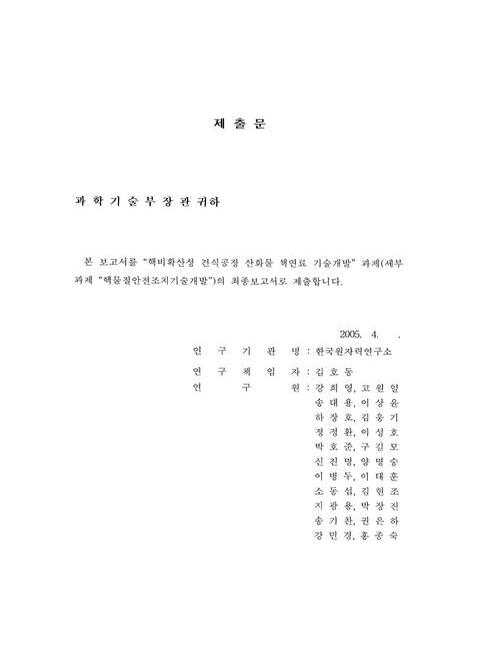
제출문=0,2,1
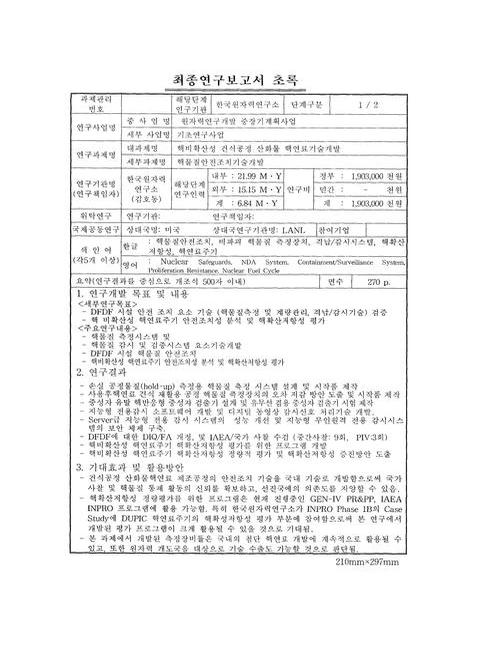
최종연구보고서 초록/김호동=0,3,1
요약문=i,4,6
SUMMARY=vii,10,7
CONTENTS=xv,17,2
목차=xvii,19,2
표목차=xix,21,1
그림목차=xxi,22,3
제1장 연구개발과제의 개요=0,25,2
제1절 연구개발의 목적 및 필요성=1,26,2
제2절 연구개발의 내용 및 범위=3,28,2
제2장 국내ㆍ외 기술개발 현황=4-1,30,2
제1절 국외 기술개발 현황=5,31,3
제2절 국내 기술개발 현황=8,34,2
제3장 연구개발 수행 내용 및 결과=10,36,2
제1절 핵물질측정 시스템 요소기술 개발=11,37,1
1. 손실공정핵물질 핵물질 측정 기술=11,37,23
2. 사용후핵연료 건식 재활용 공정 핵물질 측정 장치의 오차 저감방안 검증=34,60,15
3. 중성자 유발 핵반응형 중성자 검출기 개발 및 성능 개선=49,75,5
4. 유무선 중성자 검출기의 기술개발=54,80,19
제2절 핵물질 감시 및 검증 시스템 요소기술 개발=73,99,1
1. 지능형 전용감시 소프트웨어 개발=73,99,16
2. 디지털 동영상 감시신호 처리기술 개발=88,114,13
3. Server급 지능형 전용 감시 시스템의 성능시험 및 개선=100,126,3
4. 디지털 감시 신호의 원격 전송시험 및 보안체제 구축=102,128,8
제3절 핵비확산성 핵연료주기별 안전조치성 평가=110,136,1
1. 민감 시설 핵물질 측정방안 및 측정 오차 분석=110,136,1
2. 핵확산저항성 핵연료주기의 안전조치성 및 핵확산 저항성 평가 기준=110,136,3
3. 핵비확산성 핵연료주기 핵확산저항성 평가 방법 개발=112,138,3
4. 핵비확산성 핵연료주기 핵확산저항성 정량 평가=114,140,7
5. 핵비확산성 핵연료주기 핵확산저항성 증진방안 도출=120,146,17
제4절 DFDF 시설의 핵물질 안전조치 이행=137,163,1
1. IAEA 설계정보서 및 시설부록 개정=137,163,1
2. 핵물질 계량 및 핵물질 재고 관리=138,164,3
3. 미국산 사용후핵연료 사용허가 및 핵물질 수출입 체계 확립=141,167,3
제4장 연구개발 목표 달성도 및 관련 분야에의 기여도=144,170,7
제5장 연구개발결과의 활용계획=150-1,177,3
제6장 연구개발과정에서 수집한 해외 과학기술정보=152-1,180,4
부록=156,184,1
부록. DFDF 시설의 IAEA 사찰수검 겨로가(2004)=157,185,92
영문목차
[title page etc.]=0,1,16
CONTENTS=xv,17,8
Chapter 1. Introduction=0,25,5
Chapter 2. Status of Domestic and Foreign Art=4-1,30,6
Chapter 3. Contents and Results of R&D=10,36,2
Section 1. Development of Essential Technology in Nuclear Material Measurement System=11,37,1
1. Measurement Technology of Process Hold-Up Nuclear Material=11,37,23
2. Verification of Error Sensitivity Reduction on Measurement Instrument For Dry Spent Fuel Reutilization Process=34,60,15
3. Development and Performance Improvement of Neutron Counter Measuring Signals from Fission Neutron Source=49,75,5
4. Development and Verification of WireWireless Neutron Measurement System=54,80,19
Section 2. Development of Essential Technology in Surveillance and Verification System of Nuclear Material=73,99,1
1. Software Development of Intelligent Diversion Monitoring System=73,99,16
2. Development on Digital Video Signal Processing Technology=88,114,13
3. Performance Test And Improvement of Intelligent Diversion Monitoril System=100,126,3
4. Development of Technology for The Remote Transmission and Authentication of Digital Video Signal=102,128,8
Section 3. Evaluation of Safeguards System on Non Proliferation Fuel Cycle Facilities=110,136,1
1. Measurement Methods and Their Measurement Error Analyses for Sensitive Facilities=110,136,1
2. Evaluation Criteria on Safeguardability and Proliferation Resistancy for Proliferation Resistant Nuclear Fuel Cycles Facilities=110,136,3
3. Methodology Development for the Evaluation of Proliferation Resistancy=112,138,3
4. Quantitative Analysis of Proliferation Resistancy for Proliferation Resistant Nuclear Fuel Cycle Facilities=114,140,7
5. Approach on the Increase of Proliferation Resistancy for Nuclear Fuel Cycles=120,146,17
Section 4. Safeguards of DFDF=137,163,1
1. Revision of facility DIQ and corresponding IAEA FA=137,163,1
2. Management of Nuclear Material Accountability and Inventory=138,164,3
3. Securing of prior consent on US origin nuclear material Establishment of Import and Export System of Nuclear Material=141,167,3
Chapter 4. Achievement of Project Object=144,170,7
Chapter 5. Proposal for Applications=150-1,177,3
Chapter 6. References=152-1,180,4
Appendix. IAEA Safeguards Implementation of DFDF(2004)=156,184,93
Fig. 3.1.1. MCN Simulation for holdup neutron measurement system=24,50,1
Fig. 3.1.2. Cylinder type neutron collimator=25,51,1
Fig. 3.1.3. Well type neutron collimator=26,52,1
Fig. 3.1.4. Cone shape neutron collimator=27,53,1
Fig. 3.1.5. Neutron hot cell scanner and signal processing module=28,54,1
Fig. 3.1.6. Radiation image for CF-252=29,55,1
Fig. 3.1.7. Spectrum depend on the distance between source and detector=30,56,1
Fig. 3.1.8. Simulated spectrum depend on the distance between source and detector=31,57,1
Fig. 3.1.9. Spectrum depelld on the HDPE hicknesses=32,58,1
Fig. 3.1.10. Position resolution as a function of source distance=33,59,1
Fig. 3.1.11. Statistics of IAEA inspection=36,62,1
Fig. 3.1.12. DSNC background level analysis=37,63,1
Fig. 3.1.13. DSNC background in hot cell=38,64,1
Fig. 3.1.14. DSNC background virsus U-235 in hot cell=39,65,1
Fig. 3.1.15. DSNC background virsUS Pu in hot Cell=40,66,1
Fig. 3.1.16. Neutron efficiency as a function of off center distance in well type system=41,67,1
Fig. 3.1 17. MINP results of neutrun efficiency along the He-3 Tube direction=42,68,1
Fig. 3.1.18. Comparison among chemical analysis,ORIGEN simulation,DSNC=43,69,1
Fig. 3.1.19. Drawing for a small amount NDA system=44,70,1
Fig. 3.1.20. Simulation of small amount DSNC=45,71,1
Fig. 3.1.21. Fanricated system for a small amount nuclear material=46,72,1
Fig. 3.1.22. Measured neutron yield and voltage depnedency=47,73,1
Fig. 3.1.23. Neutron detenction displayer=48,74,1
Fig. 3.1.24. Concept of neutron counter by induced fission neutron=58,84,1
Fig. 3.1.25. Axial neutron count rate of neutron counter=59,85,1
Fig. 3.1.26. UO2 enrichment measurement by Cf-252 source=60,86,1
Fig. 3.1.27. Comparison of singles between doubles rate for UO2 enrichment measurement=61,87,1
Fig. 3.1.28. Signal circuit of wire neutron detector=62,88,1
Fig. 3.1.29. Overview of wire neutron detector system=63,89,1
Fig. 3.1.30. Concept for portable neutron detector system=64,90,1
Fig. 3.1.31. Overview for portale neutron detector system=65,91,1
Fig. 3.1.32. Neuron count for protable neutron detector system=66,92,1
Fig. 3.1.33. Concept of single channel Portable neutron detector=67,93,1
Fig. 3.1.34. Concept of wireless neutron detector system=68,94,1
Fig. 3.1.35. Transmitter module of wireless neutron detector=69,95,1
Fig. 3.1.36. Transmitter and receiver module of wireless neutron detector=70,96,1
Fig. 3.2.1. Evolution of Rad Rewiew:Step 1=75,101,1
Fig. 3.2.2. Evolution of Rad Rewiew:Step 2=76,102,1
Fig. 3.2.3. Integrated Review software:Ultimate=77,103,1
Fig. 3.2.4. DISS-NG Main Form=86,112,1
Fig. 3.2.5. Data Flow diagram among Modules of DISS-NG=87,113,1
Fig. 3.2.6. Structure of ComArt HICAP-50=94,120,1
Fig. 3.2.7. SDK Routine ComArt HICAP Series for Image Capture=95,121,1
Fig. 3.2.8. Process flow for Imagec Capture=96,122,1
Fig. 3.2.9. Source List of main Interface for SOM Component server=105,131,1
Fig. 3.2.10. Source List of Client Module od DISS-NG=106,132,1
Fig. 3.2.11. Module of finding CASK Image=107,133,1
Fig. 3.2.12. Secure Transfer of DUPIC Surveillance Data Using VPN=108,134,1
Fig. 3.3.1. Input Screen for Evaluation Criteria=133,159,1
Fig. 3.3.2. Input Screen for Comparison of Evaluation Criteria=134,160,1
Fig. 3.3.3. Input Screen for Comparison of Option for a Specific Evaluation Criteria=135,161,1
Fig. 3.3.4. Approach for INPRO Proliferation Resistance Evaluation=136,162,1
Fig. 3.4.1. Approach for Retransfer of Special Nuclear Material of United States Origin=142,168,1
Fig. 3.4.2. The Official Document of for the Result of Approval for Retransfer of Special Nuclear Material of United States Origin=143,169,1
*표시는 필수 입력사항입니다.
| 전화번호 |
|---|
| 기사명 | 저자명 | 페이지 | 원문 | 기사목차 |
|---|
| 번호 | 발행일자 | 권호명 | 제본정보 | 자료실 | 원문 | 신청 페이지 |
|---|
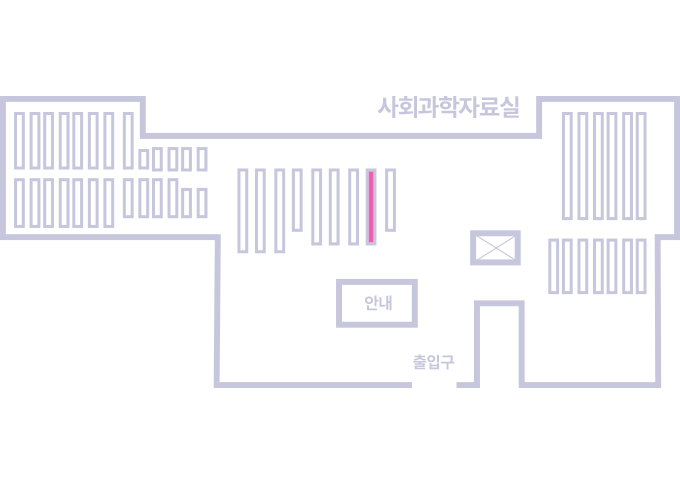
도서위치안내: / 서가번호:
우편복사 목록담기를 완료하였습니다.
*표시는 필수 입력사항입니다.
저장 되었습니다.