

 대표어
권호기사보기
| 기사명 | 저자명 | 페이지 | 원문 | 기사목차 |
|---|
결과 내 검색
동의어 포함
표제지
제출문
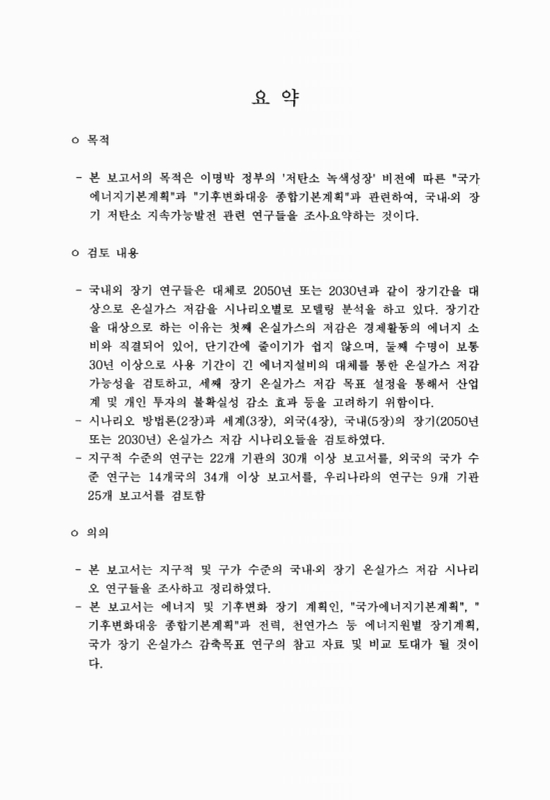
요약
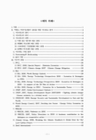
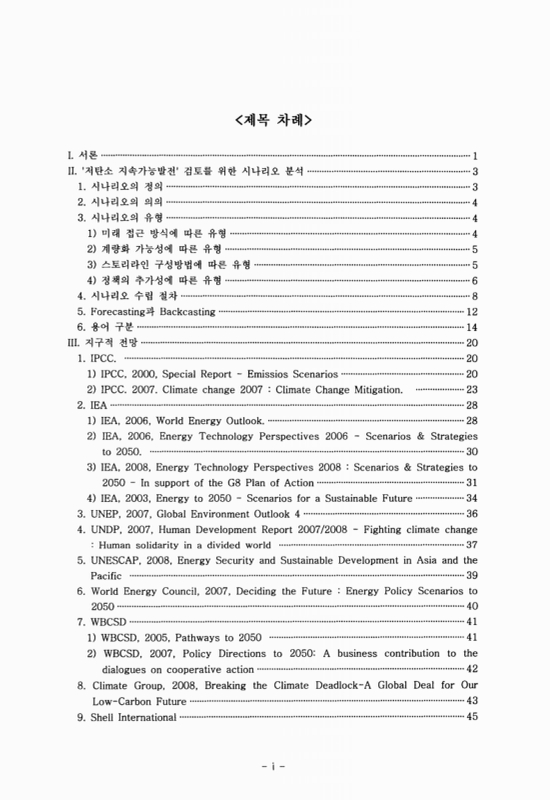
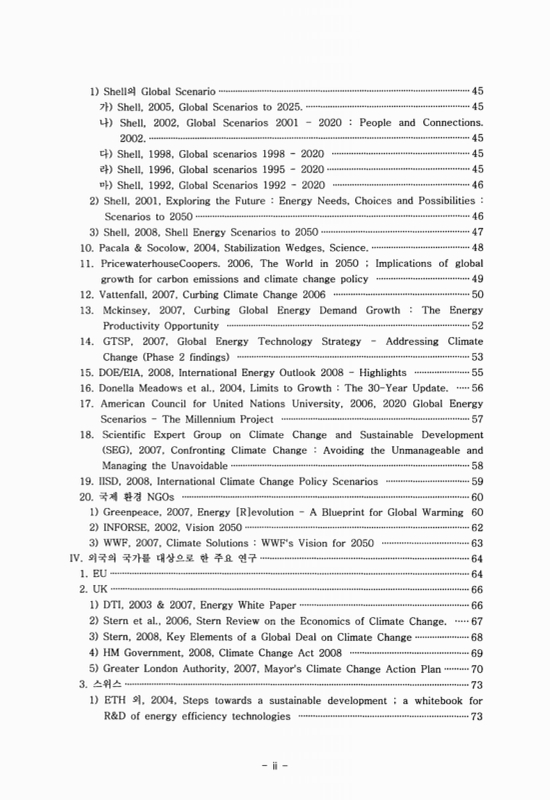
목차
I. 서론 8
II. '저탄소 지속가능발전' 검토를 위한 시나리오 분석 10
1. 시나리오의 정의 10
2. 시나리오의 의의 11
3. 시나리오의 유형 11
1) 미래 접근 방식에 따른 유형 11
2) 계량화 가능성에 따른 유형 12
3) 스토리라인 구성방법에 따른 유형 12
4) 정책의 추가성에 따른 유형 13
4. 시나리오 수립 절차 15
5. Forecasting과 Backcasting 19
6. 용어 구분 21
III. 지구적 전망 27
1. IPCC. 27
1) IPCC, 2000, Special Report - Emissions Scenarios 27
2) IPCC. 2007. Climate change 2007 : Climate change Mitigation. 30
2. IEA 34
1) IEA, 2006, World Energy Outlook. 34
2) IEA, 2006, Energy Technology Perspectives 2006 - Scenrios & Strategies to 2050. 36
3) IEA, 2008, Energy Technology Perspectives 2008 : Scenarios & Strategies to 2050 - In support of the G8 Plan of Action 37
4) IEA, 2003, Energy to 2050 - Scenarios for a Sustainable Future 40
3. UNEP, 2007, Global Environmnet Outlook 4 42
4. UNDP, 2007, Human Development Report 2007/2008 - Fighting climate change : Human solidarity in a divided world 43
5. UNESCAP, 2008, Energy Security and Sustainable Development in Asia and the Pacific 45
6. World Energy Council, 2007, Deciding the Future : Energy Policy Scenarios to 2050 46
7. WBCSD 47
1) WBCSD, 2005, Pathways to 2050 47
2) WBCSD, 2007, Policy Directions to 2050: A business contribution to the dialogues on cooperative action 48
8. Climate Group, 2008, Breaking the Climate Deadlock- A Global Deal for Our Low-Carbon Future 49
9. Shell International 51
1) Shell의 Global Scenario 51
가) Shell, 2005, Global Scenarios to 2025. 51
나) Shell, 2002, Global Scenarios 2001 - 2020 : People and Connections. 2002. 51
다) Shell, 1998, Global Scenarios 1998 - 2020 51
라) Shell, 1996, Global Scenarios 1995 - 2020 51
마) Shell, 1992, Global Scenarios 1992 - 2020 52
2) Shell, 2001, Exploring the Future : Energy Needs, Choices and Possibilities : Scenarios to 2050 52
3) Shell, 2008, Shell Energy Scenarios to 2050 53
10. Pacala & Socolow, 2004, Stabilization Wedges, Science 54
11. PricewaterhouseCoopers. 2006, The World in 2050 ; Implications of global growth for carbon emissions and climate change policy 55
12. Vattenfall, 2007, Curbing Climate Change 2006 56
13. Mckinsey, 2007, Curbing Global Energy Demand Growth : The Energy Productivity Opportunity 58
14. GTSP, 2007, Global Energy Technology Strategy - Addressing Climate Change (Phase 2 findings) 59
15. DOE/EIA, 2008, International Energy Outlook 2008 - Highlights 61
16. Donella Meadows et al., 2004, Limits to Growth : The 30-Year Update 62
17. American Council for United Nations University, 2006, 2020 Global Energy Scenarios - The Millennium Project 63
18. Scientific Expert Group on Climate Change and Sustainable Development (SEG), 2007, Confronting Climate Change : Avoiding the Unmanageable and Managing the Unavoidable 64
19. IISD, 2008, International Climate Change Policy Scenarios 65
20. 국제 환경 NGOs 66
1) Greenpeace, 2007, Energy [R]evolution - A Blueprint for Global Warming 66
2) INFORSE, 2002, Vision 2050 68
3) WWF, 2007, Climate Solutions : WWF's Vision for 2050 69
IV. 외국의 국가를 대상으로 한 주요 연구 70
1. EU 70
2. UK 72
1) DTI, 2003 & 2007, Energy White Paper 72
2) Stern et al., 2006, Stern Review on the Econocis of Climate Change. 73
3) Stern, 2008, Key Elements of a Global Deal on Climate Change 74
4) HM Government, 2008, Climate Change Act 2008 75
5) Greater London Authority, 2007, Mayor's Climate Change Action Plan 76
3. 스위스 78
1) ETH 외, 2004, Steps towrads a sustainalbe development ; a whitebook for R&D of energy efficiency technologies 78
4. 프랑스 80
1) MIES, 2004, Reducing CO2 emissions fourfold in France by 2050 - Introduction to the debate 80
2) IEER, 2006, Low-Carbon Diet without Nukes in France : An Energy Technology and Policy Case Study on Simultaneous Reduction of Climate Change and Proliferation Risks. 81
5. 독일 82
1) Enquete Commission on Sustainable Energy, 2002, Supply against the Background of Globalisation and Liberalisation 82
2) WBGU, 2003, Climate Protection Strategies for the 21st Century : Kyoto and Beyond 83
3) Federal Ministry for the Environment, Nature Conservation and Nuclear Safety, 2004, Ecologically Optimized Extension of Renewable Energy Utilization in Germany. 84
4) 헤르만 셰어, 2006, 에너지 주권 86
6. 네덜란드 87
1) RIVM, 2001 & 2002, Climate Options for the Long Term 87
2) ECN, 2007, A sustainable energy system in 2050: promise or possibility? - A vision by ECN and NRG 89
7. 스웨덴 91
1) Commission on Oil Independence, 2006, Making Sweden an Oil-free Society 91
8. 일본 93
1) Abe (ex-prime minister), 2007.5.24, Invitation to "Cool Earth 50" - 3 Proposals, 3 Principles 93
2) NIES, 2004~, Japan Low Carbon Society 94
3) METI, 2008, Cool Earth-Innovative Energy Technology Program 97
9. 호주 98
1) Department of Climate Change, 2008, 2007 Tracking to the Kyoto Target 98
2) Garnaut, 2008, The Garnaut Climate Change Review 99
3) Commonwealth of Australia, 2008, Australia's Low Pollution Futrue: The Economics of Climate Change Mitigation 100
10. 미국 102
1) CCSP, 2007, Final Report - Synthesis and Assessment Product 2.1 : Scenarios of Greenhouse Gas Emissions and Atmospheric Concentrations; and Review of Intergrated Scenario Development and Application 102
2) U.S. Climate Change Technology Program, 2006.9, Strategic Plan 103
3) DOE/EIA, 2008.6, Annual Energy Outlook 2008 With Projections to 2030 105
4) WBCSD, 2007, Lieberman-Warner seek 70 percent emissions cut by 2050 106
5) Pew Center on Global Climate Change, 2008, Insights Not Numbers 106
6) Pew Center on Global Climate Change, 2007, Learning from State Action on Climate Change 108
11. 캐나다 109
1) National Round Table on the Environmnet and the Economy, 2006, Advice on a long term strategy on energy and climate 109
12. 중국과 인도 110
1) 중국 110
2) 인도 110
13. 탄소 중립 국가 : 뉴질랜드, 코스타리카, 노르웨이, 아이슬란드 110
V. 한국 111
1. 정보통신정책연구원, 2006, 디지털 사회의 미래예측방법론 연구 112
2. 산업자원부, 2006, 에너지비전 2030 113
3. 국무총리실 외, 2008, 국가에너지기본계획(안) : 2008~2030 114
4. 국무총리실, 2008, 기후변화대응 종합기본계획 116
5. 산업자원부, 2006, 제3차 전력수급기본계획(2006~2020) 117
6. 산업자원부, 2006, 제8차 장기천연가스 수급기본계획(2006~2020) 118
7. 산업자원부, 2005, 수소경제 국가비전 및 실행계획 수립연구 119
8. 한국수력원자력, 2006, 지속가능발전을 위한 원자력의 역할 120
9. 에너지경제연구원의 기후변화대응 연구의 분석 시나리오 121
1) 기후변화협약 관련 국가보고서 작성 및 대응방안 연구(제1차년도). 1994 121
2) 기후변화협약 관련 국가보고서 작성 및 대응방안 연구(제2차년도). 1995 121
3) 기후변화협약 대응 실천계획 수립을 위한 연구(제1차년도). 1997.12 121
4) 기후변화협약 대응 실천계획 수립을 위한 연구(제2차년도). 1998.12 122
5) 기후변화협약 대응 실천계획 수립을 위한 연구(제3차년도). 1999.12 123
6) 기후변화협약 및 교토의정서 대응전략 연구(제1차년도). 2000.12 123
7) 기후변화협약 및 교토의정서 대응전략 연구(제2차년도). 2002.4 124
8) 기후변화협약 및 교토의정서 대응전략 연구(제3차년도). 2003.5 125
9) 기후변화협약 대응을 위한 중장기 정책 및 전략 수립에 관한 연구(제1차년도). 2004.6 126
10) 기후변화협약 대응을 위한 중장기 정책 및 전략 수립에 관한 연구(제2차년도). 2005.8 127
11) 기후변화협약 대응을 위한 중장기 정책 및 전략 수립에 관한 연구(제3차년도). 2006.5 128
12) 산업부문 업종별 온실가스 감축잠재량 분석 129
10. ADB/GEF/UNDP, 1998, Asia Least-cost Greenhouse Gas Abatement Strategy - Republic of Korea 131
11. 김정욱, 존 번 외, 2003 「에너지혁명」, 매일경제신문 132
12. 지구의 벗·환경운동연합, 2007, 1.5℃ DOWN 캠페인 133
13. 에너지경제연구원·환경정책평가연구원, 2008, 국가온실가스 감축방안 연구 - 2050년까지 국가 저감잠재량. 134
VI. 결론 135
VII. 참고문헌 136
| 등록번호 | 청구기호 | 권별정보 | 자료실 | 이용여부 |
|---|---|---|---|---|
| 0001866742 | 338.927 -13-34 | 서울관 서고(열람신청 후 1층 대출대) | 이용가능 |
*표시는 필수 입력사항입니다.
| 전화번호 |
|---|
| 기사명 | 저자명 | 페이지 | 원문 | 기사목차 |
|---|
| 번호 | 발행일자 | 권호명 | 제본정보 | 자료실 | 원문 | 신청 페이지 |
|---|
도서위치안내: / 서가번호:

우편복사 목록담기를 완료하였습니다.
*표시는 필수 입력사항입니다.
저장 되었습니다.
