

 대표어
권호기사보기
| 기사명 | 저자명 | 페이지 | 원문 | 기사목차 |
|---|
결과 내 검색
동의어 포함
Title Page
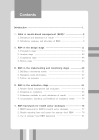
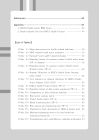
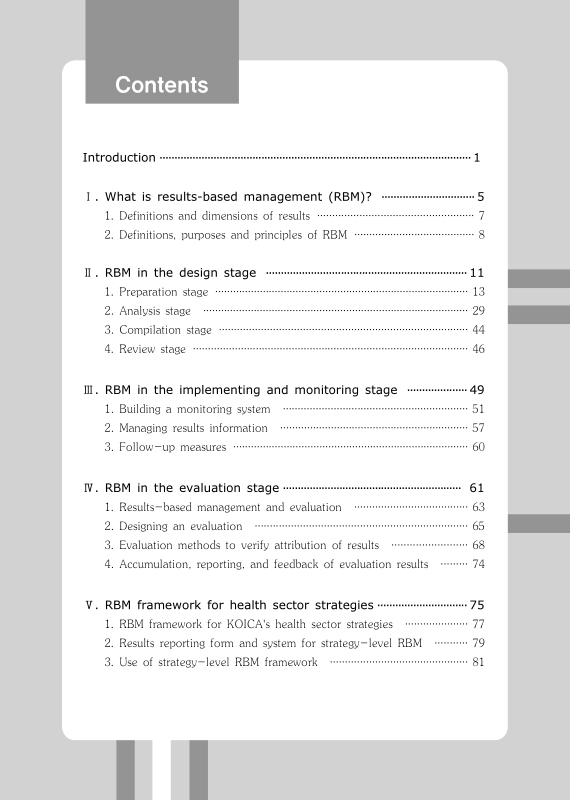
Contents
Abbreviations 8
Introduction 9
I. What is results-based management (RBM)? 13
1. Definitions and dimensions of results 15
2. Definitions, purposes and principles of RBM 16
II. RBM in the design stage 19
1. Preparation stage 21
1-1. Research on partner countries' health sector statuses and strategies 21
1-2. Reviewing KOICA's Health Strategies 31
2. Analysis stage 37
2-1. Setting results objectives 37
2-2. Selecting result indicators 41
2-3. Setting baselines and targets 44
2-4. Planning data collection 48
2-5. Assumption and risk analysis 51
3. Compilation stage 52
4. Review stage 54
III. RBM in the implementing and monitoring stage 57
1. Building a monitoring system 59
1-1. Results-based monitoring 59
1-2. Building a results-based monitoring system 60
2. Managing results information 65
2-1. Project results database 65
2-2. Results data analysis and reporting form 66
3. Follow-up measures 68
IV. RBM in the evaluation stage 69
1. Results-based management and evaluation 71
2. Designing an evaluation 73
3. Evaluation methods to verify attribution of results 76
4. Accumulation, reporting, and feedback of evaluation results 82
V. RBM framework for health sector strategies 83
1. RBM framework for KOICA's health sector strategies 85
2. Results reporting form and system for strategy-level RBM 87
3. Use of strategy-level RBM framework 89
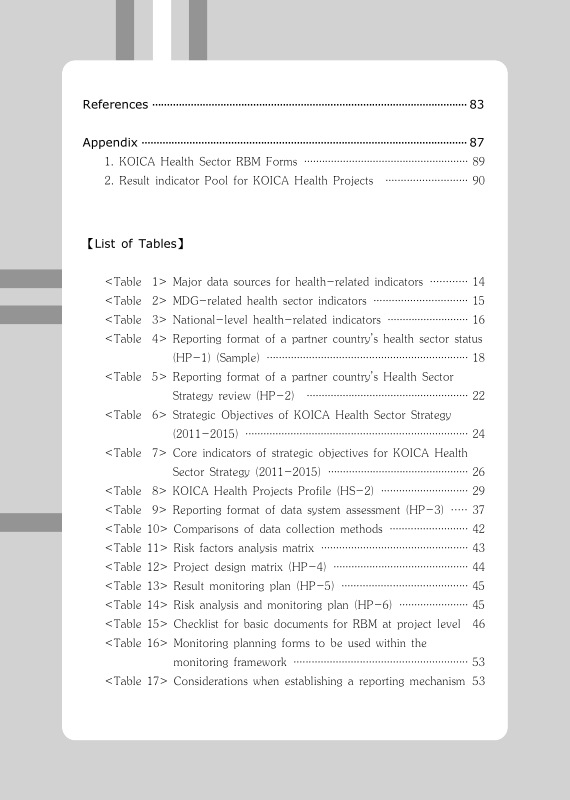
References 91
Appendix 95
1. KOICA Health Sector RBM Forms (excel file to be provided later) 97
2. Result indicator Pool for KOICA Health Projects 98
References 123
Copyright 124
〈Figure 1〉 Map of KOICA's health sector strategic objectives 31
〈Figure 2〉 Linkage between SOs and project results 36
〈Figure 3〉 Logics for outcome statement 39
〈Figure 4〉 Targets and baselines 47
〈Figure 5〉 Characteristics of data collection methods 49
〈Figure 6〉 Monitoring framework 60
〈Figure 7〉 Diagram for result achievement possibility prediction 67
〈Figure 8〉 Designing an evaluation 73
〈Figure 9〉 USAID Impact evaluation decision tree 77
〈Figure 10〉 Results information flow chart 86
〈Box 1〉 Finding strategy documents on health in a partner country 28
〈Box 2〉 Setting project outcomes at an achievable level 39
〈Box 3〉 CREAM (WB's criteria for the selection of indicators) 42
〈Box 4〉 PMC's role in results-based monitoring system 64
〈Box 5〉 Cases in which evaluation is needed during project implementation 72
〈Box 6〉 Information to be included in evaluation terms of reference (ToR) 75
〈Box 7〉 Impact evaluation for development cooperation projects 78
〈Box 8〉 Hill's criteria for judging causality 81
| 등록번호 | 청구기호 | 권별정보 | 자료실 | 이용여부 |
|---|---|---|---|---|
| EM0000054455 | ER 전자형태로만 열람 가능함 | 이용가능 |
*표시는 필수 입력사항입니다.
| 전화번호 |
|---|
| 기사명 | 저자명 | 페이지 | 원문 | 기사목차 |
|---|
| 번호 | 발행일자 | 권호명 | 제본정보 | 자료실 | 원문 | 신청 페이지 |
|---|
도서위치안내: / 서가번호:

우편복사 목록담기를 완료하였습니다.
*표시는 필수 입력사항입니다.
저장 되었습니다.
