
 대표어
대표어

권호기사보기
| 기사명 | 저자명 | 페이지 | 원문 | 기사목차 |
|---|
결과 내 검색
동의어 포함
Title
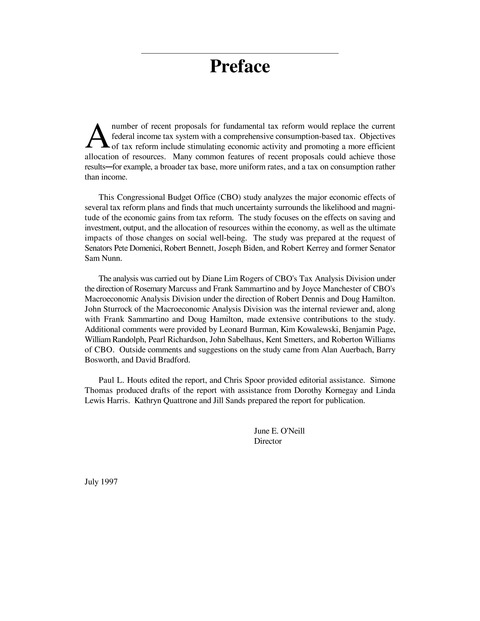
Preface
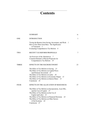
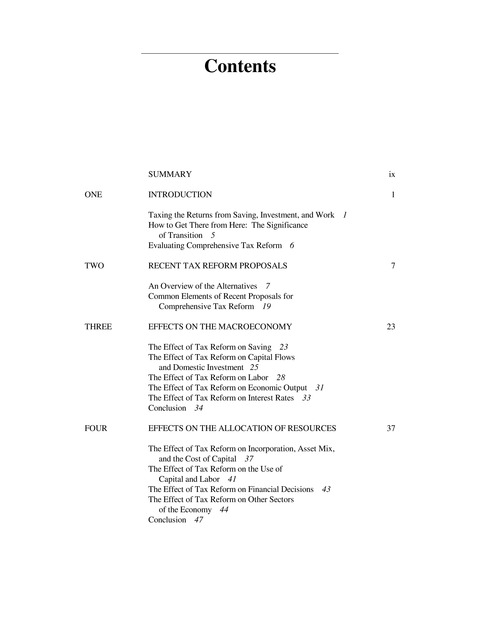
Contents
Summary 8
Chapter One. Introduction 12
Taxing the Returns from Saving, Investment, and Work 12
How to Get There from Here: The Significance of Transition 16
Evaluating Comprehensive Tax Reform 17
Chapter Two. Recent Tax Reform Proposals 18
An Overview of the Alternatives 18
Common Elements of Recent Proposals for Comprehensive Tax Reform 30
Chapter Three. Effects on the Macroeconomy 34
The Effect of Tax Reform on Saving 34
The Effect of Tax Reform on Capital Flows and Domestic Investment 36
The Effect of Tax Reform on Labor 39
The Effect of Tax Reform on Economic Output 42
The Effect of Tax Reform on Interest Rates 44
Conclusion 45
Chapter Four. Effects on the Allocation of Resources 48
The Effect of Tax Reform on Incorporation, Asset Mix, and the Cost of Capital 48
The Effect of Tax Reform on the Use of Capital and Labor 52
The Effect of Tax Reform on Financial Decisions 54
The Effect of Tax Reform on Other Sectors of the Economy 55
Conclusion 58
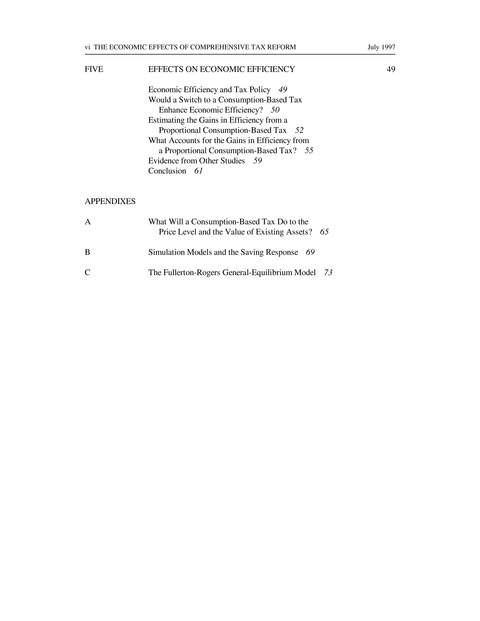
Chapter Five. Effects on Economic Efficiency 60
Economic Efficiency and Tax Policy 60
Would a Switch to a Consumption-Based Tax Enhance Economic Efficiency? 61
Estimating the Gains in Efficiency from a Proportional Consumption-Based Tax 63
What Accounts for the Gains in Efficiency from a Proportional Consumption-Based Tax? 66
Evidence from Other Studies 70
Conclusion 72
Appendixes 74
Appendix A. What Will a Consumption-Based Tax Do to the Price Level and the Value of Existing Assets? 76
The Price Level 76
The Value of Existing Assets 77
Appendix B. Simulation Models and the Saving Response 80
Appendix C. The Fullerton-Rogers General-Equilibrium Model 84
Lifetime Incomes 84
Model Structure and Numerical Specification of Parameters 85
Boxes
Box 1. Comparing Taxes on Savings Under an Income Tax and Various Types of Consumption Taxes 31
Box 2. Destination-Based Versus Origin-Based Taxes 39
Box 3. The Effect of Tax Reform on Rates of Return 45
Box 4. Using the Fullerton-Rogers Model to Predict Changes in the Allocation of Resources 52
Box 5. Calculating Gains in Efficiency 65
Box B-1. A Key Factor in the Simulation Models: The Intertemporal Elasticity of Substitution 81
| 등록번호 | 청구기호 | 권별정보 | 자료실 | 이용여부 |
|---|---|---|---|---|
| 9000012892 | A J934 1997-07 | 서울관 서고(열람신청 후 2층 법률정보센터) | 이용가능 | |
| EM0000006624 | A J934 1997-07 | 이용가능 |
*표시는 필수 입력사항입니다.
| 전화번호 |
|---|
| 기사명 | 저자명 | 페이지 | 원문 | 기사목차 |
|---|
| 번호 | 발행일자 | 권호명 | 제본정보 | 자료실 | 원문 | 신청 페이지 |
|---|
도서위치안내: / 서가번호:

우편복사 목록담기를 완료하였습니다.
*표시는 필수 입력사항입니다.
저장 되었습니다.
