
 대표어
권호기사보기
| 기사명 | 저자명 | 페이지 | 원문 | 기사목차 |
|---|
결과 내 검색
동의어 포함
영문목차
About the Contributors.
Preface.
1.Theoretical Foundations of Asset Allocations and Pricing Models with Higher-order Moments (Emmanuel Jurczenko and Bertrand Maillet).
2.On certain Geometric Aspects of Portfolio Optimisation with Higher Moments (Gustavo Athayde and Renato Flores).
3.Hedge Funds portfolio Selection with Higher-order Moments: A Non-parametric Mean-Variance-Skewness-Kurtosis Efficient Frontier (Emmanuel Jurczenko, Bertrand Maillet and Paul Merlin).
4.Higher Order Moments and Beyond (Luisa Tibiletti).
5.Gram-Charlier Expansions and Portfolio Selection in Non Gaussian Universes (Fran?ois Desmoulins-Lebeault).
6.The Four-moment Capital Asset Pricing Model: between Asset Pricing and Asset Allocation (Emmanuel Jurczenko and Bertrand Maillet).
7.Multi-Moments Method For Portfolio Management: Generalized Capital Asset Pricing Model in Homogeneous and Heterogeneous Markets (Yannick Malevergne and Didier Sornette).
8.Modeling the Dynamics of Conditional Dependency Between Financial Series (Eric Jondeau and Michael Rockinger).
9.A Test of the Homogeneity of Asset Pricing Models (Giovanni Barone-Adesi, Patrick Gagliardini and Giovanni Urga).
Index.
| 등록번호 | 청구기호 | 권별정보 | 자료실 | 이용여부 |
|---|---|---|---|---|
| 0001190492 | 332.6015195 J95m | 서울관 서고(열람신청 후 1층 대출대) | 이용가능 |

“In a less well-known part of his path-breaking 1952 article on ‘Portfolio Selection’, Harry Markowitz details the conditions whereby mean-variance efficient portfolios will not be optimal. Markowitz argues that if investors have utility which depends on not only mean and variance but also skewness, then this could lead to a different set of optimal portfolios. This insight lay fallow for more than 20 years. It was revived in the important work of Mark Rubinstein in 1973. Since the late 1990s, we have seen an explosion of research on higher moments. People are beginning to think of the efficient frontier – as the efficient surface (incorporating skewness and other higher moments). This interest is sparked by five factors. First, it is obvious that people have a preference for positively skewed outcomes rather than negatively skewed returns (holding mean and variance constant). Second, most asset returns are non-normal. Third, it is widely acknowledged that two-moment CAPM has trouble fitting the data. Fourth, there is a large growth in a style of investing, sometimes referred to as alternatives, whose expected returns have option-like, non-normal features. Finally, computing power has advanced to such a degree that we can feasibly tackle the difficult problem of solving for optimal portfolios in the presence of higher moments. The time is right for a book on higher moments in asset pricing - and this is the right book.” —Campbell R. Harvey, J. Paul Sticht Professor of International Business, Duke University, USA
“Plenty of evidence has emerged in the financial literature that the distributional assumptions underlying mean-variance analysis do not hold. Returns on many individual assets as well as returns on actively managed mutual funds have been found to be skewed and fat-tailed and are affected by occasional outliers. Unless investors have quadratic preferences, in equilibrium an asset's skew and kurtosis should generally be priced. The focus of the traditional CAPM on the first two moments was made out of analytical convenience, but we now have better tools to go beyond this analysis. The time is right for a book on the multi-moment CAPM and its related topics.” —Allan Timmermann, Professor of Economics, University of California at San Diego, USA
*표시는 필수 입력사항입니다.
| 전화번호 |
|---|
| 기사명 | 저자명 | 페이지 | 원문 | 기사목차 |
|---|
| 번호 | 발행일자 | 권호명 | 제본정보 | 자료실 | 원문 | 신청 페이지 |
|---|
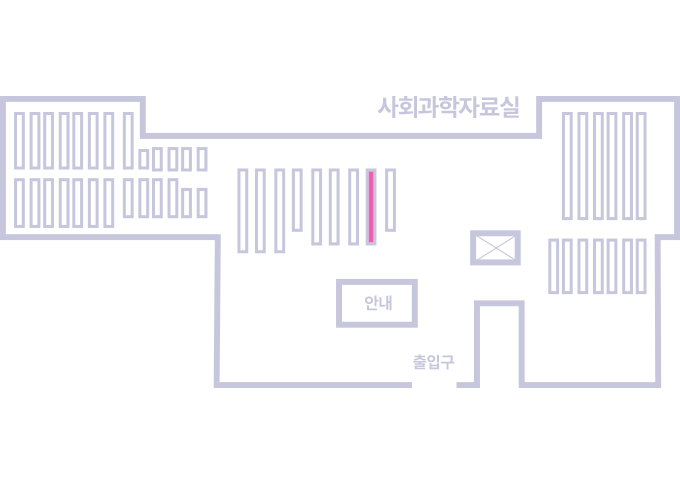
도서위치안내: / 서가번호:
우편복사 목록담기를 완료하였습니다.
*표시는 필수 입력사항입니다.
저장 되었습니다.