
 대표어
대표어
권호기사보기
| 기사명 | 저자명 | 페이지 | 원문 | 기사목차 |
|---|
결과 내 검색
동의어 포함
| 등록번호 | 청구기호 | 권별정보 | 자료실 | 이용여부 |
|---|---|---|---|---|
| 0002503383 | 332.602855133 -A19-1 | 서울관 서고(열람신청 후 1층 대출대) | 이용가능 | |
| B000018598 | 332.602855133 -A19-1 | 부산관 서고(열람신청 후 2층 주제자료실) | 이용가능 |

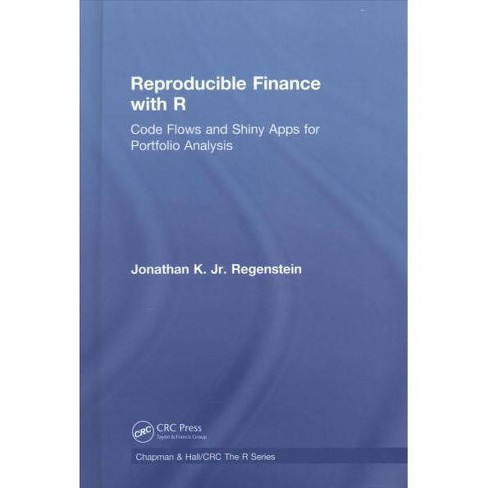
Reproducible Finance with R: Code Flows and Shiny Apps for Portfolio Analysis is a unique introduction to data science for investment management that explores the three major R/finance coding paradigms, emphasizes data visualization, and explains how to build a cohesive suite of functioning Shiny applications. The full source code, asset price data and live Shiny applications are available at reproduciblefinance.com. The ideal reader works in finance or wants to work in finance and has a desire to learn R code and Shiny through simple, yet practical real-world examples.
The book begins with the first step in data science: importing and wrangling data, which in the investment context means importing asset prices, converting to returns, and constructing a portfolio. The next section covers risk and tackles descriptive statistics such as standard deviation, skewness, kurtosis, and their rolling histories. The third section focuses on portfolio theory, analyzing the Sharpe Ratio, CAPM, and Fama French models. The book concludes with applications for finding individual asset contribution to risk and for running Monte Carlo simulations. For each of these tasks, the three major coding paradigms are explored and the work is wrapped into interactive Shiny dashboards.
The intended audience is leaders at financial institutions who want to build data science practices, analysts at financial institutions who want to work on data science teams, students/aspiring professionals who want work in finance and anyone who has foreseen that Excel skills are not enough to be competitive in finance.
*표시는 필수 입력사항입니다.
| 전화번호 |
|---|
| 기사명 | 저자명 | 페이지 | 원문 | 기사목차 |
|---|
| 번호 | 발행일자 | 권호명 | 제본정보 | 자료실 | 원문 | 신청 페이지 |
|---|
도서위치안내: / 서가번호:

우편복사 목록담기를 완료하였습니다.
*표시는 필수 입력사항입니다.
저장 되었습니다.
