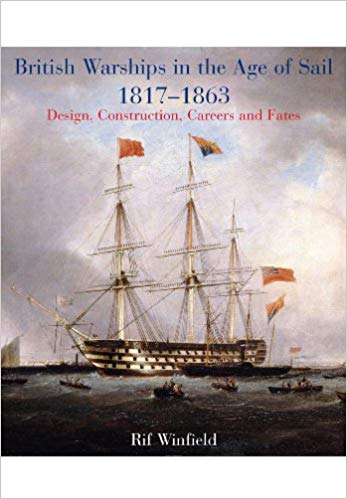
The publication of this book sees the completion of a monumental work listing the technical details and career histories of every significant British warship between 1603 and 1863. Following three earlier volumes, this one carries forward the story from the post Napoleonic War reorganization of the Royal Navy's rating system to the end of sail as the principal mode of propulsion.
Although apparently well documented, this is a period of great complexity in the procurement and naval architecture of ships. The introduction of steam radically altered the design of vessels under construction and was later retrofitted to others, while many 'names' lived a ghostly existence on the Navy List: ships ordered but not started, and in some cases having their intended drafts altered more than once before being canceled entirely.
This book meticulously sorts out and clarifies these confusions - a major contribution in itself - but for the first time it also provides outline service histories for an era that is largely neglected. Like its companion volumes, the book is organized by Rate, classification and class, with significant technical and building data, followed by a concise summary of the careers of each ship in every class.
With its unique depth of information, this is a work of the utmost importance to every naval historian and general reader interested in the navy of the sailing era and the formative years of the steam navy that supplanted it.

 대표어
대표어