
 대표어
대표어
권호기사보기
| 기사명 | 저자명 | 페이지 | 원문 | 기사목차 |
|---|
결과 내 검색
동의어 포함
| 등록번호 | 청구기호 | 권별정보 | 자료실 | 이용여부 |
|---|---|---|---|---|
| 0002613341 | 153 -A20-3 | 서울관 서고(열람신청 후 1층 대출대) | 이용가능 |

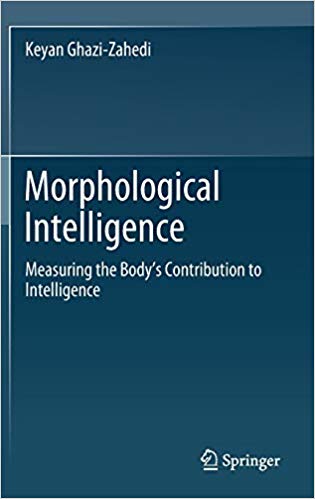
Intelligence results from the interaction of the brain, body and environment. The question addressed in this book is, can we measure the contribution of the body and its' interaction with the environment?
To answer this, we first present a comprehensive overview of the various ways in which a body reduces the amount of computation that the brain has to perform to solve a task. This chapter will broaden your understanding of how important inconspicuously appearing physical processes and physical properties of the body are with respect to our cognitive abilities. This form of contribution to intelligence is called Morphological Intelligence.
The main contribution of this book to the field is a detailed discussion of how Morphological Intelligence can be measured from observations alone. The required mathematical framework is provided so that readers unfamiliar with information theory will be able to understand and apply the measures. Case studies from biomechanics and soft robotics illustrate how the presented quantifications can, for example, be used to measure the contribution of muscle physics to jumping and optimise the shape of a soft robotic hand.
To summarise, this monograph presents various examples of how the physical properties of the body and the body’s interaction with the environment contribute to intelligence. Furthermore, it treats theoretical and practical aspects of Morphological Intelligence and demonstrates the value in two case studies.
New feature
Intelligence results from the interaction of the brain, body and environment. The question addressed in this book is, can we measure the contribution of the body and its' interaction with the environment?To answer this, we first present a comprehensive overview of the various ways in which a body reduces the amount of computation that the brain has to perform to solve a task. This chapter will broaden your understanding of how important inconspicuously appearing physical processes and physical properties of the body are with respect to our cognitive abilities. This form of contribution to intelligence is called Morphological Intelligence.
The main contribution of this book to the field is a detailed discussion of how Morphological Intelligence can be measured from observations alone. The required mathematical framework is provided so that readers unfamiliar with information theory will be able to understand and apply the measures. Case studies from biomechanics and soft robotics illustrate how the presented quantifications can, for example, be used to measure the contribution of muscle physics to jumping and optimise the shape of a soft robotic hand.
To summarise, this monograph presents various examples of how the physical properties of the body and the body’s interaction with the environment contribute to intelligence. Furthermore, it treats theoretical and practical aspects of Morphological Intelligence and demonstrates the value in two case studies.
*표시는 필수 입력사항입니다.
| 전화번호 |
|---|
| 기사명 | 저자명 | 페이지 | 원문 | 기사목차 |
|---|
| 번호 | 발행일자 | 권호명 | 제본정보 | 자료실 | 원문 | 신청 페이지 |
|---|
도서위치안내: / 서가번호:

우편복사 목록담기를 완료하였습니다.
*표시는 필수 입력사항입니다.
저장 되었습니다.
