
 대표어
대표어
권호기사보기
| 기사명 | 저자명 | 페이지 | 원문 | 기사목차 |
|---|
결과 내 검색
동의어 포함
| 등록번호 | 청구기호 | 권별정보 | 자료실 | 이용여부 |
|---|---|---|---|---|
| 0002613444 | 327.1 -A20-3 | 서울관 서고(열람신청 후 1층 대출대) | 이용가능 |

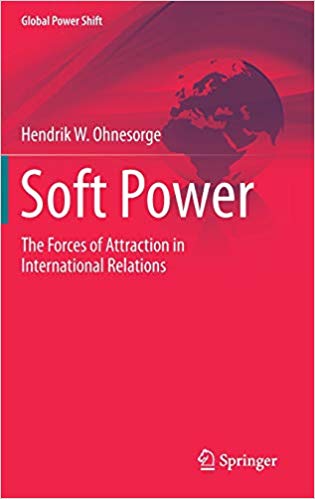
This book explores the phenomenon of soft power in international relations. In the context of current discourses on power and global power shift s, it puts forward a comprehensive taxonomy of soft power and outlines a methodological roadmap for its empirical study. To that end, the book classifies soft power into distinct components - resources, instruments, reception, and outcomes - and identifies relevant indicators for each of these categories.Moreover, the book integrates previously neglected aspects into the concept of soft power, including the significance of (political) personalities. A broad range of historical examples is drawn upon to illustrate the effects of soft power in international relations in an innovative and analytically differentiated way. A central methodological contribution of this book consists in highlighting the value of comparative-historical analysis (CHA) as a promising approach for empirical analyses of the soft power of different actors on the international stage.By introducing a comprehensive taxonomy of soft power, the book offers an innovative and substantiated perspective on a pivotal phenomenon in today’s international relations. As the forces of attraction in world politics continue to gain in importance, it provides a valuable asset for a broad readership.
“In this important and thoughtful book, Hendrik Ohnesorge explains and advances our knowledge of the ways that soft power, public diplomacy, and charismatic personal diplomacy are shaping the international relations of our global information age.”
Joseph S. Nye, Jr., Harvard University and author of The Future of Power
“Soft power is a much-used term, almost a commonplace in current-day international relations. Yet its multiple dimensions are seldom explored, and its usefulness as a methodological tool rarely explained. This book covers these gaps with some skill. By introducing a four-level approach, focusing on resources, instruments, reception, and outcomes, Hendrik Ohnesorge has provided a critical guidebook for the analysis of soft power in IR.”
Giles Scott-Smith, Roosevelt Chair in New Diplomatic History, Leiden University
New feature
This book explores the phenomenon of soft power in international relations. In the context of current discourses on power and global power shift s, it puts forward a comprehensive taxonomy of soft power and outlines a methodological roadmap for its empirical study. To that end, the book classifies soft power into distinct components - resources, instruments, reception, and outcomes - and identifies relevant indicators for each of these categories.
Moreover, the book integrates previously neglected aspects into the concept of soft power, including the significance of (political) personalities. A broad range of historical examples is drawn upon to illustrate the effects of soft power in international relations in an innovative and analytically differentiated way. A central methodological contribution of this book consists in highlighting the value of comparative-historical analysis (CHA) as a promising approach for empirical analyses of the soft power of different actors on the international stage.
By introducing a comprehensive taxonomy of soft power, the book offers an innovative and substantiated perspective on a pivotal phenomenon in today’s international relations. As the forces of attraction in world politics continue to gain in importance, it provides a valuable asset for a broad readership.
“In this important and thoughtful book, Hendrik Ohnesorge explains and advances our knowledge of the ways that soft power, public diplomacy, and charismatic personal diplomacy are shaping the international relations of our global information age.”
Joseph S. Nye, Jr., Harvard University and author of The Future of Power
“Soft power is a much-used term, almost a commonplace in current-day international relations. Yet its multiple dimensions are seldom explored, and its usefulness as a methodological tool rarely explained. This book covers these gaps with some skill. By introducing a four-level approach, focusing on resources, instruments, reception, and outcomes, Hendrik Ohnesorge has provided a critical guidebook for the analysis of soft power in IR.”
Giles Scott-Smith, Roosevelt Chair in New Diplomatic History, Leiden University
*표시는 필수 입력사항입니다.
| 전화번호 |
|---|
| 기사명 | 저자명 | 페이지 | 원문 | 기사목차 |
|---|
| 번호 | 발행일자 | 권호명 | 제본정보 | 자료실 | 원문 | 신청 페이지 |
|---|
도서위치안내: / 서가번호:

우편복사 목록담기를 완료하였습니다.
*표시는 필수 입력사항입니다.
저장 되었습니다.
