본문 바로가기 주메뉴 바로가기

전체메뉴

국회도서관 홈으로 정보검색 소장정보 검색

결과 내 검색

동의어 포함

목차보기


Section I. Introduction
Introduction: Understanding Communication, Interpreting, and Language in Wartime
Section II. Experiences of Cross-Cultural Communication in Wartime
Cross-Cultural Communication and the Experiences of Australian Soldiers During the First World War
Unfamiliar Allies: Australian Cross-Cultural Communication in Afghanistan and Iraq During the War on Terror
Section III. Strategies of Communication and Language Teaching
The Implications of War for the Teaching of Japanese Language in Australian Universities, 1917–1945
Effectiveness of Intensive Courses in Teaching War Zone Languages
The Challenge of Strategic Communication in Multinational Military Operations: Approaches by the United States and Germany in the ISAF
Section IV. Experiences of Interpreters in Wartime and After
‘Rediscovering Homeland’: Russian Interpreters in the Wehrmacht, 1941–1943
Interpreters at Australia’s War-Crimes Trials, 1945–1951: From ‘Ready-Mades’ to ‘Happenchancers’
Interpreting the ‘Language of War’ in War-Crimes Trials
Working with Australian Defence Force Interpreters in Timor 1999 and Aceh 2005: Reflections Drawn from Personal Experience
Risk Perception and Its Management: Lessons from Iraqi Linguistic Mediators for the Australian Defence Force in the Iraq War (2003–2009)
Section V. Conclusion
Conclusion: Cross-Cultural Communication and Language in Wartime: Reflections and Future Directions

이용현황보기

Communication, interpreting and language in wartime : historical and contemporary perspectives 이용현황 표 - 등록번호, 청구기호, 권별정보, 자료실, 이용여부로 구성 되어있습니다.
등록번호 청구기호 권별정보 자료실 이용여부
0002613362 400.1 -A20-1 서울관 서고(열람신청 후 1층 대출대) 이용가능

출판사 책소개

알라딘제공

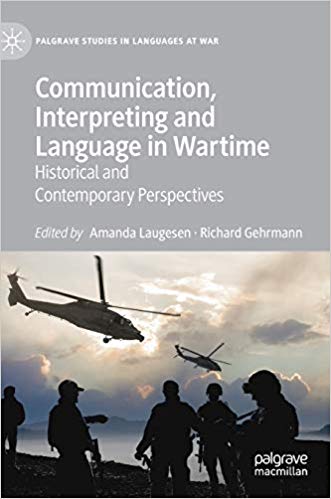
This edited book provides a multi-disciplinary approach to the topics of translation and cross-cultural communication in times of war and conflict. It examines the historical and contemporary experiences of interpreters in war and in war crimes trials, as well as considering policy issues in communication difficulties in war-related contexts. The range of perspectives incorporated in this volume will appeal to scholars, practitioners and policy-makers, particularly in the fields of translating and interpreting, conflict and war studies, and military history.


New feature

"In the age of information warfare, Ludendorff’s assertion, ‘The right words, battles won; the wrong words, battle lost’, was never truer. This important collection restores interpreters, translators and language specialists to the heart of the action where, searching for the right words to mediate conflict or manage hostilities, they have long stood but rarely received the recognition they deserve."
-- Kevin Foster, Head, School of Languages, Literatures, Cultures and Linguistics, Monash University, Australia.

This edited book provides a multi-disciplinary approach to the topics of translation and cross-cultural communication in times of war and conflict. It examines the historical and contemporary experiences of interpreters in war and in war crimes trials, as well as considering policy issues in communication difficulties in war-related contexts. The range of perspectives incorporated in this volume will appeal to scholars, practitioners and policy-makers, particularly in the fields of translating and interpreting, conflict and war studies, and military history.

Amanda Laugesen is Director of the Australian National Dictionary Centre at the Australian National University. She is the author of a number of books, including Furphies and Whizz-bangs: Anzac Slang from the Great War (2015) and Taking Books to the World: American Publishers and the Cultural Cold War (2017).

 Richard Gehrmann is Senior Lecturer in International Studies at the University of Southern Queensland, Australia. He has published on war and society and (with Jessica Gildersleeve) is co-editor of the book Memory and the Wars on Terror: Australian and British Perspectives (2017).


