본문 바로가기 주메뉴 바로가기

전체메뉴

국회도서관 홈으로 정보검색 소장정보 검색

결과 내 검색

동의어 포함

목차보기


List of Figures
Acknowledgments
Contributor Biographies
Introduction: Monsters and Change Yasmine Musharbash Geir Henning Presterudstuen
1 Monsters and Fear of Highway Travel in Ancient Greece and Rome Debbie Felton
2 Gods as Monsters: Insatiable Appetites, Exceeding Interpretations, and a Surfeit of Life Indira Arumugam
3 Pangkarlangu, Wonder, Extinction Yasmine Musharbash
4 Decline and Resilience of Eastern Penan Monsters Mikael Rothstein
5 Monster Mash: What Happens When Aboriginal Monsters Are Co-opted into the Mainstream? Christine Judith Nicholls
6 Margt byr ipokunni---What Dwells in the Mist? Helena Onnudottir and Mary Hawkins
7 Bird/Monsters and Contemporary Social Fears in the Central Desert of Australia Georgia Curran
8 The Nine-night Siege: Kurdaitcha at the Interface of Warlpiri/Non-Indigenous Relations Joanne Thurman
9 Monsters, Place, and Murderous Winds in Fiji Geir Henning Presterudstuen
10 Terror and the Territory Cults: Pregnancy and Power in Monsoon Asia Holly High
11 Drawing in the Margins: My Son's Arsenal of Monsters---(Autistic) Imagination and the Cultural Capital of Childhood Rozanna Lilley
Afterword: Scenes from the Monsterbiome Michael
Dylan Foster
Index

이용현황보기

Monster anthropology : ethnographic explorations of transforming social worlds through monsters 이용현황 표 - 등록번호, 청구기호, 권별정보, 자료실, 이용여부로 구성 되어있습니다.
등록번호 청구기호 권별정보 자료실 이용여부
0002613477 398.46 -A20-1 서울관 서고(열람신청 후 1층 대출대) 이용가능

출판사 책소개

알라딘제공

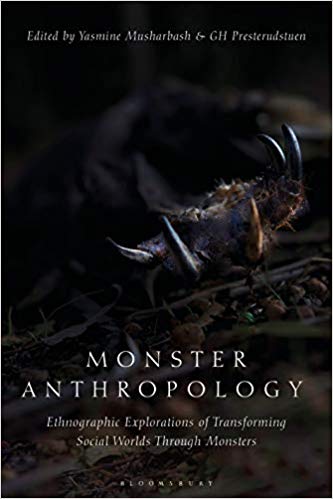
Monsters are culturally meaningful across the world. Starting from this key premise, this book tackles monsters in the context of social change. Writing in a time of violent upheaval, when technological innovation brings forth new monsters while others perish as part of the widespread extinctions that signify the Anthropocene, contributors argue that putting monsters at the center of social analysis opens up new perspectives on change and social transformation. Through a series of ethnographically grounded analyses they capture monsters that herald, drive, experience, enjoy, and suffer the transformations of the worlds they beleaguer.

Topics examined include the evil skulking new roads in Ancient Greece, terror in post-socialist Laos's territorial cults, a horrific flying head that augurs catastrophe in the rain forest of Borneo, benign spirits that accompany people through the mist in Iceland, flesh-eating giants marching through neo-colonial central Australia, and ghosts lingering in Pacific villages in the aftermath of environmental disasters.

By taking the proposition that monsters and the humans they haunt are intricately and intimately entangled seriously, this book offers unique, cross-cultural perspectives on how people perceive the world and their place within it. It also shows how these experiences of belonging are mediated by our relationships with the other-than-human.


Monsters are culturally meaningful across the world. Starting from this key premise, this book tackles monsters in the context of social change. Writing in a time of violent upheaval, when technological innovation brings forth new monsters while others perish as part of the widespread extinctions that signify the Anthropocene, contributors argue that putting monsters at the center of social analysis opens up new perspectives on change and social transformation. Through a series of ethnographically grounded analyses they capture monsters that herald, drive, experience, enjoy, and suffer the transformations of the worlds they beleaguer. Topics examined include the evil skulking new roads in Ancient Greece, terror in post-socialist Laos?s territorial cults, a horrific flying head that augurs catastrophe in the rain forest of Borneo, benign spirits that accompany people through the mist in Iceland, flesh-eating giants marching through neo-colonial central Australia, and ghosts lingering in Pacific villages in the aftermath of environmental disasters. By taking the proposition that monsters and the humans they haunt are intricately and intimately entangled seriously, this book offers unique, cross-cultural perspectives on how people perceive the world and their place within it. It also shows how these experiences of belonging are mediated by our relationships with the other-than-human.


