
 대표어
권호기사보기
| 기사명 | 저자명 | 페이지 | 원문 | 기사목차 |
|---|
결과 내 검색
동의어 포함
| 등록번호 | 청구기호 | 권별정보 | 자료실 | 이용여부 |
|---|---|---|---|---|
| 0002614705 | 327.405 -A20-1 | 서울관 서고(열람신청 후 1층 대출대) | 이용가능 |

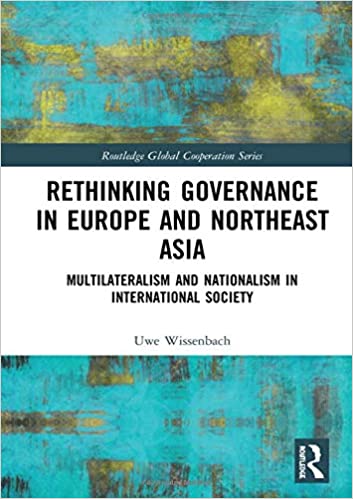
This book explores how nationalism and multilateralism transform international society and global governance. It does so by comparing the governance model of the EU ? a constitutionalised and increasingly polycentric form of multilateralism ? with Northeast Asia. There nationalist administrations have resisted multilateral commitments and are locked into rivalries instead of pursuing a regional project.
Both Europe and Northeast Asia can be seen as success stories of the late 20th/ early 21st centuries, but by having followed different approaches to international governance. The book traces these two trajectories through critical junctures in history to how both regions have dealt with the contemporary challenges of the financial crisis and climate change. During the financial crisis, Europe’s multilateral economic and monetary architecture revealed profound weaknesses whilst national policies allowed much of Northeast Asia to escape the worst of it. On climate change the European Union (EU) has developed effort-sharing governance models to reduce emissions, while Northeast Asian countries are relying on greening national industrial policy. The book argues that global governance has to find the balance between multilateralism and nationalism in order to find collaborative approaches to global challenges.
This book provides a fresh take on the EU and on Northeast Asia and develops innovative concepts of international society and polycentric governance. Thus, it will be of considerable interest to researchers and students of global governance, international relations, EU and Asia Studies.
The Open Access version of this book, available at http://www.taylorfrancis.com, has been made available under a Creative Commons Attribution-Non Commercial-No Derivatives (CC-BY-ND) 4.0 license.
This book explores how nationalism and multilateralism transform international society and global governance. It does so by comparing the governance model of the EU - a constitutionalised and increasingly polycentric form of multilateralism, with Northeast Asia.
*표시는 필수 입력사항입니다.
| 전화번호 |
|---|
| 기사명 | 저자명 | 페이지 | 원문 | 기사목차 |
|---|
| 번호 | 발행일자 | 권호명 | 제본정보 | 자료실 | 원문 | 신청 페이지 |
|---|
도서위치안내: / 서가번호:

우편복사 목록담기를 완료하였습니다.
*표시는 필수 입력사항입니다.
저장 되었습니다.
