
 대표어
대표어
권호기사보기
| 기사명 | 저자명 | 페이지 | 원문 | 기사목차 |
|---|
결과 내 검색
동의어 포함
| 등록번호 | 청구기호 | 권별정보 | 자료실 | 이용여부 |
|---|---|---|---|---|
| 0002886908 | 338.27282 -A22-4 | 서울관 서고(열람신청 후 1층 대출대) | 이용가능 |

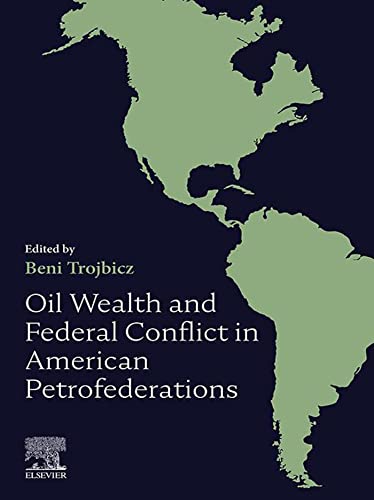
Oil wealth and Federal Conflict in American Petrofederations documents the critical relationship between oil rents and federal conflicts by illustrating key concepts with six representative cross-regional case studies. Each case study discusses encompasses qualitative, quantitative and comparative elements under a common structure. With each petrofederation ranging in conflict types and modalities, the work as a whole identifies key differences including oil rent decentralization (in terms of resource property, sector management and distribution of revenues), sectoral importance (considered at national and subnational levels), and federation redistribution policy (in terms of fiscal federal imbalance, fiscal equalization, and oil rent use for regional equity).
Collectively, the book generalizes a consistent theory of causality between oil rents and federal conflicts that take into account systemic variables. The book's conclusions will serve as a guide for researchers and policymakers seeking pathways to translate oil rents into development and stability.
Feature
*표시는 필수 입력사항입니다.
| 전화번호 |
|---|
| 기사명 | 저자명 | 페이지 | 원문 | 기사목차 |
|---|
| 번호 | 발행일자 | 권호명 | 제본정보 | 자료실 | 원문 | 신청 페이지 |
|---|
도서위치안내: / 서가번호:

우편복사 목록담기를 완료하였습니다.
*표시는 필수 입력사항입니다.
저장 되었습니다.
