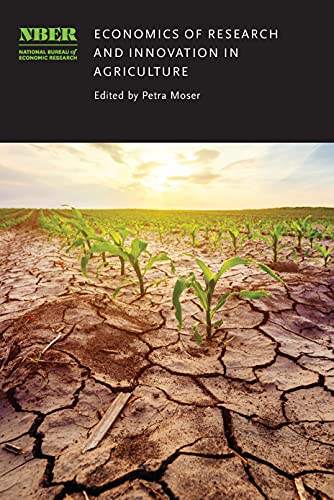
Papers from an NBER conference of the same name, held in Washington, DC, on 17 May 2019. Includes bibliographical references and indexes.
연계정보
외부기관 원문
목차보기
Introduction 1. The Roots of Agricultural Innovation: Patent Evidence of Knowledge Spillovers 2. Quantifying Heterogeneous Returns to Genetic Selection: Evidence from Wisconsin Dairies 3. Yield Performance of Corn under Heat Stress: A Comparison of Hybrid and Open-Pollinated Seeds during a Period of Technological Transformation, 1933–55 4. Local Effects of Land Grant Colleges on Agricultural Innovation and Output 5. Academic Engagement, Commercialization, and Scholarship: Empirical Evidence from Agricultural and Life Scientists at US Land Grant Universities 6. Venture Capital and the Transformation of Private R&D for Agriculture Notes Contributors Author Index Subject Index
이용현황보기
Economics of research and innovation in agriculture 이용현황 표 - 등록번호, 청구기호, 권별정보, 자료실, 이용여부로 구성 되어있습니다.
등록번호
청구기호
권별정보
자료실
이용여부
0002886909
338.1072 -A22-1
서울관 서고(열람신청 후 1층 대출대)
이용가능
출판사 책소개
Feeding the world's growing population is a critical policy challenge for the twenty-first century. With constraints on water, arable land, and other natural resources, agricultural innovation is a promising path to meeting the nutrient needs for future generations. At the same time, potential increases in the variability of the world's climate may intensify the need for developing new crops that can tolerate extreme weather. Despite the key role for scientific breakthroughs, there is an active discussion on the returns to public and private spending in agricultural R&D, and many of the world's wealthier countries have scaled back the share of GDP that they devote to agricultural R&D. Dwindling public support leaves universities, which historically have been a major source of agricultural innovation, increasingly dependent on industry funding, with uncertain effects on the nature and direction of agricultural research. All of these factors create an urgent need for systematic empirical evidence on the forces that drive research and innovation in agriculture. This book aims to provide such evidence through economic analyses of the sources of agricultural innovation, the challenges of measuring agricultural productivity, the role of universities and their interactions with industry, and emerging mechanisms that can fund agricultural R&D.

 대표어
대표어