
 대표어
대표어
권호기사보기
| 기사명 | 저자명 | 페이지 | 원문 | 기사목차 |
|---|
결과 내 검색
동의어 포함
| 등록번호 | 청구기호 | 권별정보 | 자료실 | 이용여부 |
|---|---|---|---|---|
| 0002886917 | 331.09 -A22-1 | 서울관 서고(열람신청 후 1층 대출대) | 이용가능 |

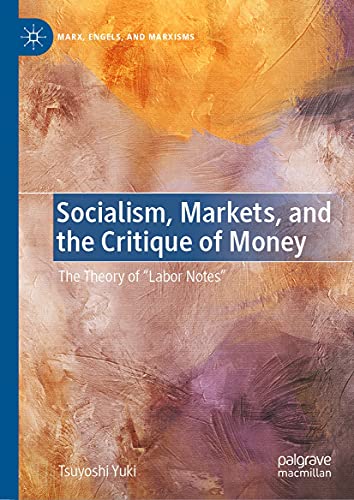
This book provides a comprehensive overview of historical and international debates on the theory of “labor money” or “labor notes.” These debates exist in a triangular context of market socialism, communism (community-based socialism), and local currency, joining numerous socialists, anarchists, and Marx and Engels. Labor note theory encompasses theoretical, ideological, and practical doctrines aimed at designing a fair and desirable labor-based market or non-market economy by reforming the monetary and credit system. This theory was considered an unfeasible utopian idea in the context of orthodox Marxism, which is typically based on a historical study of surplus value doctrines. However, this book eschews Marx’s critique of “labor money” that limits the debate regarding a concrete alternative society, and instead proposes practical and gradual approaches to social reform by scrutinizing the primary sources of labor money theories and practical experiences and reconstructs their theoretical relationships.
New feature
This book provides a comprehensive overview of historical and international debates on the theory of “labor money” or “labor notes.” These debates exist in a triangular context of market socialism, communism (community-based socialism), and local currency, joining numerous socialists, anarchists, and Marx and Engels. Labor note theory encompasses theoretical, ideological, and practical doctrines aimed at designing a fair and desirable labor-based market or non-market economy by reforming the monetary and credit system. This theory was considered an unfeasible utopian idea in the context of orthodox Marxism, which is typically based on a historical study of surplus value doctrines. However, this book eschews Marx’s critique of “labor money” that limits the debate regarding a concrete alternative society, and instead proposes practical and gradual approaches to social reform by scrutinizing the primary sources of labor money theories and practical experiences and reconstructs their theoretical relationships.
Tsuyoshi Yuki is Professor in the Graduate School of Humanities and Social Sciences at Saitama University, Japan.
*표시는 필수 입력사항입니다.
| 전화번호 |
|---|
| 기사명 | 저자명 | 페이지 | 원문 | 기사목차 |
|---|
| 번호 | 발행일자 | 권호명 | 제본정보 | 자료실 | 원문 | 신청 페이지 |
|---|
도서위치안내: / 서가번호:

우편복사 목록담기를 완료하였습니다.
*표시는 필수 입력사항입니다.
저장 되었습니다.
