
 대표어
대표어
권호기사보기
| 기사명 | 저자명 | 페이지 | 원문 | 기사목차 |
|---|
결과 내 검색
동의어 포함
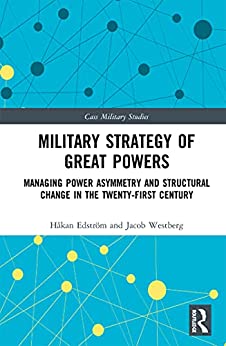
This book explores the military strategies of the five system-determining great powers during the twenty-first century.
The book’s point of departure is that analyses of countries’ defence strategies should acknowledge that states come in various shapes and sizes and that their strategic choices are affected by their perceptions of their position in the international system and by power asymmetries between more and less resourceful states. This creates a diversity in strategies that is often overlooked in theoretically oriented analyses. The book examines how five major powers – the United States, China, the United Kingdom, France and Russia – have adjusted their strategies to improve or maintain their relative position and to manage power asymmetries during the twenty-first century. It also develops and applies an analytical framework for exploring and categorising the strategies pursued by the five major powers which combines elements of structural realism with research on power transition theory and status competition. The concluding chapter addresses questions related to stability and change in the present international system.
This book will be of interest to students of strategic studies, foreign policy, and International Relations.
| 등록번호 | 청구기호 | 권별정보 | 자료실 | 이용여부 |
|---|---|---|---|---|
| 0002908213 | 355.02 -A22-15 | 서울관 서고(열람신청 후 1층 대출대) | 이용가능 |

This book explores the military strategies of the five system-determining great powers during the twenty-first century.
The book’s point of departure is that analyses of countries’ defence strategies should acknowledge that states come in various shapes and sizes and that their strategic choices are affected by their perceptions of their position in the international system and by power asymmetries between more and less resourceful states. This creates a diversity in strategies that is often overlooked in theoretically oriented analyses. The book examines how five major powers ? the United States, China, the United Kingdom, France and Russia ? have adjusted their strategies to improve or maintain their relative position and to manage power asymmetries during the twenty-first century. It also develops and applies an analytical framework for exploring and categorising the strategies pursued by the five major powers which combines elements of structural realism with research on power transition theory and status competition. The concluding chapter addresses questions related to stability and change in the present international system.
This book will be of interest to students of strategic studies, foreign policy, and International Relations.
This book explores the military strategies of the five system-determining great powers during the twenty-first century.
*표시는 필수 입력사항입니다.
| 전화번호 |
|---|
| 기사명 | 저자명 | 페이지 | 원문 | 기사목차 |
|---|
| 번호 | 발행일자 | 권호명 | 제본정보 | 자료실 | 원문 | 신청 페이지 |
|---|
도서위치안내: / 서가번호:

우편복사 목록담기를 완료하였습니다.
*표시는 필수 입력사항입니다.
저장 되었습니다.
