
 대표어
권호기사보기
| 기사명 | 저자명 | 페이지 | 원문 | 기사목차 |
|---|
결과 내 검색
동의어 포함
| 등록번호 | 청구기호 | 권별정보 | 자료실 | 이용여부 |
|---|---|---|---|---|
| 0002941289 | 004.678 -A22-28 | 서울관 서고(열람신청 후 1층 대출대) | 이용가능 |

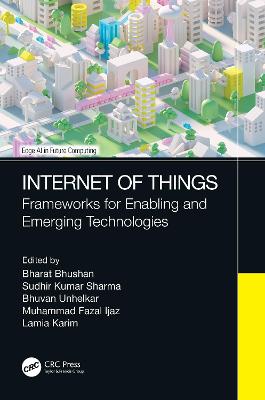
Today, Internet of Things (IoT) is ubiquitous as it is applied in practice in everything from Industrial Control Systems (ICS) to e-Health, e-commerce, Cyber Physical Systems (CPS), smart cities, smart parking, healthcare, supply chain management and many more. Numerous industries, academics, alliances and standardization organizations make an effort on IoT standardization, innovation and development. But there is still a need for a comprehensive framework with integrated standards under one IoT vision. Furthermore, the existing IoT systems are vulnerable to huge range of malicious attacks owing to the massive numbers of deployed IoT systems, inadequate data security standards and the resource-constrained nature. Existing security solutions are insufficient and therefore it is necessary to enable the IoT devices to dynamically counter the threats and save the system.
Apart from illustrating the diversified IoT applications, this book also addresses the issue of data safekeeping along with the development of new security-enhancing schemes such as blockchain, as well as a range of other advances in IoT. The reader will discover that the IoT facilitates a multidisciplinary approach dedicated to create novel applications and develop integrated solutions to build a sustainable society. The innovative and fresh advances that demonstrate IoT and computational intelligence in practice are discussed in this book, which will be helpful and informative for scientists, research scholars, academicians, policymakers, industry professionals, government organizations and others.
This book is intended for a broad target audience, including scholars of various generations and disciplines, recognized scholars (lecturers and professors) and young researchers (postgraduate and undergraduates) who study the legal and socio-economic consequences of the emergence and dissemination of digital technologies such as IoT. Furthermore, the book is intended for researchers, developers and operators working in the field of IoT and eager to comprehend the vulnerability of the IoT paradigm. The book will serve as a comprehensive guide for the advanced-level students in computer science who are interested in understanding the severity and implications of the accompanied security issues in IoT.
Dr. Bharat Bhushan is an Assistant Professor of Department of Computer Science and Engineering (CSE) at School of Engineering and Technology, Sharda University, Greater Noida, India.
Prof. (Dr.) Sudhir Kumar Sharma is currently a Professor and Head of the Department of Computer Science, Institute of Information Technology & Management affiliated to GGSIPU, New Delhi, India.
Prof. (Dr.) Bhuvan Unhelkar (BE, MDBA, MSc, PhD; FACS; PSM-I, CBAP®) is an accomplished IT professional and Professor of IT at the University of South Florida, Sarasota-Manatee (Lead Faculty).
Dr. Muhammad Fazal Ijaz is working as an Assistant Professor in Department of Intelligent Mechatronics Engineering, Sejong University, Seoul, Korea.
Prof. (Dr.) Lamia Karim is a professor of computer science at the National School of Applied Sciences Berrechid (ENSAB), Hassan 1st University.
*표시는 필수 입력사항입니다.
| 전화번호 |
|---|
| 기사명 | 저자명 | 페이지 | 원문 | 기사목차 |
|---|
| 번호 | 발행일자 | 권호명 | 제본정보 | 자료실 | 원문 | 신청 페이지 |
|---|
도서위치안내: / 서가번호:

우편복사 목록담기를 완료하였습니다.
*표시는 필수 입력사항입니다.
저장 되었습니다.
