
 대표어
대표어
권호기사보기
| 기사명 | 저자명 | 페이지 | 원문 | 기사목차 |
|---|
결과 내 검색
동의어 포함
| 등록번호 | 청구기호 | 권별정보 | 자료실 | 이용여부 |
|---|---|---|---|---|
| 0002982552 | 338.9 -A23-9 | 서울관 국가전략정보센터(107호) | 이용가능 |

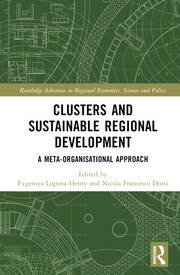
Clusters and Sustainable Regional Development conceptualises the role of organised clusters in the transition towards sustainability. It introduces a novel perspective on these clusters, viewing them as deliberate collective actors within their environments that can become the driving force for transformation in their regions or nations.
The book draws upon the meta-organisational perspective in cluster studies, in contrast to traditional approaches. This view suggests that clusters are not merely territories or geographical areas, but organised entities. As such, they are defined as territorially anchored groups of independent organisations engaging in joint decision-making, pursuing system-level goals and capable of purposive collective action.
This text introduces a new set of ideas and questions at the intersection of economic geography, regional and cluster studies, organisation and management, policy and governance research. It will appeal to researchers from these diverse fields seeking to further develop the meta-organisational view of clusters as well as conceptualise their role in sustainability transitions.
This book will also be a useful guide for policymakers who have an interest in the dynamics of economic development and the transition towards sustainability.
Clusters and Sustainable Regional Development conceptualises the role of organised clusters in the transition towards sustainability. It introduces a novel perspective on these clusters, viewing them as deliberate collective actors within their environments that can become the driving force for transformation in their regions or nations.
*표시는 필수 입력사항입니다.
| 전화번호 |
|---|
| 기사명 | 저자명 | 페이지 | 원문 | 기사목차 |
|---|
| 번호 | 발행일자 | 권호명 | 제본정보 | 자료실 | 원문 | 신청 페이지 |
|---|
도서위치안내: 국가전략정보센터 / 서가번호: 4

우편복사 목록담기를 완료하였습니다.
*표시는 필수 입력사항입니다.
저장 되었습니다.
